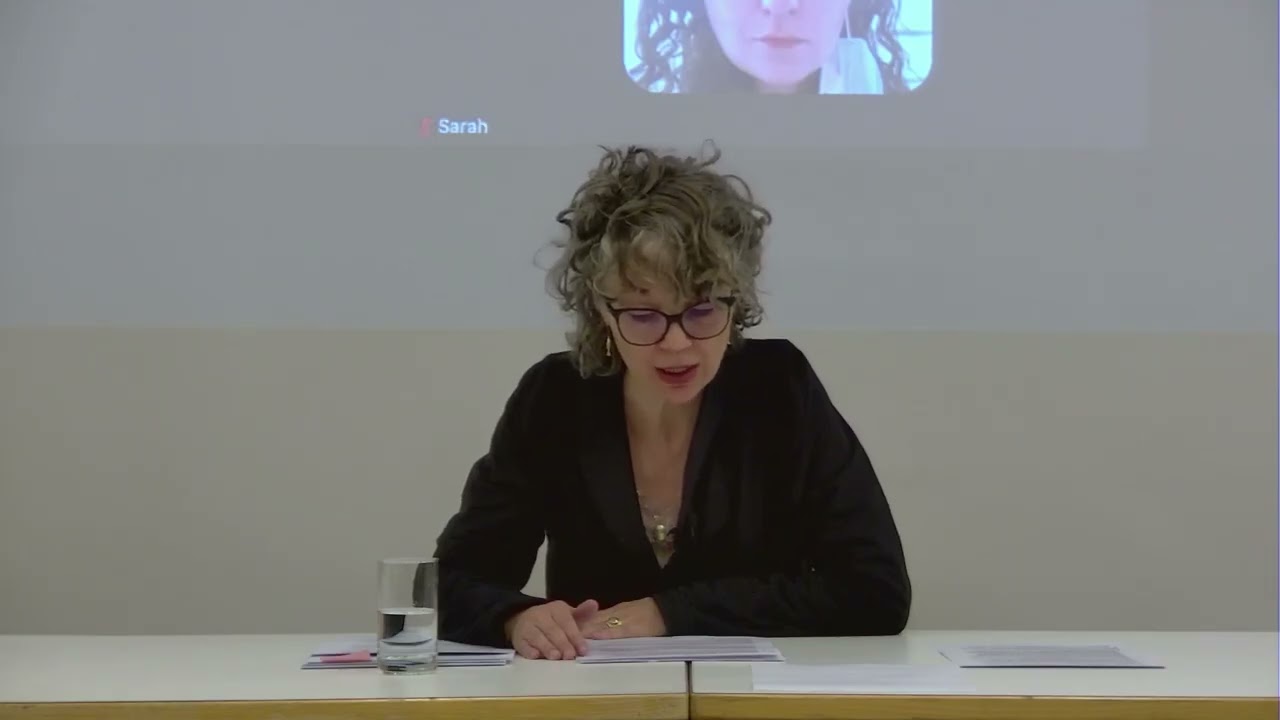
Melinda Nadj Abonji - Moral corruption: Eugenics and Immigration Policy in Switzerland
Keywords
Summary
187 words
Critical Evaluation
Value of the Information & Strength of the Argument
The value of this lecture lies in its meticulous archival research, bringing to light primary documents that expose the eugenic ideology behind Swiss immigration legislation. Abonji’s argumentation is structured and persuasive, drawing on quotes from key figures like Max Ruth and Walter Burckhardt to demonstrate the deliberate design of a selection system based on racial and class criteria. She effectively links the legal concept of ‘over-foreignization’ to its historical origins and shows how it was used to justify family separations and criminalization of migrants. The strength of her argument is enhanced by her personal testimony, which adds an ethical dimension but also risks introducing emotional bias. However, the factual basis is solid, and she acknowledges gaps in research, making her claims measured and credible.
Scientific Rigor, Source Quality, Title Accuracy
The lecture demonstrates high scientific rigor through the use of primary sources, including minutes of the 1920 Solothurn conference and personal letters from the immigration authorities. Abonji cites the migration historian Toni Ricciardi and references the work of historians like Mario T. (likely Mario Truger) to support her claims. However, she does not provide direct citations to specific publications, which limits verifiability. The title ‘Moral corruption: Eugenics and Immigration Policy in Switzerland’ is accurate as the content directly addresses the moral failures inherent in the law and its eugenic foundations. The lecture aligns well with the title, offering a critical historical analysis.
241 words
Title / Content Match
The title accurately reflects the content, focusing on moral corruption, eugenics, and immigration policy in Switzerland.
Quality & Reliability
8/10
The presentation is based on primary historical sources, including conference minutes and personal documents, and aligns with established historical research on Swiss immigration policy. The author's personal involvement adds perspective but does not undermine the factual content.
Key Moments
Markers derived by PSI from the transcript: the creator did not define chapters.
- Introduction of Melinda Nadj Abonji and her background as a Hungarian-Swiss writer
- Reading of the rejection letter citing 'over-foreignization' and its personal impact
- The 1920 Solothurn conference and the key participants who shaped the ANAG
- Max Ruth's concept of selection and the emphasis on preventing foreign reproduction
- Eugenic and racist undertones, including rejection of intermingling and 'Eastern Jews'
- Seasonal workers and the legal prohibition of family life, exemplifying the exploitative system
Cited Sources
- European Graduate School — Institution hosting the lecture; likely platform for the video
Contribution & Novelties
The lecture provides a critical reappraisal of Swiss immigration policy by unearthing the eugenic origins of the ANAG. Abonji’s original contribution is the connection between the legal concept of ‘over-foreignization’ and the eugenic ideology of the early 20th century, showing how the law was deliberately designed to manage reproduction and racial purity. She also highlights the human cost, with half a million families separated, and calls for further research into the economic benefits derived from this exploitation. This is a rare and important perspective that challenges mainstream historical narratives.
Pour aller plus loin :
- Eugenics — Provides background on the pseudoscientific movement that influenced Swiss officials.
- Swiss immigration policy — Overview of current and historical immigration policies in Switzerland.
- Foreigners Police (Switzerland) — History of the institution discussed in the lecture.
131 words
Radar Profile
The radar profile shows a strong balance between information quality and quantity, with high reliability and moderate technical level. The lecture excels in comprehensive research and clear presentation, though its advanced historical detail may require some background knowledge, reflecting a high-quality academic talk.