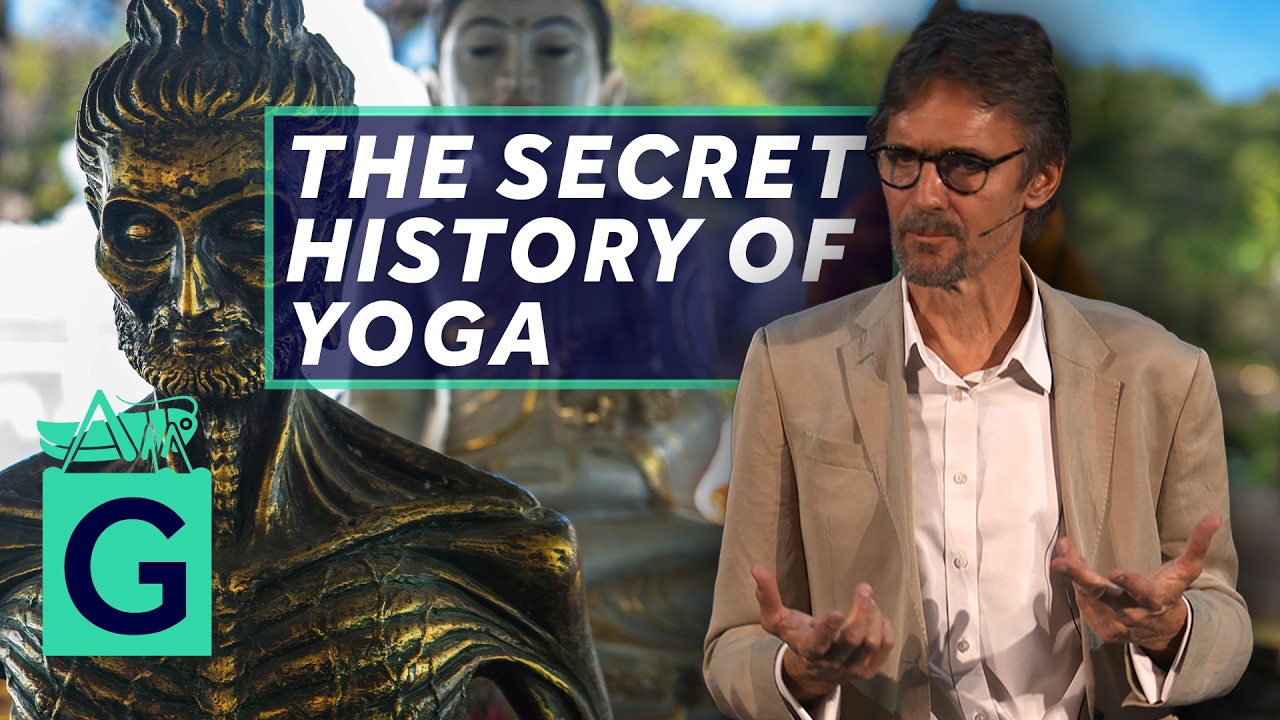
What is the Purpose of Yoga: Transcendence or Transformation? - Jim Mallinson
Title history
- What is the Purpose of Yoga: Transcendence or Transformation? - Jim Mallinson — observed on 20261104-1707 UTC (YouTube)
Keywords
Summary
115 words
Critical Evaluation
Value of the Information & Strength of the Argument
The lecture provides a high-value synthesis of decades of scholarship, correcting common misconceptions. Mallinson’s argument is well-supported by textual evidence, archaeological findings, and personal ethnographic observations. He presents a clear thesis about the shift from transcendence to transformation, substantiated with specific examples and scholarly references. The reasoning is logical and compelling.
Scientific Rigor, Source Quality, Title Accuracy
The lecture demonstrates excellent scientific rigor. Mallinson is a leading expert and cites numerous primary Sanskrit texts, historical accounts, and modern scholarship. He addresses counterarguments (e.g., the Indus Valley seal) with reasoned analysis. The title accurately encapsulates the central question, and the content directly addresses it, offering a nuanced answer.
116 words
Title / Content Match
The title accurately frames the central question of the lecture regarding the purpose of yoga as transcendence or transformation.
Quality & Reliability
9/10
Expert lecture by a leading scholar of yoga history, based on philological research, fieldwork, and art historical evidence. Comprehensive and well-supported.
Chapters
- Introduction and welcome
- Framing the question: from fakir to yogi
- A scholar's life among India's ascetics
- From Sanskrit student to Oxford PhD
- What yoga isn't: the "5,000 years old" myth
- Rethinking the Indus Valley "proto-Shiva" seal
- The earliest evidence of yoga, c. 500 BCE
- The Buddha, ascetics, and Alexander's "naked philosophers"
- Vishvamitra's penances and seasonal austerities
- Extreme mortification, then and now
- Ascetic practice witnessed at a modern Kumbh Mela
- Women and asceticism: Parvati and a historical gap
- The turning point: body-positive yoga emerges
- Transmission to Tibet and the breath-retention technique
- The earliest known images of yoga postures
- Possible Chinese influences on the yogic body
- Hatha texts: new postures and cleansing techniques
- Svatmarama and the text that defined yoga
- More postures, and the "Yoga Body" debate
- Case studies: two ascetics who bridged traditions
- How yoga went global in the 20th century
- Old and new practices converging today
- Conclusion: two traditions of the body
Cited Sources
- Gresham College Lecture Page — Official page for the lecture, including transcript and downloadable materials.
- Q&A Session Video — Follow-up question and answer session with Jim Mallinson.
- Gresham College Website — Main website of Gresham College, offering over 2,500 free public lectures.
External References
Contribution & Novelties
This lecture offers a significant contribution by challenging the popular claim that yoga is 5,000 years old, using rigorous philology and fieldwork to trace the actual history. It highlights the pivotal shift from ascetic body-denial to body-positive practices, emphasizing the role of Buddhist texts like the Amṛtasiddhi and the later development of Haṭha yoga. The speaker’s integration of textual, artistic, and ethnographic evidence provides a nuanced understanding of yoga’s evolution.
Pour aller plus loin :
- Yoga — Overview of yoga’s history and forms, relevant to the broader context.
- Hatha yoga — Detailed information on the physical yoga tradition discussed in the lecture.
- Asceticism — Explores the universal practice of extreme self-discipline, central to the early yoga described.
117 words
Radar Profile
The radar profile shows exceptionally high scores in information quantity, quality, and reliability, with a slightly lower technical accessibility, indicating a dense, expert-led presentation that is nevertheless well-argued and well-supported.