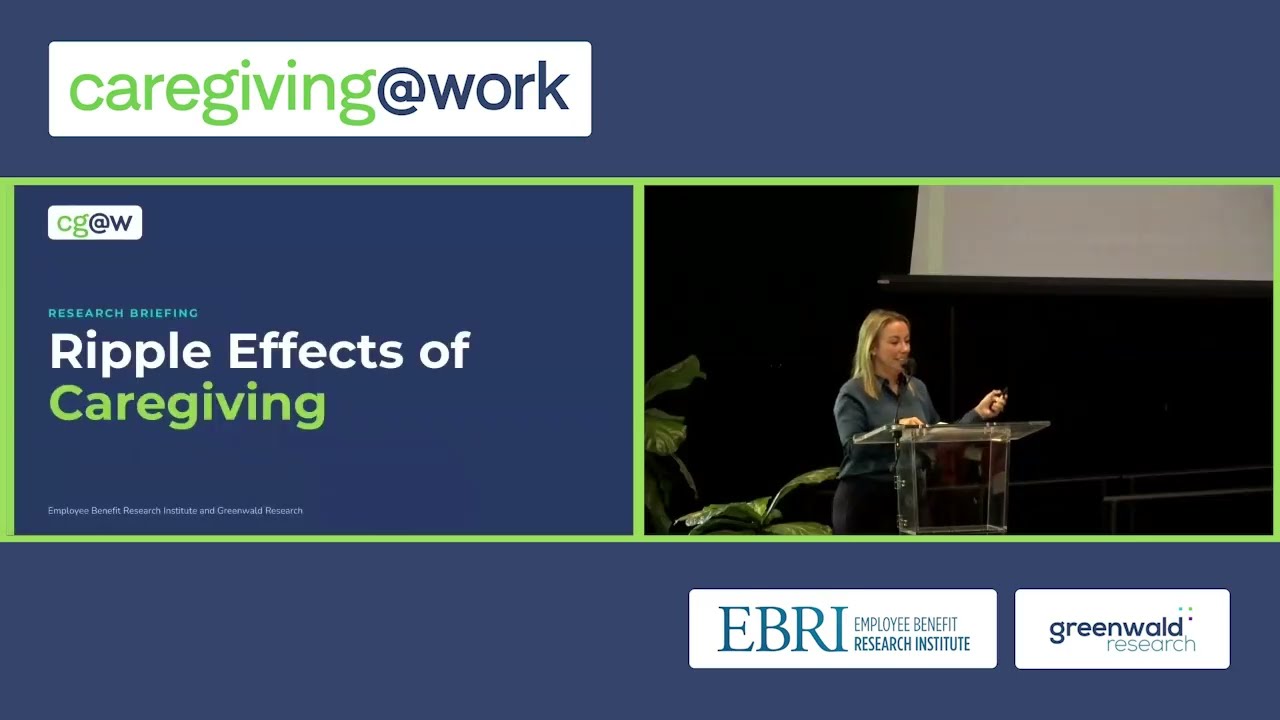
The Experience of Working Caregivers — 2026 Caregiving at Work Forum
Title history
- The Experience of Working Caregivers — 2026 Caregiving at Work Forum — observed on 20261030-1707 UTC (YouTube)
Keywords
Summary
207 words
Critical Evaluation
Value of the Information & Strength of the Argument
The value of the information lies in its synthesis of multiple authoritative surveys, providing a comprehensive overview of the working caregiver population. The argumentation is clear and well-structured, progressing from definitions to demographic profiles, then to tasks, and finally to financial and health consequences. The use of specific statistics (e.g., 27%, 63 million, 24 hours per week) lends empirical weight. The speaker effectively frames caregiving as a widespread and long-term issue for employers, supported by forward-looking data on expected future caregivers. The argument is persuasive in making the case that caregiving is a strategic workforce concern, but it could be strengthened by citing specific studies or publications directly rather than relying on aggregated references.
Scientific Rigor, Source Quality, Title Accuracy
The scientific rigor is moderate to high, given that the data come from reputable organizations like EBRI, Greenwald Research, AARP, and the National Alliance for Caregiving, and the methodology aligns with established definitions. However, the presentation does not provide detailed methodological explanations or direct citations to specific studies, making it difficult to verify the exact data sources. The title accurately matches the content: the presentation focuses on the experiences of working caregivers, covering demographics, tasks, and implications. No comment analysis was possible as no comments were provided.
216 words
Title / Content Match
The title accurately reflects the content: a synthesis of research on working caregivers' experiences, covering demographics, tasks, and financial/retirement implications.
Quality & Reliability
7/10
The presentation is based on established research from EBRI and Greenwald Research, using recognized definitions from AARP and the National Alliance for Caregiving. The speaker provides clear statistics and context, though no external references are given during the talk. The source is a reputable research institute, but the content is a concise conference summary rather than a detailed methodological exposition.
Key Moments
Markers derived by PSI from the transcript: the creator did not define chapters.
- Introduction and outline of the presentation.
- Definition of caregiver using AARP/NAC framework; 63 million US caregivers.
- Statistics on working caregivers: 27% of workers, relationships with care recipients.
- Types of caregiving tasks: IADLs, ADLs, medical/nursing tasks, and care coordination.
- Time commitment: ~24 hours per week, almost 6 years on average.
- Future caregivers: 73% of workers have been, are, or expect to be caregivers; demographic differences.
- Financial impacts: lower savings, reduced retirement readiness, irregular retirement timing.
- Health and well-being impacts, including lower satisfaction with employer efforts.
- Concluding remarks on the value of human connection and hope for solutions.
Cited Sources
- EBRI Workplace Wellness Survey — Source of data on working caregivers and their tasks.
- EBRI Retirement Confidence Survey — Source of data on retirement and financial impacts.
- Greenwald Research — Collaborator on surveys about caregiving.
- AARP / National Alliance for Caregiving - Caregiving in the US — Reference for caregiver definition and national statistics.
Contribution & Novelties
The presentation provides a concise, up-to-date synthesis of research on working caregivers, integrating multiple datasets to show the prevalence, tasks, and financial/retirement consequences. It emphasizes the high proportion of workers affected (73%) and highlights the often overlooked role of financial management and care coordination. The call to consider caregivers alongside parents and dependents broadens the perspective for employers.
Pour aller plus loin :
- AARP Caregiving Resources — Official resources on caregiving, including tools and research.
- National Alliance for Caregiving — Organization providing research and advocacy for caregivers.
- EBRI — Employee Benefit Research Institute, source of the presented data.
- World Health Organization on Caregiving — Global perspective on caregiver burden and health implications.
112 words
Radar Profile
The profile shows a balanced performance, with quality of information and reliability scoring high, while quantity and technical depth are moderate. This suggests the content is trustworthy and well-communicated, but not overly detailed in methodology or extensive in scope.