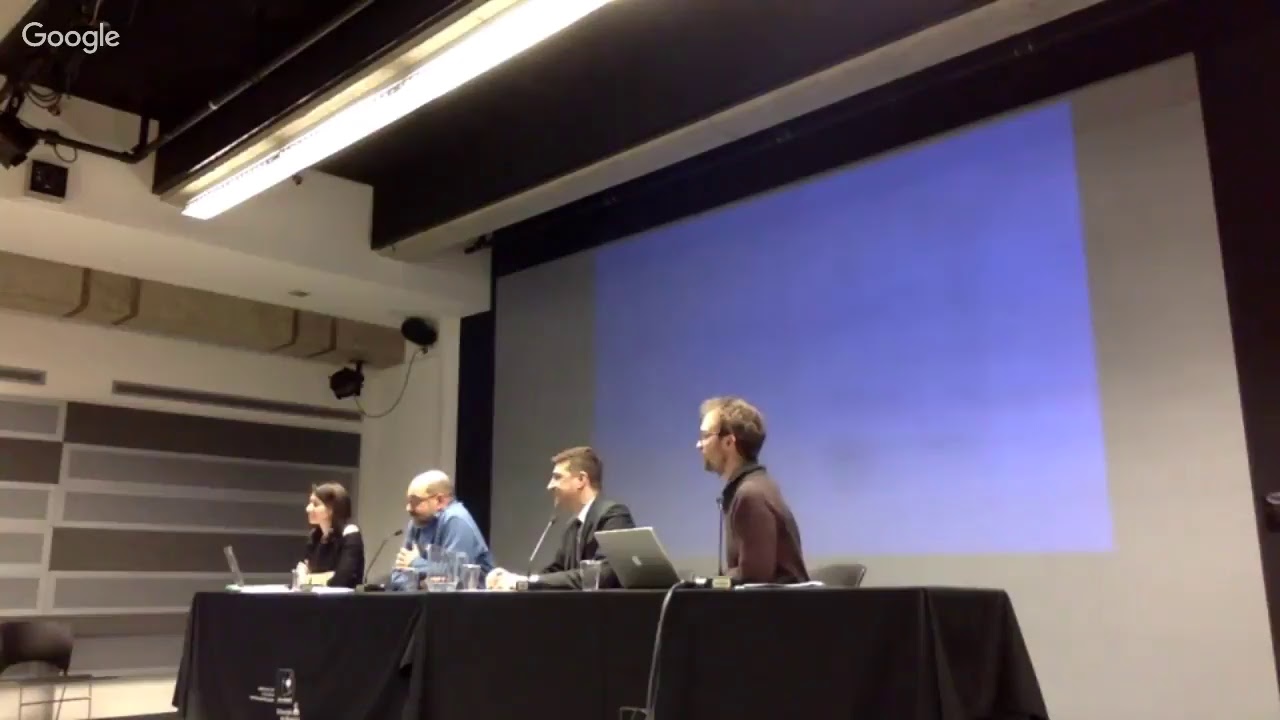
Table ronde : « Le projet encyclopédique à l'époque du numérique »
Round table: “The encyclopedic project in the digital age”
Title history
- Table ronde : « Le projet encyclopédique à l'époque du numérique » — observed on 20261030-1713 UTC (YouTube)
Keywords
Summary
172 words
Critical Evaluation
Value of the Information & Strength of the Argument
The value of the informations lies in the participants’ deep historical expertise and their ability to articulate connections between past encyclopedic models and current digital practices. The argumentation is solid, relying on concrete examples such as the Encyclopédie’s ‘arbre des connaissances’ and the Technès project’s database structure. The discussion offers a thoughtful critique of the monolithic nature of traditional encyclopedias, arguing for more dynamic and networked approaches. The reasoning is coherent and well-supported, with each speaker contributing distinct perspectives that enrich the overall analysis of encyclopedic knowledge production.
Scientific Rigor, Source Quality, Title Accuracy
The scientific rigor is high, as the panelists are established academics with relevant publications. They reference historical sources such as Bacon’s classification of human knowledge and the Encyclopédie’s articles, and they are careful to distinguish facts from myths (e.g., debunking the idea of a ‘subversive cross-referencing system’). The title is apt and does not overstate the content; it clearly signals a discussion of encyclopedic projects in the context of digital technology. No external sources are cited in the video description, but the oral references are reliable. No comments were provided to analyze public reception.
197 words
Title / Content Match
The title accurately reflects the content: a round table discussing the encyclopedic project in the digital age, with specific attention to historical and contemporary examples.
Quality & Reliability
8/10
The discussion features academic experts in history, digital humanities, and film studies, providing well-informed and nuanced perspectives. While not a formal academic publication, the reasoning is rigorous and grounded in historical sources.
Key Moments
Markers derived by PSI from the transcript: the creator did not define chapters.
- Introduction by Michael Sinatra and welcomes
- Servan de Mongeau introduces the panelists
- Benoît Melançon discusses the Encyclopédie and Wikipedia
- Emmanuel Châteaudutier speaks on early modern theater of machines
- Rémi Besson presents the Technès encyclopedia project
- Discussion on digital formats and knowledge design
Contribution & Novelties
The video offers an original contribution by bridging historical encyclopedic traditions with contemporary digital humanities practices, specifically through the concept of ‘knowledge design’. It provides a non-superficial comparison between Diderot’s Encyclopédie and Wikipedia, going beyond common parallels to examine the philosophical and material underpinnings. The Technès project serves as a concrete case study, illustrating how a digital encyclopedia can integrate multiple research perspectives in film studies.
Pour aller plus loin :
- Encyclopédie (Wikipedia) — Provides background on Diderot’s project and its historical significance.
- Digital humanities (Wikipedia) — Contextualizes the field in which the discussion is situated.
- Knowledge organization (Wikipedia) — Relevant to the concept of structuring information, a central theme in the round table.
114 words
Radar Profile
The radar profile shows high scores in quality, quantity, and reliability, with a moderate technical level, indicating a content that is information-rich and trustworthy, but not highly technical in terms of methodology or formal analysis. The overall assessment is strong, suitable for an academic audience.