Colloque l'invention littéraire de médias - Narrer le contemporain
Symposium the literary invention of media - Narrating the contemporary
Title history
- Colloque l'invention littéraire de médias - Narrer le contemporain — observed on 20261030-1713 UTC (YouTube)
Keywords
Summary
180 words
Critical Evaluation
Value of the Information & Strength of the Argument
The value of the information lies in its nuanced interdisciplinary analysis, connecting media studies, literary theory, and concrete historical examples. The argumentation is solid, especially in Cléder’s detailed examination of the Tour de France broadcast, which uses a specific case to illustrate broader theoretical points about narrative construction and the role of absence. The second presentation on David Foster Wallace is provocative, though less developed due to time constraints, and the concept of hysteresis is intriguing but could be further elaborated. The third presentation is more speculative and less grounded in concrete analysis. Overall, the speakers engage critically with established theories and offer fresh perspectives on how literature and media co-evolve.
Scientific Rigor, Source Quality, Title Accuracy
The presentations are academically rigorous, with clear theoretical frameworks and well-chosen examples. However, explicit sources are not listed in the video description, and the transcript mentions several theorists (Ricoeur, Benjamin, Marin, Foucault, etc.) without providing detailed citations. The title accurately represents the conference’s focus, though the content is selective rather than comprehensive. The video suffers from minor technical issues (e.g., missing audio segments), which slightly detract from the overall quality. The audience questions are not included in this transcript, so no public feedback is available.
211 words
Title / Content Match
The title accurately reflects the conference theme on literary invention of media and contemporary narration, though the content focuses on specific case studies rather than a broad overview.
Quality & Reliability
7/10
The presentation offers rigorous academic analysis with theoretical references (Ricoeur, Benjamin, Marin) and concrete case studies. However, no external sources are explicitly cited in the video description, and some technical interruptions occur.
Key Moments
Markers derived by PSI from the transcript: the creator did not define chapters.
- Introduction of the first speaker, Jean Cléder, and his topic on the Tour de France media coverage.
- Cléder discusses the 1975 Tour de France and the initial media predictions, referencing Télé 7 Jours and Miroir du cyclisme.
- Detailed breakdown of the television broadcast apparatus: helicopter, moto cameras, commentators, and the fragmented narrative structure.
- The incident where Eddy Merckx's failure is not captured by cameras; discussion of how the narrative fills the gap.
- Conclusion of Cléder's talk and introduction of Philippe Theophanidis.
- Theophanidis introduces the concept of media hysteresis using David Foster Wallace's 'Infinite Jest' and discusses media as milieu.
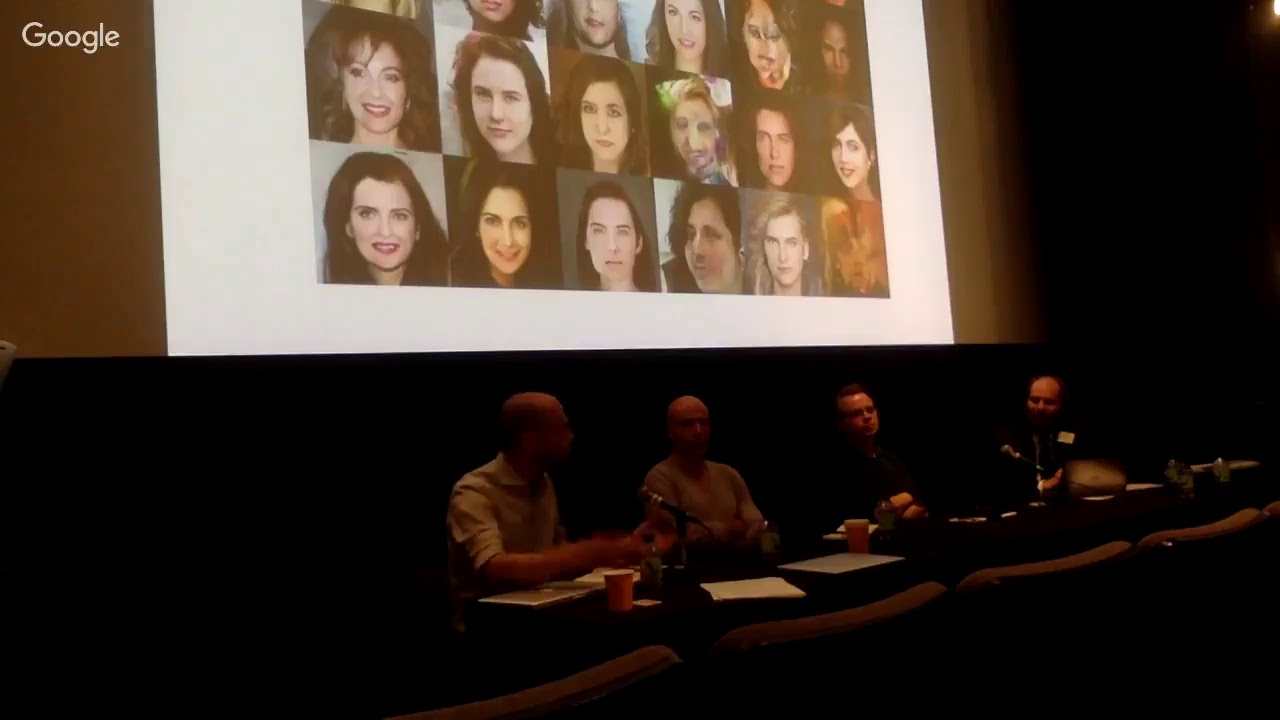
- Start of Grégory Chatonsky's presentation on artificial imagination and its implications for media invention.
Cited Sources
- Paul Ricoeur — Referenced for the concept of pre-narrative structure of experience.
- Walter Benjamin — Mentioned in relation to experts in media; his essay on the work of art in the age of mechanical reproduction.
- Louis Marin — Cited for the relationship between body and narrative in interpreting the empty tomb as origin of narrative.
- David Foster Wallace — Central to Theophanidis's discussion of media hysteresis, particularly 'Infinite Jest'.
Contribution & Novelties
The video contributes original insights by applying literary and philosophical concepts to concrete media practices, such as the Tour de France broadcast, and by proposing ‘media hysteresis’ as a novel framework for understanding how media depend on prior states. It also broadens the debate on invention of media beyond technological gadgets to include environments and imaginaries.
Pour aller plus loin :
- Media ecology — Explores media as environments, directly relevant to the discussion of media as milieu.
- Hysteresis — The physical concept adapted by Theophanidis to media; explains lag and dependence on past conditions.
- Remediation (media theory) — Bolter and Grusin’s concept, useful for understanding how literature invents and redefines media.
111 words
Radar Profile
The profile shows a balanced but moderate emphasis on information quantity and quality, with slightly lower technical depth and reliability. This reflects the interdisciplinary yet non-quantitative nature of the content, which relies on theoretical argumentation rather than empirical data.