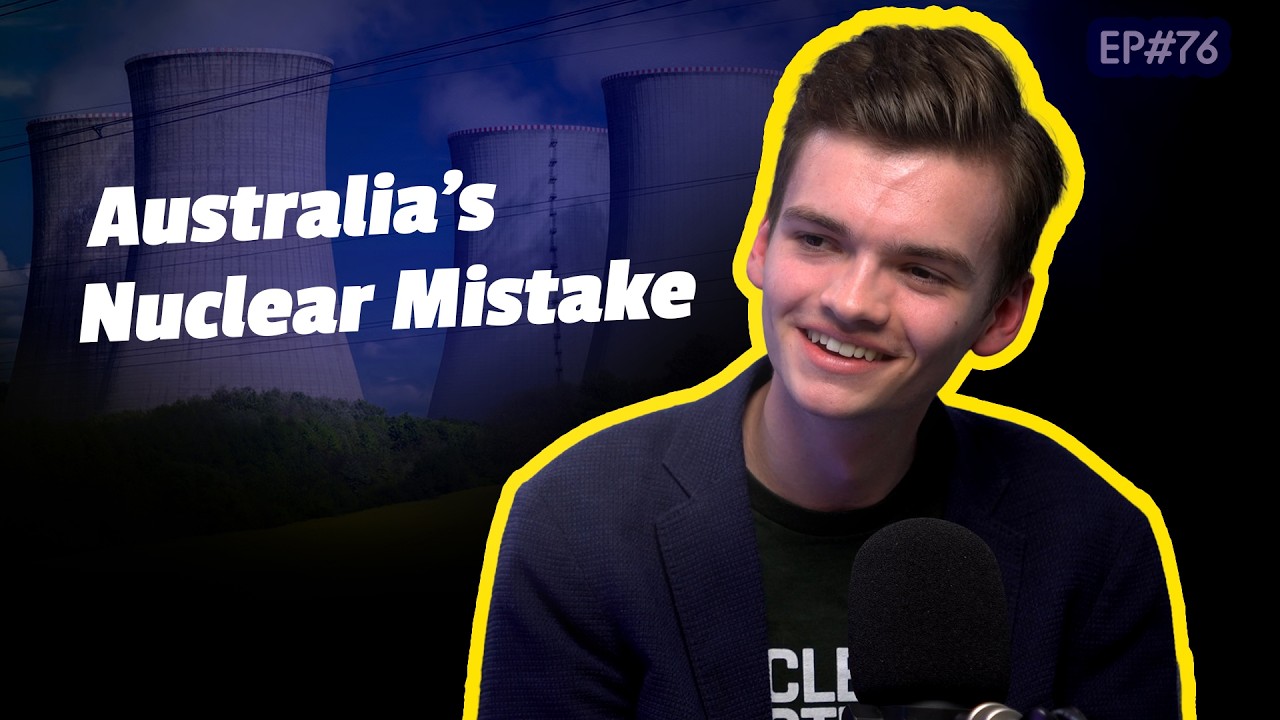
Did Cheap Solar and Batteries Kill Nuclear in Australia?
Keywords
Summary
201 words
Critical Evaluation
Value of the Information & Strength of the Argument
The value of this video lies in presenting a coherent and passionate argument for nuclear power in Australia, a topic often dominated by emotional reactions. Shackel provides several compelling points: the comparable or lower life-cycle emissions of nuclear compared to renewables, the small physical footprint of spent fuel (e.g., two TN-81 canisters from Lucas Heights), and the potential for advanced reactors to load-follow renewable sources. He also offers a candid critique of the Coalition’s failed 2025 election policy, acknowledging mistakes in communication and community engagement. However, the argumentation is primarily persuasive rather than scientific, relying heavily on selective comparisons (e.g., France’s success, Germany’s mistake) and personal conviction. The discussion lacks a rigorous cost-benefit analysis and does not deeply engage with the economic arguments against nuclear in a market flooded by cheap solar and batteries. While Shackel is articulate and well-informed, his role as an advocate means the reasoning is one-sided, omitting or downplaying challenges such as project delays, and the practicality of nuclear deployment within Australia’s regulatory framework.
Scientific Rigor, Source Quality, Title Accuracy
The video demonstrates moderate scientific rigor. Shackel references ‘Our World in Data’ for emission comparisons and mentions real projects like TerraPower’s Natrium reactor and the Lucas Heights research facility. However, no specific citations or academic papers are provided during the discussion, and the arguments are often anecdotal or based on general knowledge. The description includes links to the Your Energy Answers website, an article explaining the nuclear ban, and an installer-finding resource, which serve as general references but do not directly substantiate every claim. The title, ‘Did Cheap Solar and Batteries Kill Nuclear in Australia?’ is catchy but somewhat misleading; the video does address this question at the 29-minute mark, where Shackel argues that nuclear is still relevant because demand is projected to double and nuclear can complement renewables, but the conversation spans much wider topics like the history of the ban and safety. Overall, the title captures a key point but underrepresents the breadth of the interview. The content is more opinionated than peer-reviewed, so viewers should treat it as a starting point for further research.
360 words
Title / Content Match
The title poses a specific question addressed at 29:00, but the video covers a broader range of topics about nuclear power in Australia, making the title only partially reflective of the full content.
Quality & Reliability
6/10
The interview is conducted with a passionate nuclear advocate, offering a clear but biased perspective. It includes factual claims and references to real projects and events, but lacks rigorous citations. The quality is moderate, suitable for an initial understanding but not for academic reliability.
Chapters
- Meet Will Shackel, who started Nuclear for Australia at 16
- The attacks from both sides of politics
- The case for nuclear
- Nuclear alongside renewables
- The Coalition's mistakes and Dutton's "can of Coke" of waste
- Have cheap solar and batteries made nuclear redundant?
- What nuclear really costs, coal-site transmission and the jobs argument
- Chernobyl, Fukushima and Three Mile Island: how safe is it really?
- How the 1998 ban happened in 10 minutes, Australia's uranium exports and China's 10 reactors a year
Cited Sources
- Your Energy Answers - Official Website — Main website of the hosting channel, providing additional energy-related content.
- Find Quality Local Installers — Resource for solar installation, relevant to the renewable energy discussion.
- Why is Nuclear Power Illegal in Australia? — Article detailing the history and reasons behind the nuclear ban, referenced in the conversation.
External References
Contribution & Novelties
This video contributes by providing an accessible and passionate case for nuclear energy in Australia, framed through the lens of a young advocacy leader. It offers valuable insights into the political and social barriers, including the 1998 ban’s origin and the perceived missteps of the Coalition’s nuclear policy. While not novel for experts, it serves as a resource for newcomers to the debate. For further exploration, consider the following:
- Nuclear power in Australia — Provides a comprehensive overview of the history, policy, and current status of nuclear energy in Australia.
- Natrium reactor — Describes the TerraPower advanced reactor design mentioned in the video, including its molten salt energy storage feature.
- Radioactive waste — Explains the classification (low, intermediate, high) and management of nuclear waste, relevant to the discussion of storage and disposal.
132 words
Radar Profile
The radar profile shows a moderate level across all dimensions, with information quantity slightly higher than technical depth. The fiabilite_globale at 5/10 indicates that while the content is engaging, it should be cross-checked with primary sources. The balance reflects a conversational podcast filled with opinions and selected facts rather than a curated scientific review.