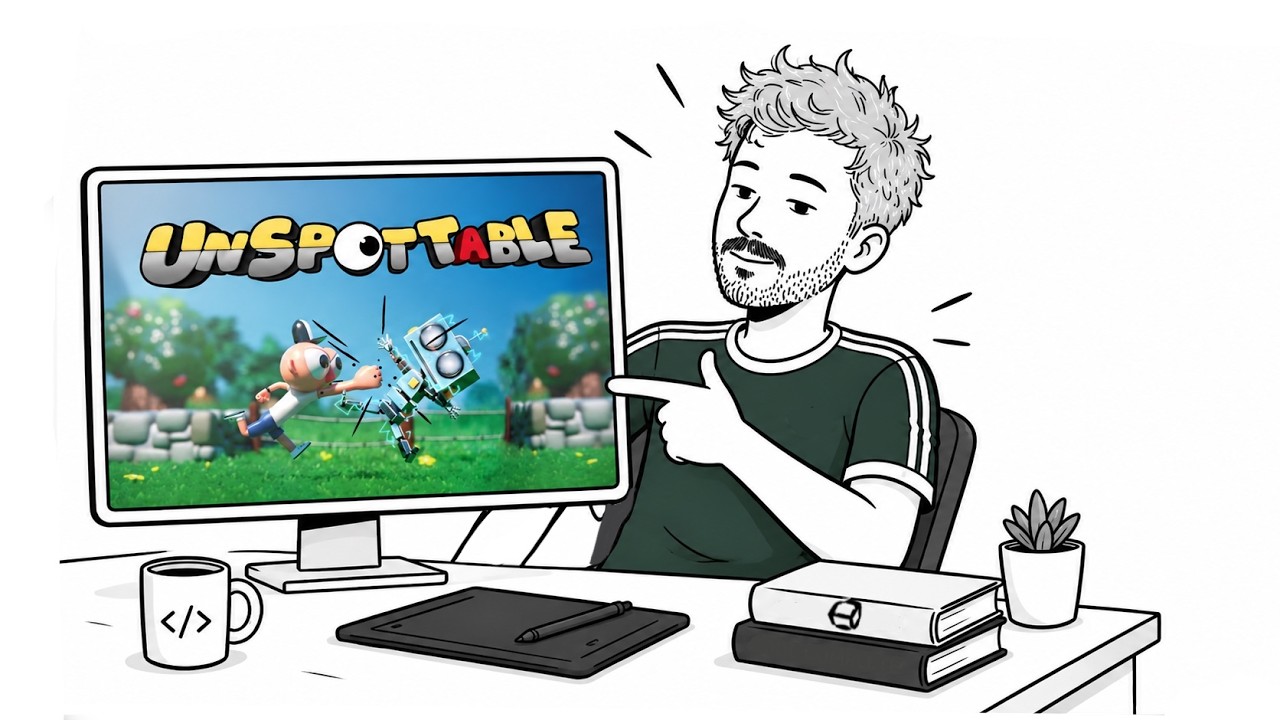
Les plus gros youtubeurs français ont joué à son jeu !
The biggest French YouTubers played his game!
Title history
- Les plus gros youtubeurs français ont joué à son jeu ! — observed on 20261110-0301 UTC (YouTube)
Keywords
Summary
202 words
Critical Evaluation
Value of the Information & Strength of the Argument
The information presented is of high value for anyone interested in the realities of indie game development, particularly in a French context. The interviewee provides rare insights into the financial mechanics of a tiny studio, such as the self-financing model based on mutual fund contributions and the anecdotal evidence that sales increased month-over-month for five years, which contradicts the usual ‘peaked shortly after release’ pattern. The argumentation is solid due to the developer’s concrete, factual statements backed by personal experience: he quantifies the sales (from ~300k to 370k), explains the specific technical hurdles of networking compared to local play, and clarifies why player review ratios may differ for social games. The narrative is structured logically, leading from personal origin to game creation to market reception, without over-claiming general knowledge—he explicitly notes his ‘weird’ sales pattern and the nuances of streaming visibility for a slow-paced game.
Scientific Rigor, Source Quality, Title Accuracy
The scientific rigor is acceptable for an interview format. The primary source is the direct testimony of a practicing developer, which is a level of evidence often overlooked in tech discussions. He is transparent about what is known (his own game’s metrics, rigging techniques) and what is uncertain (the market ratios). The description links to the studio’s game on Steam and personal project tools, providing traceable references for further exploration. The title is adequately aligned with the content: it highlights a viral success story that is a key segment of the conversation, accurately prompting viewers to click while not being misleading about the interview’s substantive discussion of game design. No external sources are cited that could be cross-referenced, but the internal consistency of the testimony and the provision of concrete numbers bolster credibility.
293 words
Title / Content Match
The title is slightly sensationalist, but accurately captures the core narrative revealed in the interview: the game's success was boosted by large French YouTubers, including the mentioned Hugo Décrypte. It fits the content well.
Quality & Reliability
8/10
The interview features a real independent game developer (Maxime Granger) who provides concrete, verifiable data points (370,000 sales, financing model with a 1/3 salary contribution, comparison of local vs online multiplayer coding challenges). The reasoning is grounded in professional experience, even if some claims about market patterns are anecdotal and not backed by external studies.
Chapters
- teaser
- Intro
- Qui es tu, que fais tu ?
- C'est quoi être supermec ?
- T'as fait quoi comme étude ?
- Pourquoi le nom gros chevaux ?
- D'ou vient cette passion pour l'art et le numérique ?
- Quels sont les différents métiers du jeu vidéo ?
- Comment t'es rentré dans le monde de l'animation ?
- Et pourquoi pas un gros studio ?
- Comment tu t'es retrouvé sur LastFight ?
- Pourquoi vous avez décidé de créer un jeu ?
- Comment vous avez financé le projet ?
- C'est quoi le pitch de ton jeu ?
- Vous avez bossé avec un éditeur ?
- Mais vous avez un mode online non ?
- C'est vrai qu'il existe un ratio review/ventes ?
- C'est quoi votre recette ?
- Et bientôt un nouveau jeu ?
- C'est quoi la suite pour le nouveau jeu ?
- Pas de projet de fusion avec un gros studio ?
- Des conseils pour ceux qui se lancent ?
- C'est quoi tes jeux préférés ?
Cited Sources
- Unspottable on Steam — Referenced in the description as the main game discussed in the interview.
- Cardburners on Steam — Referenced in the description as a secondary game project by the same studio.
- Eventually Coding Blog — The channel's blog, linked in the video description as a resource for additional content.
- Writizzy - European Blog Platform — Tool developed by the creator, cited in the description as a useful resource.
- Hakanai - Blogging Toolkit — Tool developed by the creator, mentioned in the description.
- Bloggrify - Static Blog Generator — Open-source tool created by the channel host, presented in the description.
External References
Contribution & Novelties
This video provides a unique, insider look at the economics and daily reality of a French indie game studio far from the visual effects of AAA production. The novelty lies primarily in the candid financial discussion (how they saved money, paid themselves minimal salaries, and the unusual sales trajectory of monthly growth for five years), which demystifies what is often presented as either a lottery win or quixotic venture. It also clarifies the specific technical complexity of adding online multiplayer to a game designed for local play, a point rarely articulated for general audiences.
Pour aller plus loin :
- Indie game (Wikipedia) — Useful background on the definition and historical context of independent video game development.
- Rigging (computer animation) (Wikipedia) — While the URL points to a related topic, the concept of rigging, as described in the video (matrix operations, joint constraints), is standard in 3D animation; a general search will yield solid references on the subject. Alternatively, consult a GDC talk on the subject.
- Steam (service) (Wikipedia) — Provides context on the distribution platform the studio uses, especially features like Steam Remote Play mentioned in the interview.
- Survivorship bias — Relevant when analyzing success stories like the 370,000 sales; this video is a valuable case study that perpetuates the narrative of indie success, which should be read with statistical caution.
221 words
Radar Profile
The radar reveals a profile that excels in information quantity and quality, typical of a well-structured professional interview where the subject details his career and project metrics. The technical score is decent, reflecting the explanation of rigging and networking logic, but not at a deep engineering level. The robustness score is moderate, given the single-source nature and anecdotal evidence provided by the interviewee, though the data appears internally consistent.