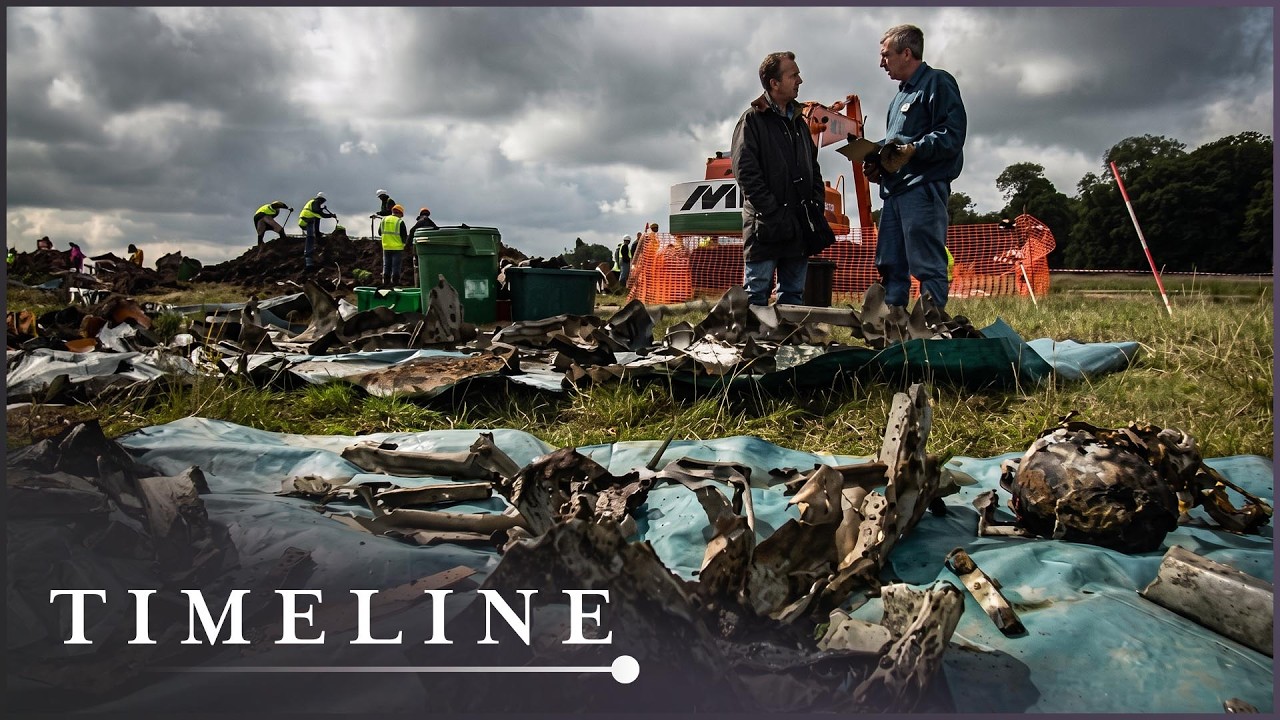
Archeologists Unearth The Wreckage Of The Norfolk B17 Collision
Keywords
Summary
172 words
Critical Evaluation
Value of the Information & Strength of the Argument
The documentary provides valuable insights into the archaeological process of investigating a crash site. It demonstrates how geophysics, excavation, and artifact analysis can answer historical questions. The argumentation is solid, relying on expert observations, eyewitness testimonies, and physical evidence. The inclusion of personal stories, such as the telegram from Hutch and the nose art painter, adds emotional weight without undermining the scientific tone. The narrative balances the need for historical accuracy with the constraints of a time-limited excavation, and the final conclusions are presented cautiously, acknowledging uncertainties.
Scientific Rigor, Source Quality, Title Accuracy
The documentary shows scientific rigor through the use of formal archaeological methods, such as trenching and recording, and the collaboration of experts like a former RAF bomb disposal sergeant and an air crash investigator. The sources used include official accident reports, eyewitness interviews, and physical artifacts. The title accurately reflects the content, as it focuses on unearthing the wreckage. The film acknowledges limitations, such as gaps in evidence and conflicting eyewitness accounts, which enhances its credibility. No external sources are explicitly cited in the description, but the investigative process is transparent.
193 words
Title / Content Match
The title accurately describes the archaeological investigation of the B-17 collision site.
Quality & Reliability
7/10
The documentary uses geophysical surveys, expert interviews, eyewitness accounts, and archaeological excavation to investigate the crash. While it is a TV production, the methods are sound and findings are presented with humility about uncertainties.
Key Moments
Markers derived by PSI from the transcript: the creator did not define chapters.
- Narration describing the collision and the aim of the excavation.
- Ian explains the crash sequence and shows the site of the first plane.
- Geophysical survey with a wheeled magnetometer identifies anomalies.
- Start of excavation; first pieces of the aircraft, including a fuel pipe and parachute shroud, are found.
- Discovery of a tail wheel retracting screw, identified by former crew chief Bob.
- Visit to Duxford Air Museum to showcase the full size of a B-17.
- Interview with Bob Goldsmith, ball gunner of another bomber, who witnessed the crash.
- Personal artifacts found; memorial painting by Annie Gordon is created.
Contribution & Novelties
The documentary offers a fresh archaeological perspective on a known WWII incident, using modern geophysical techniques and excavation to uncover new physical evidence. It also retrieves a previously unheard eyewitness account from Bob Goldsmith, providing missing testimony. The combination of material culture and oral history enriches the historical record.
Pour aller plus loin :
- Boeing B-17 Flying Fortress — Background on the aircraft type and its role.
- Big Week — Context of the bombing campaign the crews participated in.
- Conflict archaeology — The study of recent conflict sites, relevant to this excavation approach.
93 words
Radar Profile
The radar profile shows a robust documentary with high information quantity (8) and solid quality (7), while technical depth and overall reliability are slightly lower, reflecting its accessible TV format and some speculative elements.