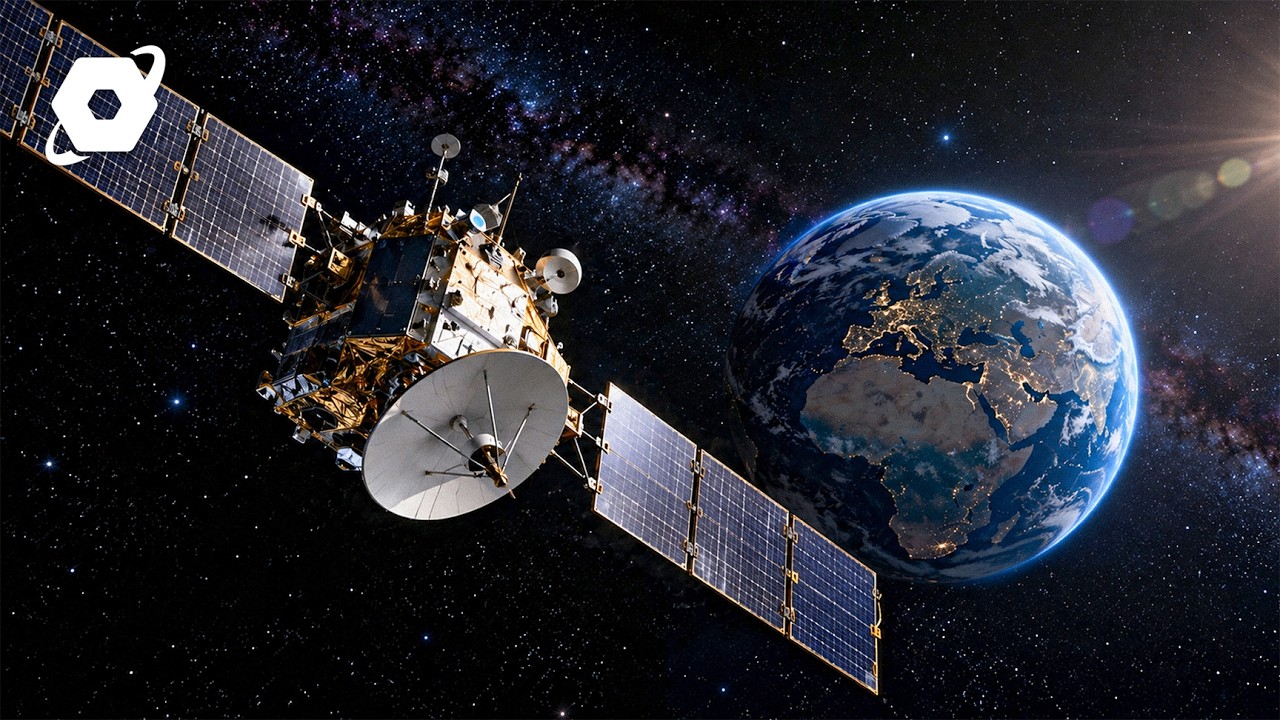
Inside the Spy Satellites That See Through Clouds and Darkness | The Military Tech Show
Keywords
Summary
187 words
Critical Evaluation
Value of the Information & Strength of the Argument
The video provides valuable insight into the capabilities and applications of SAR technology, featuring direct interviews with scientists and demonstrations of real-world testing. The argumentation is clear and logical, explaining the principles of SAR in accessible terms while showcasing concrete examples. The inclusion of the landmine detection segment adds a humanitarian dimension that strengthens the overall value. However, the presentation is more descriptive than analytical, with limited critical discussion of limitations or controversies. The reliance on a single institutional source (DLR) gives a one-sided perspective, though the expertise is credible.
Scientific Rigor, Source Quality, Title Accuracy
Scientific rigor is moderate: the video relies on expert testimony and demonstrations from DLR, which is a reputable institution, but does not cite specific publications or data sources. The quality of sources is adequate for a documentary, but the lack of external references limits verifiability. The title accurately describes the content, focusing on spy satellites that see through clouds and darkness, which is exactly what the video covers. No comments were provided for analysis, so public reception could not be assessed.
186 words
Title / Content Match
The title accurately reflects the content: the video focuses on spy satellites, specifically German radar satellites that can see through clouds and darkness, and includes military applications.
Quality & Reliability
7/10
The documentary provides a solid overview of synthetic aperture radar (SAR) technology, with direct input from DLR scientists and demonstrations of practical applications. However, it relies primarily on narrative and visual demonstrations rather than cited primary literature, and the interview content is secondary. The information is accurate and well-presented, but the depth is limited and sources are not explicitly referenced in the video itself.
Key Moments
Markers derived by PSI from the transcript: the creator did not define chapters.
- Interview with author Mary Roach about her military science book
- Introduction to German Aerospace Center and SAR technology
- Explanation of synthetic aperture radar principles
- The anechoic chamber with 50,000 absorbing cones
- Segue to landmine detection research
- Dr. Marcus Pyhil explains landmine buried in test area
- Truck-mounted SAR system for scanning large areas
- Results showing detection of anti-tank mines at 15 cm depth
Cited Sources
- Spotify link for the show — Provided in the video description as an alternative audio platform for the show.
Concurring Sources
- DLR official pages on TerraSAR-X — The video's claims align with DLR's public descriptions of the satellite's capabilities.
- Wikipedia article on Synthetic-aperture radar — Provides background on SAR technology consistent with the video's explanations.
Contribution & Novelties
The documentary offers valuable insight into the practical applications of SAR technology, particularly its dual-use nature and recent advances in civilian contexts. It shows how military-originated radar technology is now being adapted for humanitarian purposes like landmine detection, which is a novel angle.
Pour aller plus loin :
- Synthetic-aperture radar (Wikipedia) — Provides a comprehensive overview of SAR principles and history.
- TerraSAR-X (DLR official) — Details on the TerraSAR-X satellite mission and its capabilities.
- TanDEM-X (Wikipedia) — Explains the TanDEM-X mission and its role in generating a global digital elevation model.
- German Aerospace Center (DLR) — Official site of the institution featured, offering information on their research.
107 words
Radar Profile
The radar chart would show moderate scores across all dimensions, with slightly higher marks for information quantity and quality, reflecting a well-structured but not deeply technical documentary. The balance between technical explanation and accessibility is reasonable, making it suitable for a general audience interested in military technology.