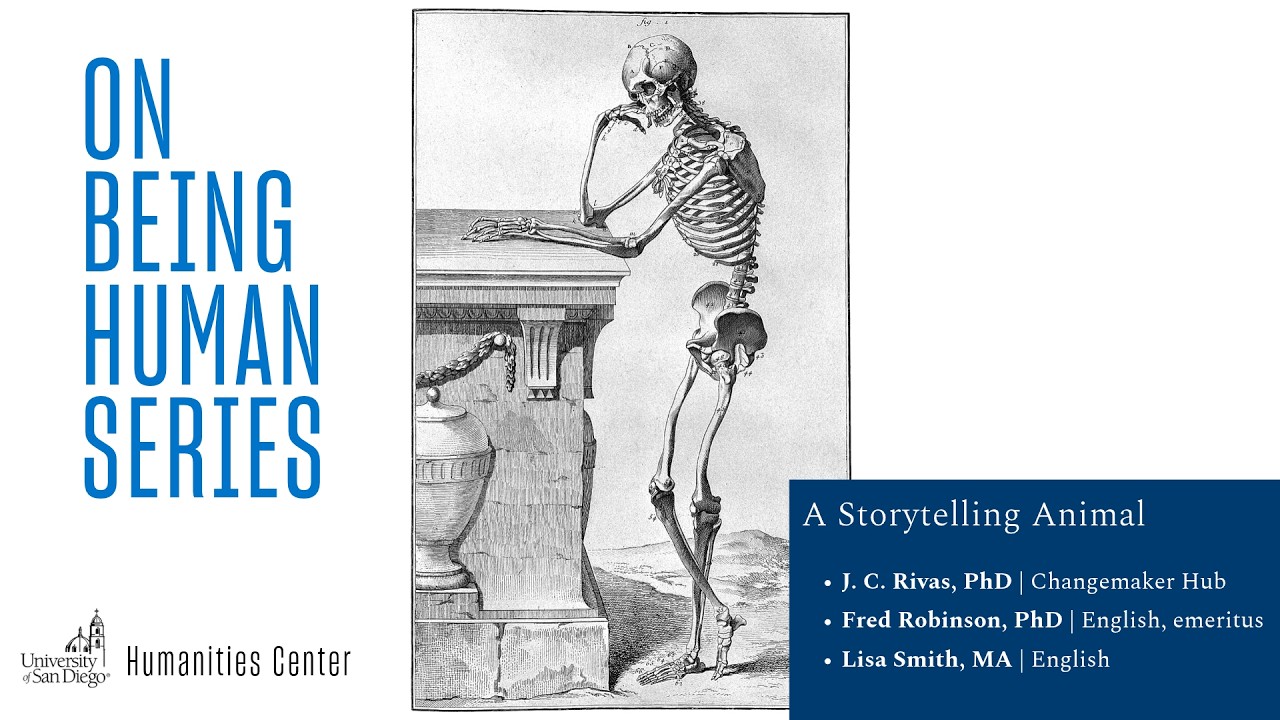
On Being Human | A Storytelling Animal
Keywords
Summary
153 words
Critical Evaluation
Value of the Information & Strength of the Argument
The value lies in the effective synthesis of literary classics with personal narrative, demonstrating how storytelling serves both individual introspection and communal bonding. Lisa Smith’s argument that writing externalizes the inner self is well-supported with quotations and examples, particularly the analysis of Orwell’s protagonist discovering his rebellious thoughts through diary writing. J.C. Rivas’s use of the ‘I want song’ metaphor provides a fresh lens for understanding personal motivation and identity, and his vulnerability in sharing his own story strengthens the argument for authenticity. The argumentation is coherent, blending erudition with relatable anecdote, though some parts feel more inspirational than rigorously analytical.
Scientific Rigor, Source Quality, Title Accuracy
The speakers are credible academics, and the literary works cited—Orwell, Didion, Montaigne, Anne Frank, Woolf, and others—are accurately represented. However, no formal citations or external links are provided, and the talk is presented for a general audience. The title aligns with the content, which focuses on storytelling as a core aspect of humanity. The discussion is tasteful and well-structured, though the lack of explicit source documentation diminishes its rigor.
185 words
Title / Content Match
The title accurately captures the theme of storytelling as a defining human trait, matching the content of the presentations.
Quality & Reliability
7/10
The talk features university faculty and covers classic literature and personal reflections on storytelling. References to canonical works are accurate, but no external citations are provided and the latter portion relies heavily on personal anecdotes.
Key Moments
Markers derived by PSI from the transcript: the creator did not define chapters.
- Introduction to the series and speakers, including Tom R of the Humanities Center.
- Lisa Smith discusses George Orwell's 1984 and the power of diary writing for self-revelation.
- Lisa Smith quotes Joan Didion's 'Why I Write' and elaborates on writing to discover one's thoughts.
- Lisa Smith covers Michel de Montaigne's essays as the foundation of personal writing.
- Lisa Smith discusses Anne Frank's diary as a symbol of resistance and the human need to be heard.
- J.C. Rivas introduces the 'I want song' concept from musical theater, linking it to personal identity.
- J.C. Rivas shares his own coming-out story and how storytelling empowered him to live authentically.
Cited Sources
- 1984 by George Orwell — Mentioned in Lisa Smith's talk as an example of diary writing revealing forbidden thoughts.
- Why I Write by George Orwell — Cited as the inspiration for the talk and for its title.
- Why I Write by Joan Didion — Quoted to illustrate writing as a process of self-discovery.
- Essays by Michel de Montaigne — Discussed as the foundational text of the personal essay genre.
- The Diary of Anne Frank — Presented as a powerful example of diary writing under oppression.
Contribution & Novelties
The talk offers a personal and literary exploration of storytelling, emphasizing the role of diaries and personal essays in self-discovery and philosophical reflection. The speakers connect personal anecdotes with classic literature, providing a lens on the human need for narrative. This is not new research but a compelling synthesis that highlights the enduring power of written self-reflection.
Pour aller plus loin :
- Diary - Wikipedia — Provides context on the history and significance of diary writing.
- Personal essay - Wikipedia — Elaborates on the genre discussed.
- Michel de Montaigne - Wikipedia — Background on the essayist referenced.
- Storytelling - Wikipedia — General overview of storytelling as a human trait.
109 words
Radar Profile
The radar profile shows high scores in quality of information and reliability, moderate in quantity, and low in technical level, reflecting a humanities-oriented discussion aimed at a general audience. The talk excels in contextual depth and credible academic references, while the absence of dense technicality keeps it accessible.