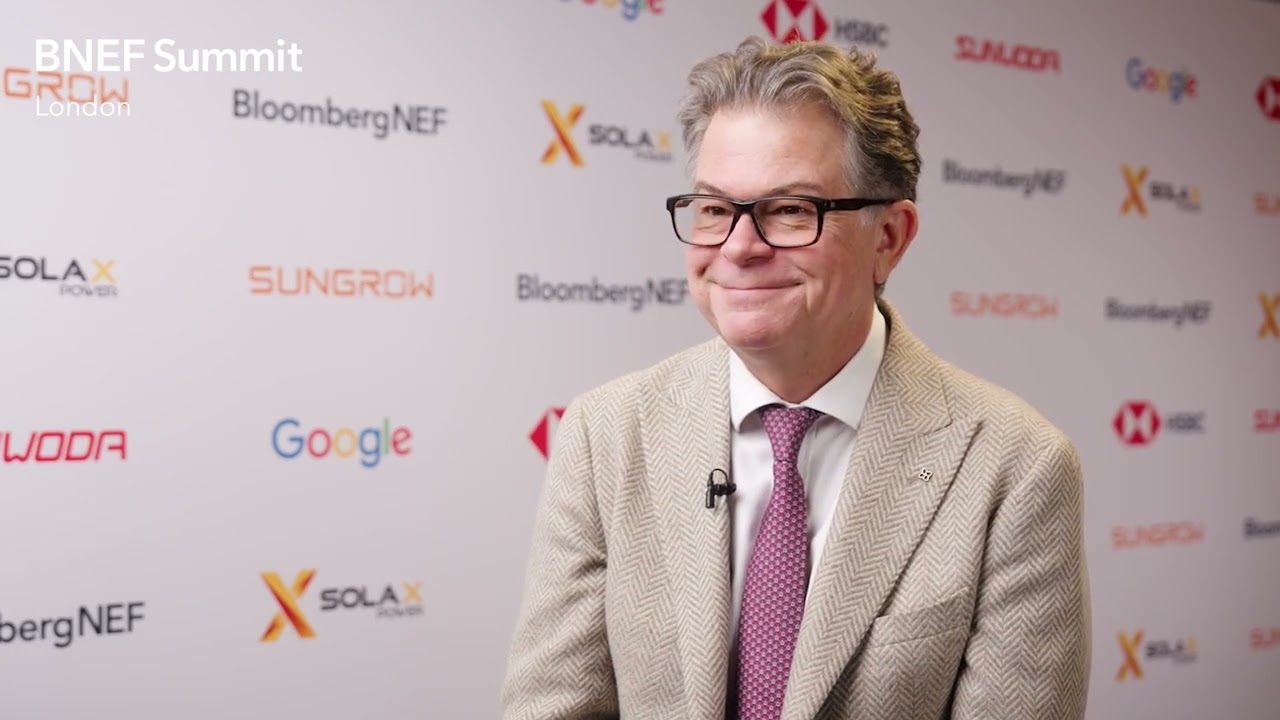
BloombergNEF x Mikal Bøe Interview - October 2026
Title history
- BloombergNEF x Mikal Bøe Interview - October 2026 (PSI archive)
- BloombergNEF x Mikal Bøe Interview - October 2026 — observed on 20261103-1521 UTC (YouTube)
Keywords
Summary
204 words
Critical Evaluation
Value of the Information & Strength of the Argument
The value of the information lies in the insider perspective of a CEO actively developing floating nuclear power and nuclear shipping. Bøe offers a coherent narrative of how nuclear energy can be industrialized through shipyard construction, citing concrete examples of investor support and government engagement. The argumentation is persuasive but largely promotional, focusing on the potential benefits while downplaying technical and safety challenges that a neutral expert would address. The reasoning about financing structures (development finance, infrastructure, construction finance) is logical and provides a useful framework for understanding how such projects could be funded. The comparison between building airports versus aircraft is compelling as a metaphor for productizing nuclear. However, the discussion remains at a strategic level, with little quantitative data or risk analysis, which limits the depth of the argument.
Scientific Rigor, Source Quality, Title Accuracy
The video is an interview, so the primary source is Mikal Bøe himself. He references two UN agencies (IMO and IAEA) and an agreement with the US government, but provides no specific documents or links. The quality of sourcing is moderate: the claims are plausible but unverifiable from the video alone. The title accurately describes the content as a BloombergNEF interview, and the topic is consistent throughout. No conflicting evidence is presented, but the inherent bias of a company founder promoting his own venture reduces the scientific rigor. The lack of critical questioning from the interviewer also contributes to a one-sided perspective.
248 words
Title / Content Match
The title accurately reflects the content: a BloombergNEF interview with Mikal Bøe, CEO of CORE POWER, focusing on nuclear energy in maritime applications.
Quality & Reliability
5/10
A single-source interview with a company's CEO, offering a commercial perspective on nuclear maritime technology. Claims are not independently verifiable within the video, and there is a clear promotional bias. However, the content covers regulatory, financial, and technological aspects.
Key Moments
Markers derived by PSI from the transcript: the creator did not define chapters.
- Introduction: Mikal Bøe defines CORE POWER's mission to deploy nuclear energy in maritime transport and energy generation.
- Discussion of shipping industry investors who have supported CORE POWER for six years.
- Bøe explains the need for a harmonized regulatory framework involving the IMO and IAEA, and highlights the US agreement as a national champion.
- Overview of three financing pillars: development finance, infrastructure for shipyards, and construction finance using ship finance models.
- Bøe argues that floating nuclear power plants will likely come first, offering examples of their use for coastal utilities and replacement cycles.
- Final thoughts on integrating nuclear with renewables and oil/gas, and the need to transform nuclear from a megaproject into a purchasable product.
Cited Sources
- BloombergNEF Summit London — The interview was recorded at this summit, as stated in the video description.
- International Maritime Organization — Mentioned as one of the UN agencies regulating shipping, involved in creating a regulatory framework.
- International Atomic Energy Agency — Mentioned as the other UN agency responsible for nuclear regulation, working on harmonized rules.
- US government agreement — Bøe mentions signing an agreement with the US government to be the national champion for this technology.
Contribution & Novelties
The interview provides a current company perspective on the commercial strategy for nuclear-powered maritime applications, including a specific financing model and regulatory roadmap. While not entirely novel, it offers a practical view of how floating nuclear power plants could be productized, which adds to the ongoing discourse on decarbonizing shipping and expanding nuclear energy.
Pour aller plus loin :
- Floating nuclear power plant — This concept is central to the interview; provides background on known projects like Akademik Lomonosov.
- Small modular reactor — Bøe’s floating plants are described as the best SMRs; this article details the broader SMR context.
- Nuclear marine propulsion — Discusses the history and technical aspects of nuclear-powered ships, relevant to the nuclear-powered ships mentioned by Bøe.
120 words
Radar Profile
The scores indicate a moderate volume of information with a relatively higher technical content, but overall reliability is constrained by the promotional nature of the interview. The radar profile suggests a balanced but not exceptional source, where the depth of technical discussion is offset by the lack of independent validation.