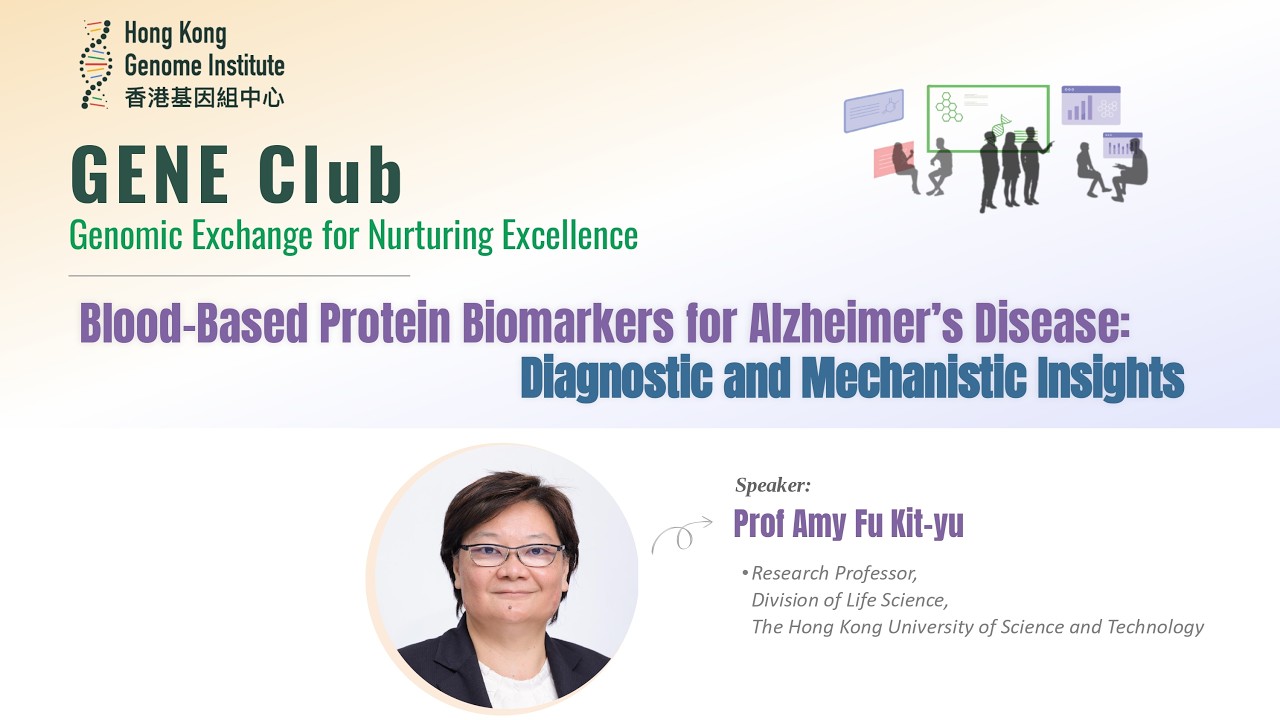
【Blood-Based Protein Biomarkers for Alzheimer’s Disease: Diagnostic and Mechanistic Insights】
Title history
- 【Blood-Based Protein Biomarkers for Alzheimer’s Disease: Diagnostic and Mechanistic Insights】 — observed on 20261027-0337 UTC (YouTube)
Keywords
Summary
264 words
Critical Evaluation
Value of the Information & Strength of the Argument
The value of the information is high: Prof Fu presents novel data on a multi-protein blood test that outperforms existing p-tau217 alone, and she introduces a brain-derived p-tau217 assay that addresses a known limitation (peripheral tau interference). The argumentation is data-driven, with clear references to their own cohort and validation set, and comparisons against established biomarkers. She also provides mechanistic context linking blood biomarkers to brain pathology, such as hippocampal volume and white matter hyperintensities. However, the talk is essentially a presentation of her own group’s research, with limited critical discussion of potential limitations or independent replication. The evidence is compelling but primarily self-reported, and further external validation would strengthen the conclusions.
Scientific Rigor, Source Quality, Title Accuracy
The scientific rigor is generally sound: the speaker cites specific FDA approvals, uses standardised measures like centiloid scale, and mentions advanced proteomic platforms (e.g., O-link, NULISA). She also references a published paper (TRAM2 variant) but does not provide a citation or journal name during the talk. The title is fully aligned with the content, as the presentation consistently discusses blood-based protein biomarkers for both diagnosis (detecting amyloid pathology) and mechanistic understanding (e.g., ST2 signalling). No external sources are provided in the video description, and the talk is self-contained. The lack of DMCA or external references is not a major weakness given the seminar format, but the absence of explicit URLs or citations limits verification.
241 words
Title / Content Match
The title accurately reflects the content: the presentation focuses on blood-based protein biomarkers for Alzheimer's disease, covering both diagnostic applications and mechanistic insights.
Quality & Reliability
8/10
The talk is delivered by a research professor with a strong publication record, uses data from a large well-characterised cohort, and mentions FDA approvals and advanced proteomic platforms. However, it is a self-presented seminar without external peer-review in the video itself.
Key Moments
Markers derived by PSI from the transcript: the creator did not define chapters.
- Introduction to Alzheimer's prevalence and need for early diagnosis
- Description of Hong Kong cohort with 7,000 participants and multi-omics data
- Presentation of blood-based multiprotein test improving detection of early AD
- Use of machine learning to predict amyloid PET centiloid values
- Discussion of peripheral tau interference and brain-derived p-tau217 assay
- Introduction of soluble ST2 as potential therapeutic target and genetic variant TRAM2
Cited Sources
- Paper on TRAM2 H157Y variant (mentioned in talk) — Referenced as a study identifying a genetic risk factor associated with AD in non-European populations and linked to neurodegeneration and autoimmune response.
Contribution & Novelties
The presentation offers novel insights into blood-based biomarkers for Alzheimer’s disease, particularly the development of an integrative protein panel that captures multiple biological pathways (inflammation, vascular dysfunction, metabolism) beyond the traditional ATN framework. The introduction of a brain-derived p-tau217 assay demonstrates improved specificity by reducing interference from peripheral tau and kidney dysfunction. The use of machine learning to predict amyloid centiloid values from blood proteins suggests a feasible alternative to PET imaging for screening and monitoring. Mechanistically, the identification of soluble ST2 as a potential biomarker and therapeutic target adds to understanding of IL-33/ST2 signalling in AD.
Pour aller plus loin :
- Amyloid beta — Core protein in AD pathology, relevant to biomarker development.
- Tau protein — Key component of neurofibrillary tangles and target of p-tau biomarkers.
- Alzheimer’s disease — Overview, including diagnosis and biomarkers.
- Interleukin-33 — Cytokine involved in immune response, related to ST2 signalling discussed in the talk.
- Machine learning in medical diagnostics — Context for the predictive modelling approach used.
163 words
Radar Profile
The radar profile shows consistent high scores across all dimensions, with a slight dip in trickiness for the technical level (referring to advanced proteomics and ML). The overall pattern indicates a well-rounded, informative seminar with strong scientific backing.