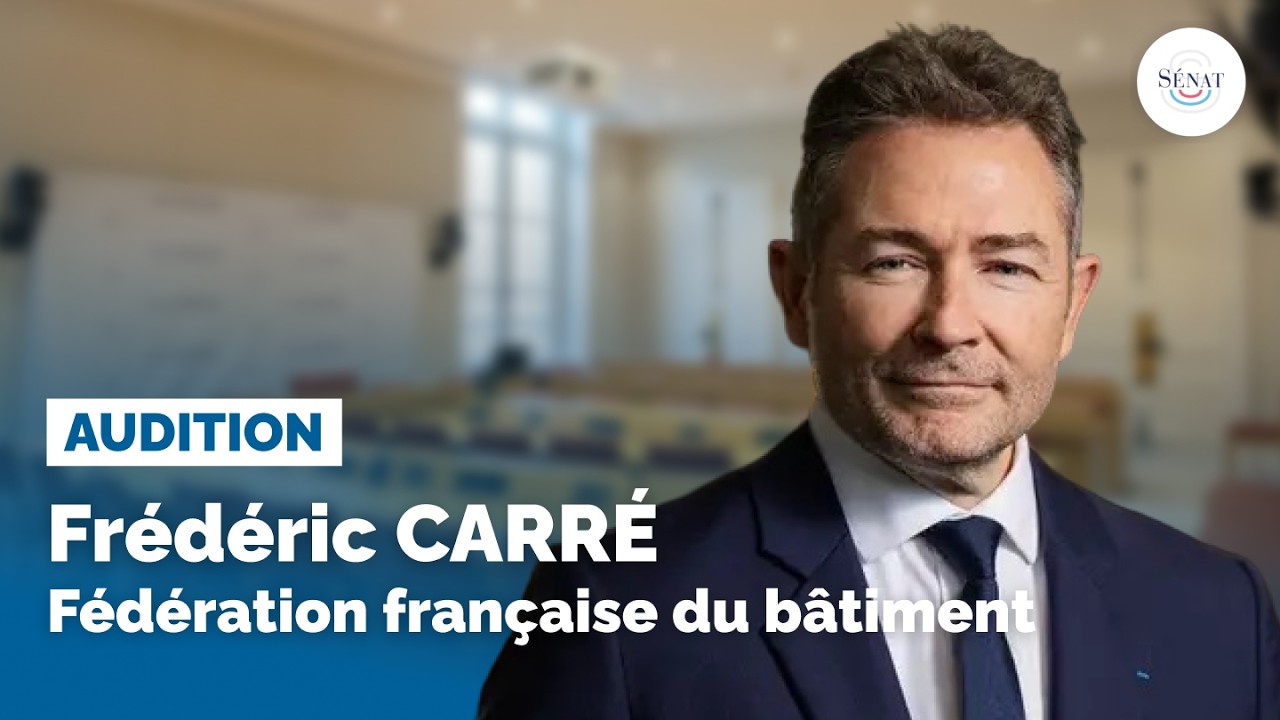
Audition de la Fédération française du bâtiment
Hearing of the French Building Federation
Title history
- Audition de la Fédération française du bâtiment — observed on 20261030-1055 UTC (YouTube)
Keywords
Summary
200 words
Critical Evaluation
Value of the Information & Strength of the Argument
The value of the information is high due to the direct expertise of the speaker, who leads the main employer federation for the sector. He provides concrete figures (e.g., 300,000 homes, 1.7 million employees, 53 billion euros net contribution to public finances) and clearly articulates the sector’s challenges and proposed solutions. The argumentation is structured around five well-defined priorities, each supported by rationales and specific policy recommendations. However, the perspective is inherently that of an industry advocate, so the arguments are selective and oriented toward deregulation and subsidies. The strength of the argumentation lies in its consistency and the use of quantitative data, but the lack of independent sources and the absence of counterarguments reduce its scientific rigor.
Scientific Rigor, Source Quality, Title Accuracy
The hearing is an official legislative process, which lends a degree of institutional reliability to the statements. However, the president of the FFB presents figures without citing specific studies or reports, relying on general knowledge and his own experience. The title ‘Hearing of the French Building Federation’ is direct and accurate; the content indeed corresponds to a formal audition. No external sources are provided in the description, and the video itself does not reference published studies or reports. The rigor is therefore limited to the authority of the speaker and the setting, but not backed by verifiable academic or institutional sources. The title perfectly matches the content.
240 words
Title / Content Match
The title accurately reflects the content: a formal Senate hearing with a representative of the building sector.
Quality & Reliability
7/10
The presentation is well-structured and detailed, coming from the president of the sector's main employer federation, but remains a stakeholder perspective without independent verification. The figures cited are presented without sources.
Key Moments
Markers derived by PSI from the transcript: the creator did not define chapters.
- Opening by committee president Dominique Estrosi Sassone, welcoming the FFB president and setting the context of the housing crisis.
- Frédéric Carré begins his opening statement, describing the socio-economic impact of the housing crisis and the sector's importance.
- Carré details the first priority: enabling French people to access housing, covering homeownership, mobility, and social housing.
- He explains the second priority: an ecology that supports employment and purchasing power, criticizing regulations like RE2020 and the REP system.
- Discussion of the third and fourth priorities: simplifying norms and enhancing business competitiveness, including lowering labor costs.
- Carré introduces the fifth priority about preparing for the future through innovation, technology, and adaptation to an aging population.
- Q&A session begins with senators questioning the REP reform, eco-PTZ, and other measures.
Contribution & Novelties
The hearing provides a comprehensive and up-to-date overview of the French building sector’s perspective on the ongoing housing crisis, including specific policy proposals. While many arguments are known, the presenter’s emphasis on the financial contribution of housing to public finances and the call to reduce norms is noteworthy. The discussion also highlights the sector’s fears regarding the proposed pension reform and its impact on employment.
Pour aller plus loin :
- RE2020 (French environmental regulation for buildings) — Provides background on the regulation Carré mentions as an example of norm inflation.
- MaPrimeRénov’ (French renovation aid scheme) — Context for the changes in renovation incentives and their criticism.
- French Housing Crisis (general background) — Supplementary perspective on the structural issues discussed in the hearing.
122 words
Radar Profile
The radar profile is balanced with slightly higher scores in quantity and quality of information, reflecting the detailed but stakeholder-specific content. The lower technical level indicates the non-expert but informed nature of the discussion, and the reliability is acceptable given the official context.