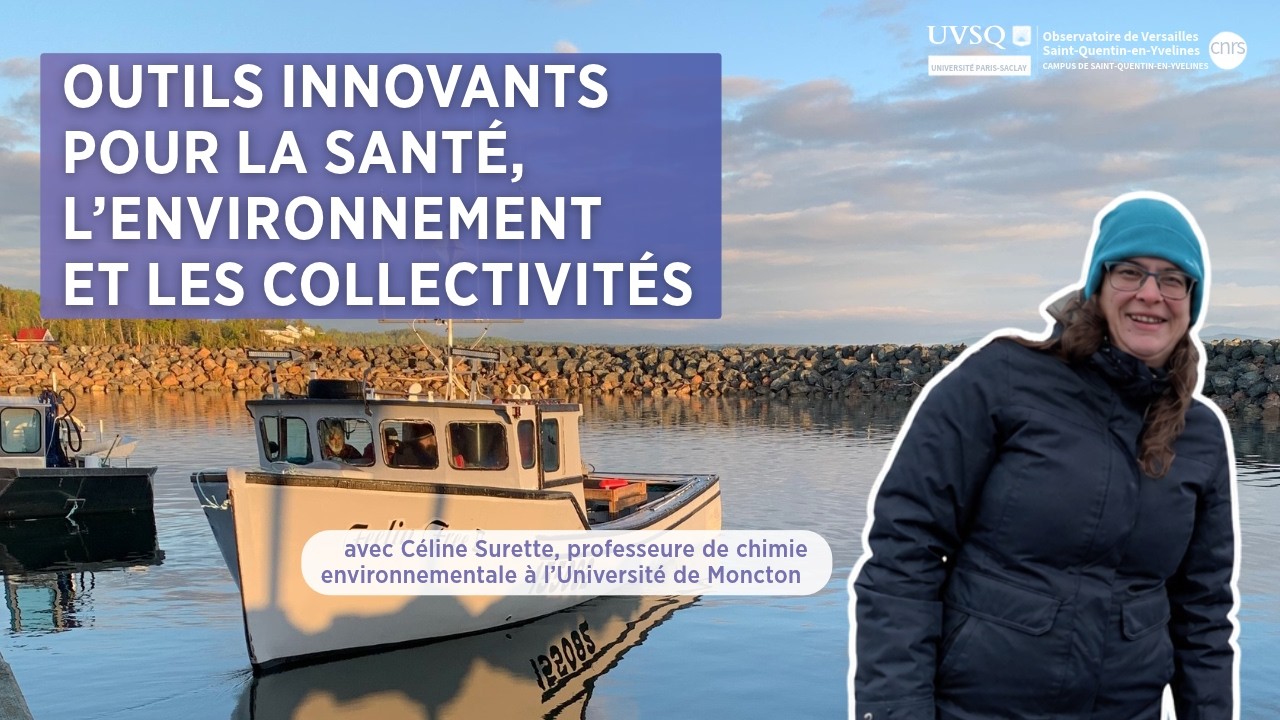
Conférence de Céline Surette, le 2 octobre 2026, Observatoire de Versailles St-Quentin-en-Yvelines
Lecture by Céline Surette, October 2, 2026, Observatoire de Versailles St-Quentin-en-Yvelines
Title history
- Conférence de Céline Surette, le 2 octobre 2026, Observatoire de Versailles St-Quentin-en-Yvelines — observed on 20261102-1123 UTC (YouTube)
Keywords
Summary
152 words
Critical Evaluation
Value of the Information & Strength of the Argument
The lecture provides valuable insights into community-based transdisciplinary research methods, with practical examples that demonstrate the utility of visual tools in fostering dialogue and uncovering environmental health linkages. The argumentation is grounded in the speaker’s extensive field experience and the positive outcomes observed in specific cases. However, the claims are largely qualitative and anecdotal, lacking robust systematic evidence or comparative analysis. The speaker positions the work within a broader critical framework, acknowledging colonial histories and systemic inequalities, which strengthens the ethical dimension of the argument. The rationale for the NB Ecoscreen is compelling, but the presentation does not include detailed validation or limitations of the tool, limiting the overall persuasiveness.
Scientific Rigor, Source Quality, Title Accuracy
The scientific rigor is moderate; the speaker draws on her own projects and collaborations, but the presentation lacks explicit references to peer-reviewed literature or external data. The quality of sources is therefore limited to the described partnerships and funding from institutions like the Canadian Institutes of Health Research. The title is generic and does not reflect the specific content, which is a minor discrepancy. The internal coherence of the talk is good, with clear progression from context to methods to case studies, though the lack of quantitative evidence and potential biases in community-based research are not critically examined.
223 words
Title / Content Match
The provided title is a generic conference announcement; it does not describe the specific topic, which is about innovative tools for health, environment and communities. The content matches the announced theme, but the title lacks specificity.
Quality & Reliability
7/10
The lecture presents original research and practical tools based on field experience, but relies mostly on anecdotal evidence and lacks formal citations. The speaker is a reputable professor, but the content is presented in a generalist setting.
Key Moments
Markers derived by PSI from the transcript: the creator did not define chapters.
- Acknowledgment of Indigenous territories and reconciliation context
- Overview of New Brunswick's demographic and health challenges
- Introduction to the network of community organizations and ecosystem approaches to health
- Explanation of visual methods, particularly photovoice, and their role in dialogue
- Application of photovoice with schoolchildren and farmers, revealing hidden environmental issues
- Development of the NB Ecoscreen tool, integrating health, environmental, and socioeconomic data
- Case study of Belledune, an industrial town, and community mobilization around health concerns
- Concluding remarks on the importance of process, equity, and community empowerment
Cited Sources
- Instituts de recherche en santé du Canada (IRSC) — Funding organization for the research network and tools presented, including the NB Ecoscreen project.
- Réseau environnemental du Nouveau-Brunswick — Key community partner in developing and testing the tools, particularly for photovoice sessions and community engagement.
Contribution & Novelties
The lecture contributes an original perspective on integrating health, environment, and community concerns through participatory tools. It showcases two distinct innovations: the widespread use of photovoice to facilitate cross-sectoral dialogue, and the NB Ecoscreen index that combines diverse datasets to map vulnerability. The emphasis on iterative co-development with local partners is a notable methodological strength.
Pour aller plus loin :
- Photovoice — A participatory research method used to give voice to communities through photography, foundational to the first tool presented.
- Ecohealth — An approach that integrates ecosystem health and human health, closely related to the ecosystem approaches to health framework described.
- Transdisciplinarity — A research strategy that transcends disciplinary boundaries, central to the speaker’s methodology.
115 words