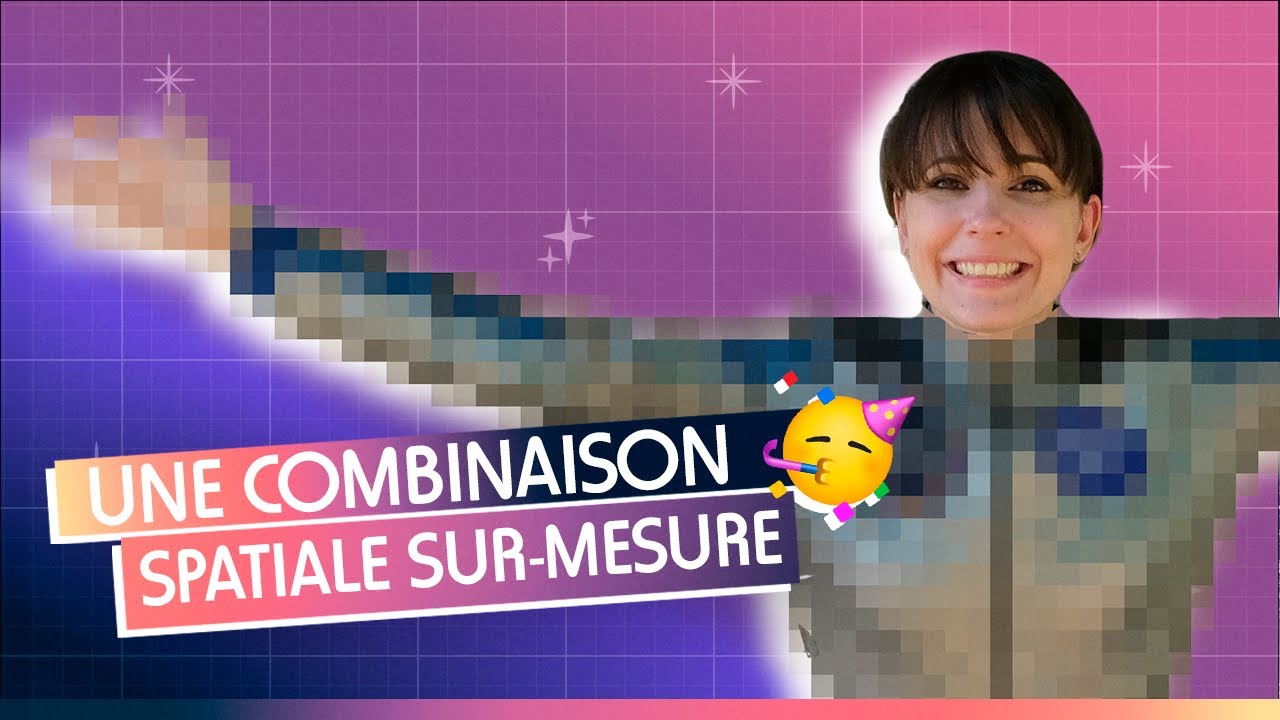
10 MOIS pour faire ma propre combinaison SPATIALE 👩🚀
10 MONTHS to make my own SPACESUIT 👩🚀
Title history
- 10 MOIS pour faire ma propre combinaison SPATIALE 👩🚀 — observed on 20261101-0203 UTC (YouTube)
Keywords
Summary
200 words
Critical Evaluation
Value of the Information & Strength of the Argument
The video offers a valuable personal perspective on spacesuit design, bridging technical facts with accessible storytelling. It successfully argues that spacesuits are not purely functional but also carry cultural and historical significance, as seen in the Mercury 7 reference. The maker clearly justifies her design choices (silver color, intra-vehicular type) with scientific reasoning, such as thermal reflection or emergency visibility. The argumentation is solid for a general audience, though it remains at an introductory level. The inclusion of the collaborative process with a seamstress adds authenticity and demonstrates the interdisciplinary nature of such projects.
Scientific Rigor, Source Quality, Title Accuracy
The video maintains scientific credibility through its use of external sources, including a Wikipedia article on spacesuits, a Space.com piece on Mercury 7, a BBC article on current spaceflight, and a video reference. These are cited in the description but not explicitly discussed on camera. The content aligns well with these sources in broad terms. The title accurately describes the video’s timeline and main theme. No significant contradictions were observed between the claims made and the provided references. The vlog format reduces rigorous technical depth, but the information presented is consistent with common knowledge about spacesuit design.
206 words
Title / Content Match
The title faithfully reflects the content: the creator documents a 10-month project to craft her own spacesuit, culminating in a final reveal.
Quality & Reliability
7/10
The video blends personal vlog with science communication, citing reputable sources like Wikipedia, Space.com, and BBC. While not deeply technical, it accurately explains key spacesuit concepts (intra- vs extra-vehicular, thermal regulation) and references historical missions (Mercury 7). The maker's hands-on process is transparent, though some scientific details are oversimplified.
Chapters
Cited Sources
- Combinaison spatiale — Wikipédia — General reference on spacesuit types and history, cited in the video description.
- NASA Mercury 7: First Americans in Space — Reference for the Mercury 7 astronauts and their silver suits, mentioned in the video.
- BBC News — Science & Environment — Supplementary article on spaceflight, linked in the description for further reading.
- YouTube video resource — Additional video reference related to spacesuits, provided in the description.
Contribution & Novelties
The video’s original contribution lies in its first-person, behind-the-scenes documentation of designing and fabricating a spacesuit, which is rarely shown in such detail. It personalizes the science, making it relatable and demonstrating the practical considerations (cost, materials, collaboration) that go into real space equipment. The emphasis on fashion as a legitimate design factor (e.g., seeking Prada, SpaceX-MARVEL collaboration) adds a fresh perspective.
Pour aller plus loin :
- Space suit — Wikipedia — Overview of spacesuit designs and functions.
- Mercury Seven — Wikipedia — Historical context for the astronauts and their suits.
- Intravehicular activity — Wikipedia — Clarifies the type of suit used inside spacecraft.
104 words
Radar Profile
The radar profile shows higher ratings in quality and reliability, reflecting the accurate but basic scientific content, while technical depth is moderate. The information quantity is sufficient for the vlog style, and overall the video delivers solid, engaging science communication.