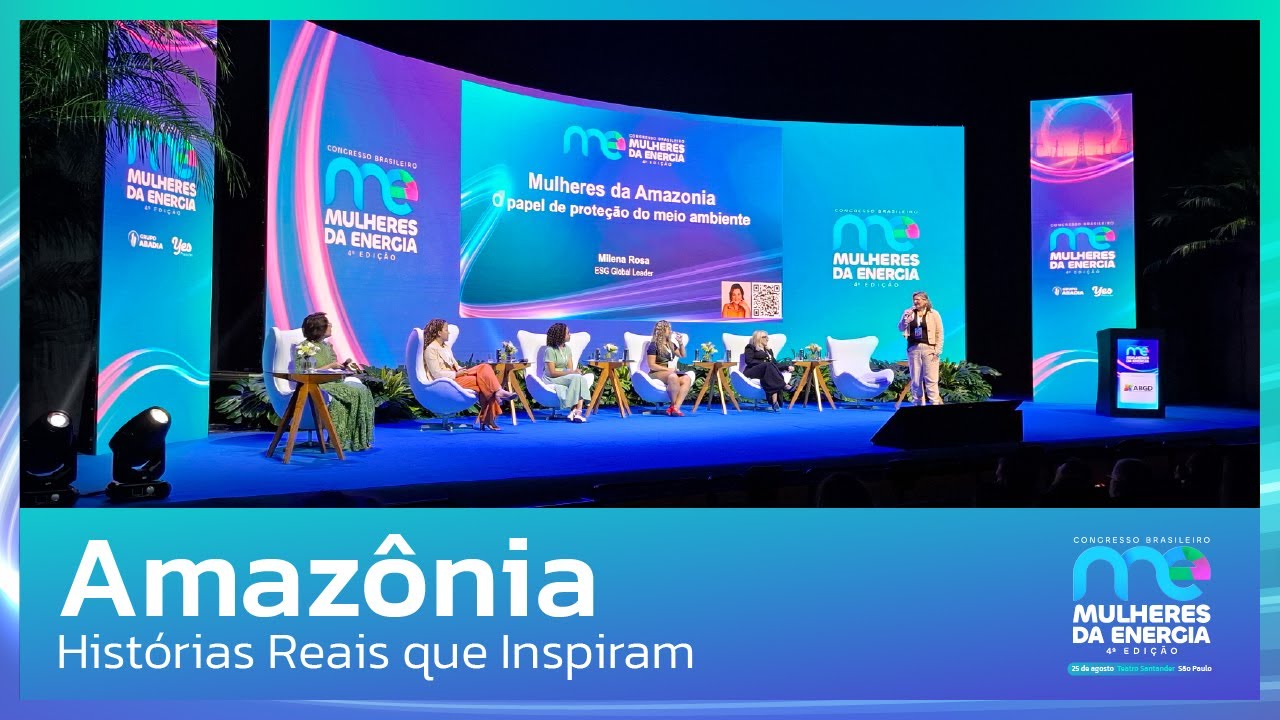
Amazônia - Histórias Reais que Inspiram e Transformam
Amazon - Real Stories that Inspire and Transform
Title history
- Amazônia - Histórias Reais que Inspiram e Transformam — observed on 20261030-1713 UTC (YouTube)
Keywords
Summary
151 words
Critical Evaluation
Value of the Information & Strength of the Argument
The value of the information lies in the authentic, first-hand accounts of women actively working in the Amazon. Their arguments are built on personal experience and professional expertise, making the content compelling and relatable. The strength of the presentation is in the emotional appeal and the demonstration of tangible initiatives, such as the Zona Franca de Manaus ESG program and the eco-brick project. However, the argumentation is primarily testimonial rather than data-driven, with limited critical analysis or exploration of counterpoints. The panelists are persuasive in conveying the region’s importance and resilience, but the discussion lacks depth on policy or technical feasibility.
Scientific Rigor, Source Quality, Title Accuracy
The video does not cite external written sources; it relies on the speakers’ own projects and memories. The title accurately describes the content, which presents inspiring real-life stories. The panelists include industry leaders and community representatives, lending credibility to their accounts. However, no verifiable research data or external references are provided, and the absence of structured argumentation limits the scientific rigor. The production quality is that of a conference recording, with occasional interruptions and informal tone. Overall, the title is well-matched, and the content is trustworthy within the bounds of personal testimony.
208 words
Title / Content Match
The title accurately reflects the content: the video presents real stories from the Amazon that inspire and aim to transform perspectives, as delivered by the panelists.
Quality & Reliability
6/10
The content is a compilation of personal narratives and professional experiences from a panel on the Amazon, combining anecdotal evidence with some factual claims (e.g., PET decomposition time, industrial data). The reliability is moderate: speakers are experienced professionals, but claims are not rigorously sourced or independently verified.
Key Moments
Markers derived by PSI from the transcript: the creator did not define chapters.
- Introduction and welcome of panelists
- Zilda Costa's opening remarks about the Amazon and the COP30 letter
- Régia Moreira Leite discusses ESG in the Amazon and the Orfãos do Covid program
- Patrícia Cristina presents the eco-brick project and the impact of PET waste
- Further panelists share their experiences and the letter is signed for COP30
Contribution & Novelties
The video contributes a unique perspective by centering the voices of women from diverse sectors in the Amazon, emphasizing community-driven solutions and the integration of ESG in industrial practices. It showcases concrete examples of social and environmental initiatives that are often overlooked in broader narratives.
Pour aller plus loin :
- Amazon rainforest — Context on the region’s biodiversity and environmental significance.
- Environmental, social, and governance (ESG) — Framework for business sustainability mentioned throughout the video.
- COP30 (2025 United Nations Climate Change Conference) — The conference for which the panelists prepared a letter.
92 words
Radar Profile
The radar profile shows a strong quantity of information (8) and moderate quality (6), indicating a rich but not tightly structured content. Technical level (5) reflects a balance between professional insights and accessible language, while reliability (6) suggests the information is generally credible but lacks robust external validation.