FMSZ 2026 Annual Congress Presentation by Dr Joane Verweij(Netherlands)
Title history
- FMSZ 2026 Annual Congress Presentation by Dr Joane Verweij(Netherlands) — observed on 20261026-0836 UTC (YouTube)
Keywords
Summary
193 words
Critical Evaluation
Value of the Information & Strength of the Argument
The presentation provides valuable insights into the management of HDFN, particularly highlighting the neglected burden in Africa. The speaker systematically outlines the steps from prevention to postnatal care, emphasizing evidence-based interventions like early phototherapy. The argumentation is solid, supported by a systematic review and ongoing research. The call for multidisciplinary collaboration is well-justified by the complexity of the disease process. The discussion on the global anti-D shortage and the need for local plasma collection is pertinent. However, some claims, such as the effectiveness of monoclonal anti-D, are presented with appropriate caution, reflecting scientific rigor.
Scientific Rigor, Source Quality, Title Accuracy
The scientific rigor is high; the speaker references a systematic review and international collaborations. However, no direct citations or URLs are provided in the description. The title is accurate but vague; it doesn’t specify the topic. Nonetheless, the presentation content matches the description of ‘Multidisciplinary Collaboration in Haemolytic Disease of the Fetus and Newborn.’ No comments are provided, so we cannot analyze audience reception.
173 words
Title / Content Match
Title is generic but accurately reflects the content as a congress presentation on HDFN; the description clarifies the specific topic of multidisciplinary collaboration.
Quality & Reliability
7/10
The presentation is evidence-based, referencing a systematic review and ongoing research, but lacks direct citations or links in the description. The speaker is a recognized expert, yet the content is not peer-reviewed and some claims are presented with appropriate caution.
Key Moments
Markers derived by PSI from the transcript: the creator did not define chapters.
- Introduction and disclosures by Dr Verweij.
- Pathophysiology of HDFN: RhD-negative mother, RhD-positive fetus, antibody formation, fetal anemia.
- Lack of data on HDFN in Africa: systematic review findings, few studies, need for Africare project.
- Prevention: blood typing, laboratory role, indirect Coombs test, titration.
- Anti-D prophylaxis: effectiveness, global shortage, difference between polyclonal and monoclonal.
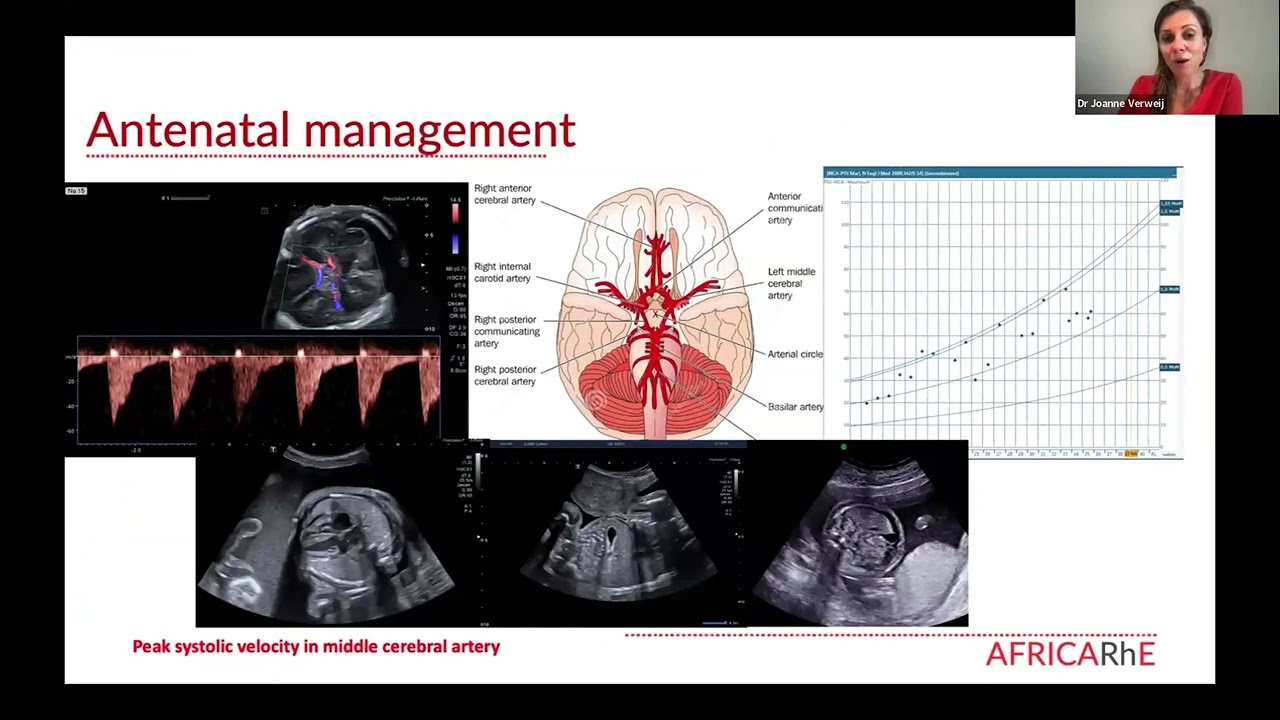
- Antenatal management: ultrasound, MCA-PSV, intrauterine transfusion, intrahepatic route.
- Postnatal management: golden hour phototherapy, reduction of exchange transfusion.
- Dutch national screening program and centralized referral, and Africare project overview.
Cited Sources
- Systematic review on HDFN in Africa — Mentioned as a systematic review conducted by the Africare team, finding only 74 papers in 60 years, with 42 from Nigeria.
- Africare project — African initiative for HDFN eradication, ongoing prospective studies in Tanzania and Ethiopia.
- DIONIS registration — Publication on the intrahepatic approach for intrauterine transfusion, mentioned as a recently published route.
Contribution & Novelties
The presentation contributes original insights into HDFN management in low-resource settings, particularly through the Africare project and the emphasis on postnatal phototherapy. It also discusses the global anti-D shortage and the potential of local plasma collection.
Pour aller plus loin :
- Haemolytic disease of the newborn — Background on HDFN pathophysiology and treatment.
- Rh blood group system — Explanation of RhD typing and immunization.
- Anti-D immunoglobulin — Details on prophylaxis and mechanisms.
72 words
Radar Profile
The radar shows high scores across the board, indicating a detailed, well-sourced, and technically proficient presentation. The fiabilité is slightly lower due to the lack of external verification, but overall the video is a valuable educational resource for medical professionals.