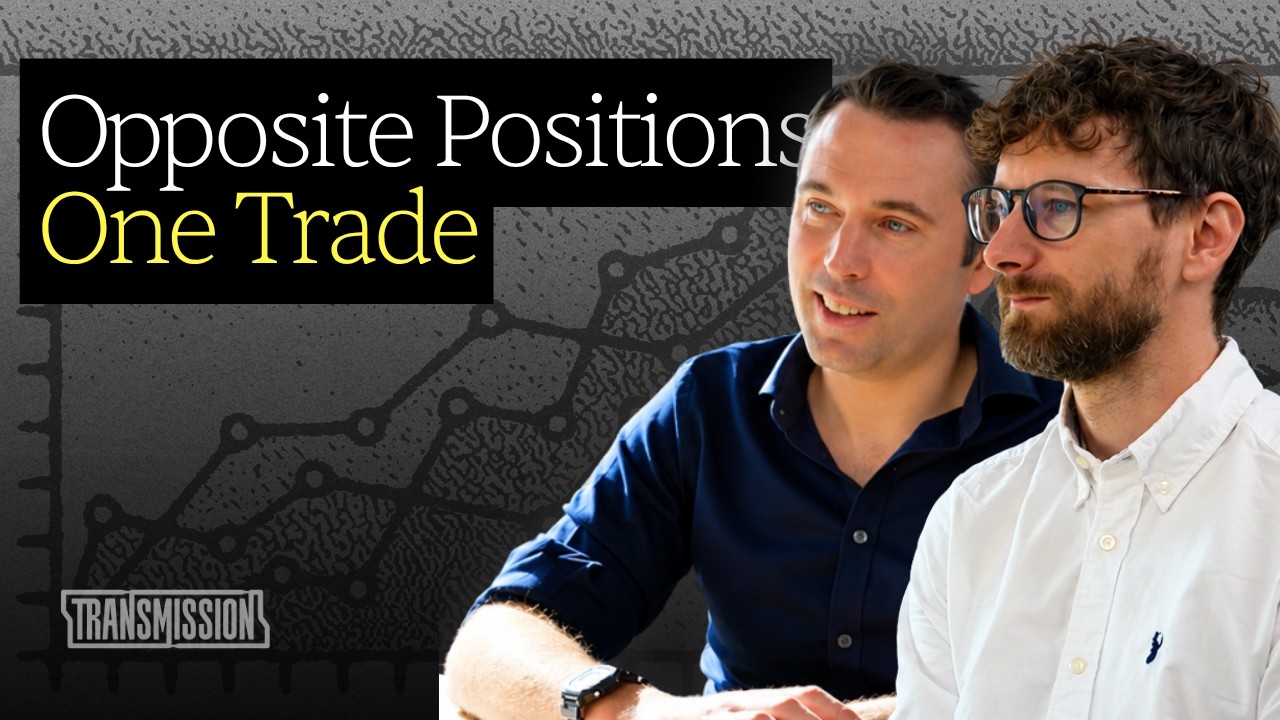
A New Way to Hedge Battery Storage Revenue - SSE & Statkraft
Title history
- A New Way to Hedge Battery Storage Revenue - SSE & Statkraft — observed on 20261027-0706 UTC (YouTube)
Keywords
Summary
131 words
Critical Evaluation
Value of the Information & Strength of the Argument
VALUE: The video offers valuable insights into a novel financial product in energy markets. It explains the mechanics of a battery revenue swap clearly, including how the index is used, the role of ISDA, and the importance of basis risk. The information is practical, drawn from real experience, and addresses questions that potential market participants would have. SOLIDITY: The argumentation is coherent and grounded in actual transaction details. The interviewees are directly involved in the deal and provide specific reasoning for both parties’ motivations. They carefully weigh the pros and cons of different hedging strategies, discussing alternatives like top-bottom swaps, floors, and virtual batteries. The technical depth is high, with clear explanations of risk factors and market dynamics.
Scientific Rigor, Source Quality, Title Accuracy
SCIENTIFIC RIGOR: The video maintains a high level of technical accuracy. The speakers use proper terminology (e.g., basis risk, EMIR, ISDA) and explain concepts precisely. They avoid overgeneralizations and acknowledge uncertainties, such as the challenge of single-asset basis risk compared to a fleet index. SOURCES: The primary source is the expertise of the guests, which is credible given their roles. The description provides a link to Modo Energy’s product (Ko), but no external scientific literature is referenced. The absence of citations does not undermine the content because it is a practitioner discussion rather than academic research. ADEQUATION: The title and content are aligned; the video delivers exactly what the title promises, a discussion on a new hedging method for battery storage revenue.
255 words
Title / Content Match
The title accurately describes the core topic: a novel battery revenue swap between SSE and Statkraft. The content directly addresses this transaction and its implications, so the title fits well.
Quality & Reliability
8/10
The video features two directly involved practitioners (SSE's Josh Brown and Statkraft's Cian O'Duffy) discussing a real transaction. Their explanations are detailed and technical, covering operational, legal, and market aspects. Modo Energy is a recognized analytics firm in energy markets, adding credibility. The content is specific and does not rely on unverified claims.
Chapters
- What is a battery revenue swap?
- How energy trading deals get set up
- Why SSE sold its battery revenue risk
- Why Statkraft wanted more battery risk
- How big the SSE and Statkraft deal is
- How swap contracts work (ISDA explained)
- Does a swap change how you run your battery?
- UK-wide vs regional battery indices
- Can wind and solar farms hedge with batteries?
- Battery revenues vs other ways to hedge
- Virtual batteries for big energy users
- What comes after swaps? Options and floors
- How CfDs affect negative electricity prices
- Why battery revenues could be a rocky ride
- Wrap-up
Cited Sources
- Modo Energy Ko - AI analyst for energy markets — Mentioned in the description as a tool for analysts to ask questions about battery revenues and power markets.
Contribution & Novelties
The video provides a detailed, first-hand account of the first battery revenue swap, which is an innovative financial instrument in the energy storage sector. It explains how such a swap works, the legal and operational steps, and the risk management benefits for both counterparties. The originality lies in the practical description of a real transaction, rather than a general theoretical discussion. This contributes to understanding how battery storage revenues can be traded and hedged, opening new possibilities for funding and risk mitigation.
Pour aller plus loin :
- ISDA (International Swaps and Derivatives Association) — The legal framework under which such swaps are typically transacted; essential for understanding the contract structure.
- EMIR (European Market Infrastructure Regulation) — The regulatory framework that mandates central clearing and trade reporting, as mentioned in the context of operational plumbing.
- Basis Risk — The risk that the index used in the swap does not perfectly track the actual revenue of an individual asset; central to the discussion on hedging effectiveness.
164 words
Radar Profile
The profile shows high technical level (9) and solid overall scores (8) across quantity, quality, and reliability, indicating a content that is rich in specific, expert information. The high technical score suggests the video is pitched to a professional audience familiar with energy markets and financial instruments.