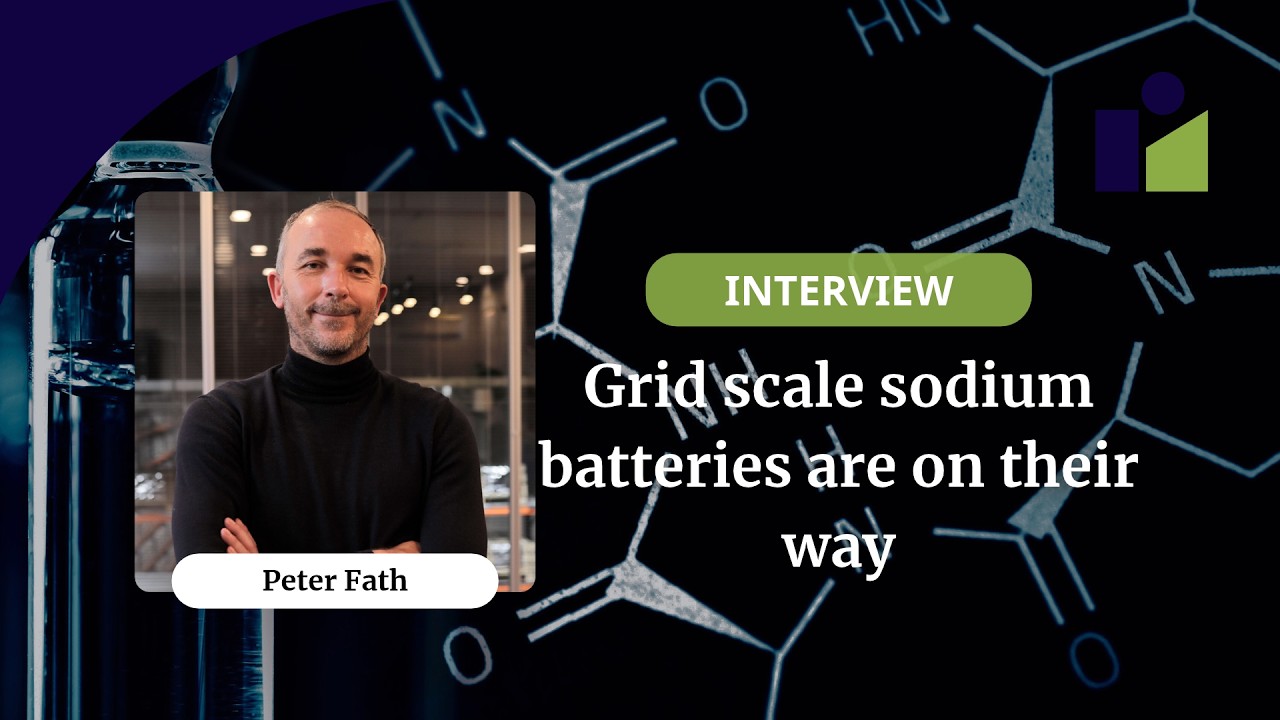
Grid scale sodium batteries are on their way | Energy Insiders
Keywords
Summary
172 words
Critical Evaluation
Value of the Information & Strength of the Argument
The interview provides valuable industry perspectives on cost trends, technology shifts, and market dynamics in battery storage. Fath’s arguments are grounded in his company’s practical experience, such as the specific cost reduction percentages and density improvements. The discussion on sodium-ion is forward-looking but well substantiated by references to supply-chain constraints (China’s lithium imports) and technical advantages. However, some claims are promotional and lack independent verification, and the cost figures are approximate without detailed breakdowns.
Scientific Rigor, Source Quality, Title Accuracy
The content is an expert opinion based on the interviewee’s professional knowledge; no external studies or peer-reviewed sources are cited. The description links are to the publisher’s social media and newsletter, not to the references. The title is accurate, focusing on sodium-ion batteries as the main topic. The conversation is episodic and not fully structured, but the information is presented coherently. Public comments are not provided, so no analysis of audience reception is possible.
163 words
Title / Content Match
The title accurately reflects the core discussion on the imminent arrival of grid-scale sodium-ion batteries and their potential.
Quality & Reliability
7/10
Interview with a senior industry executive, providing current market insights and technical details, though largely based on personal experience and opinion rather than peer-reviewed data.
Key Moments
Markers derived by PSI from the transcript: the creator did not define chapters.
- Introduction and discussion of recent battery projects in Australia.
- Peter Fath explains Valo's market position and cost reductions in battery storage.
- Discussion on vertical integration and competition with Chinese manufacturers.
- Introduction of sodium-ion technology and its advantages for long-duration storage.
- Grid-forming inverters and the future of battery storage systems.
Cited Sources
- LinkedIn - Renew Economy — Company page for Renew Economy, mentioned in the video description.
- Bluesky - Renew Economy — Social media profile listed in the video description.
- Renew Economy Newsletter Sign-up — Newsletter subscription link featured in the description.
Contribution & Novelties
This video offers a timely insider perspective on the battery storage industry, specifically the anticipated arrival of grid-scale sodium-ion batteries. It uniquely combines technical details on cell chemistry, container energy density, and grid services with strategic insights on vertical integration and regional manufacturing pressures. The interview also highlights concrete project examples in Australia and Europe, making the discussion actionable for industry stakeholders.
Pour aller plus loin :
- Sodium-ion battery - Wikipedia — Background on the technology and its potential advantages over lithium-ion.
- Grid-forming inverter - Wikipedia — Explains the role of inverters in providing grid stability, a key topic in the interview.
- Lithium iron phosphate battery - Wikipedia — Relevant to the discussion of LFP as the current mainstream chemistry.
120 words
Radar Profile
The radar profile shows strong quantitative and qualitative information, balanced by moderate technical depth and reliability. The session is information-rich but relies on expert opinion rather than documented sources, resulting in a slightly lower reliability score.