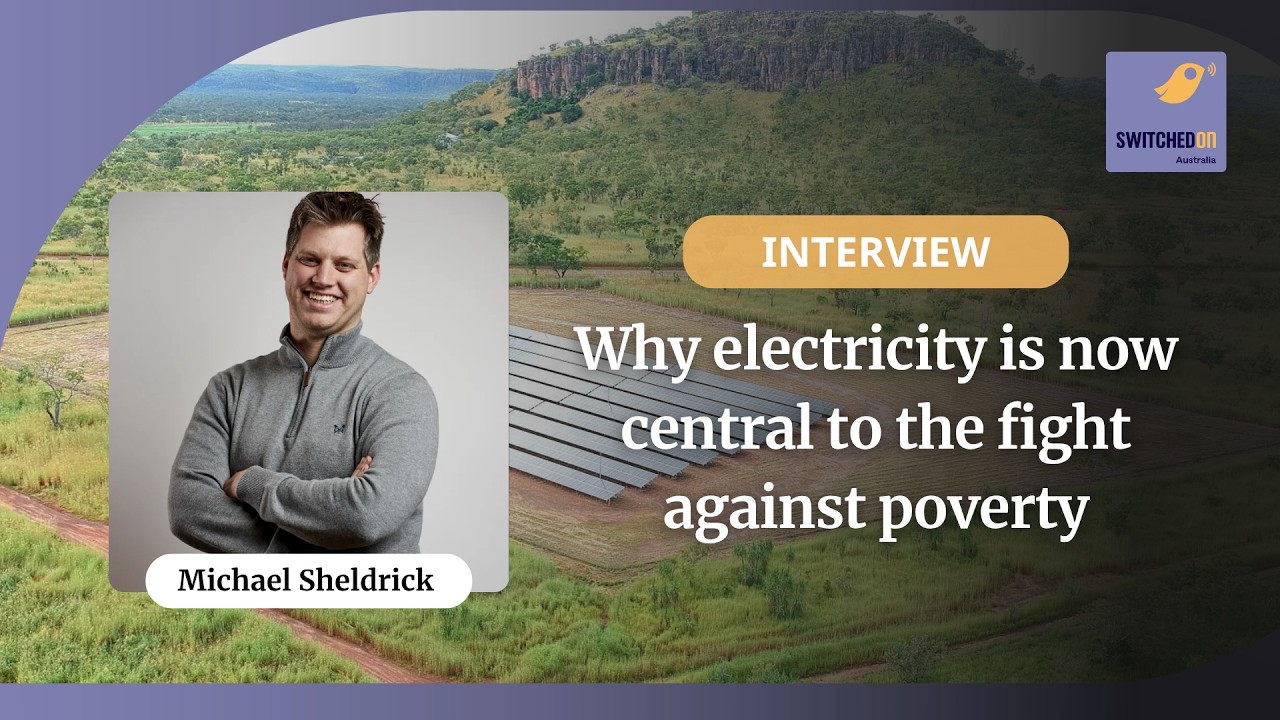
Why electricity is now central to the fight against poverty | SwitchedOn Australia
Keywords
Summary
165 words
Critical Evaluation
Value of the Information & Strength of the Argument
The video offers valuable insights into the intersection of energy access and poverty, grounded in real-world examples from Africa, the Pacific, and South Asia. Sheldrick’s argument that electricity is a fundamental enabler of education, health, and economic development is compelling and well-illustrated. He makes a strong case for decentralized renewable energy as a fast and affordable solution, citing examples like South Africa’s rapid rollout of solar. The discussion on concessional finance and the role of international institutions adds depth, though it remains at a strategic rather than technical level. The argument for the 35% electrification target is persuasive but not critically examined, and the interview stays within an advocacy frame.
Scientific Rigor, Source Quality, Title Accuracy
The interview references specific individuals and organizations (e.g., Dr. Fatih Birol, President Whipps of Palau, Octopus Energy) and cites concrete figures, such as 750 million people lacking electricity and 15 billion euros mobilized in Africa. However, it lacks direct citations to peer-reviewed studies or official reports. The description provides links to Renew Economy’s social media and newsletter, which are relevant for following up but are not primary sources. The title accurately reflects the content, and the discussion remains focused on the stated theme without significant digressions.
211 words
Title / Content Match
The title accurately reflects the core theme: the discussion centers on why electricity access is a central tool in fighting poverty, with concrete examples and policy angles.
Quality & Reliability
8/10
The video features an expert interview with a credible co-founder of Global Citizen, discussing energy access and its link to poverty eradication. The channel is reputable, but the content is advocacy-oriented and relies on anecdotal evidence rather than peer-reviewed data.
Key Moments
Markers derived by PSI from the transcript: the creator did not define chapters.
- Sheldrick describes the impact of unreliable electricity on poverty, citing diesel reliance in the Pacific.
- He explains why Global Citizen now prioritizes clean electricity, linking it to health, education, and food security.
- Discussion on distributed energy resources and the role of concessional finance in de-risking investments.
- Sheldrick details Global Citizen's capital mobilization efforts and the 15 billion euros pledge in Africa.
- He talks about the Global Citizen NOW summit in Perth and plans to power 4 million homes.
- He discusses the 35% electrification target and the role of renewable energy, referencing Fortescue's pilot in Western Australia.
Cited Sources
- Renew Economy LinkedIn — Channel's official LinkedIn profile for further updates and news.
- Renew Economy Bluesky — Channel's Bluesky social media account for additional content.
- Renew Economy Newsletter Sign-up — Link to subscribe to Renew Economy's daily newsletter for follow-up articles.
Contribution & Novelties
This video contributes to the discourse by framing electricity access as a central anti-poverty strategy, moving beyond traditional viewpoints that focus solely on education or health interventions. It emphasizes decentralized renewable systems and the need for concessional finance to bridge the affordability gap, offering a realistic pathway for scaling energy access in developing regions. The discussion also highlights the geopolitical dimension of solar panel manufacturing and the need to balance cost with policy preferences.
Pour aller plus loin :
- Sustainable Development Goal 7 — Relevant to the video’s focus on energy access as a global development target.
- Concessional loan — Explanation of the financial mechanism discussed by Sheldrick for de-risking renewable energy investments.
- Just transition — Context for the mention of Collie as a test case for ensuring workers are not left behind in the shift from coal.
- Green steel — Related to the discussion on green iron and electrifying smelting processes.
152 words
Radar Profile
The profile shows high scores in quality and global reliability, with moderate scores in quantity and technical depth. This indicates a well-presented expert discussion that is reliable but not highly technical and offers a moderate amount of information.