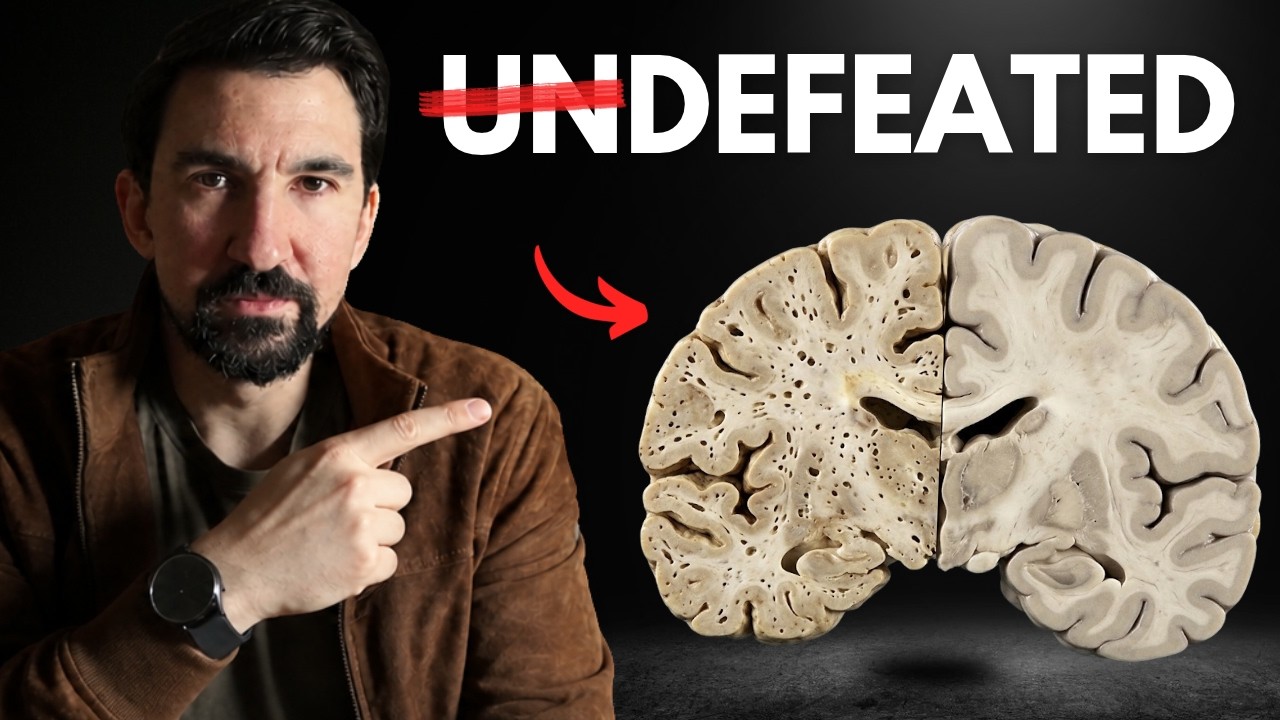
A 100% Fatal Disease Just Found a Treatment
Keywords
Summary
177 words
Critical Evaluation
Value of the Information & Strength of the Argument
The video delivers high-value information by thoroughly explaining the underlying science of prion diseases and the rationale for siRNA-based therapy. It traces the research from Prusiner’s pioneering work to recent pre-clinical studies, accurately describing experimental designs and results. The argumentation is solid: the presenter builds a logical case for targeting the prion gene rather than the protein, citing specific evidence such as the 1993 knockout mouse study and the 2019 Krovka et al. paper. The results of the mouse studies (2.7x and 64% survival extension) are presented with appropriate caveats, including the inability to restore lost neurons. The transition to human trials is explained with realistic caution about phase I objectives (safety and tolerability) and the hope for preventive treatment in the future. The overall argument is coherent and well-supported by scientific evidence.
Scientific Rigor, Source Quality, Title Accuracy
The video demonstrates strong scientific rigor, with accurate descriptions of molecular mechanisms and careful distinctions between experimental stages. Sources mentioned include Stanley Prusiner’s Nobel-winning work, the 2019 Krova et al. paper, and the Minikel-Vallabh team at the Broad Institute, among others, though no direct URLs are provided in the description. The title is accurate, as the video reports on a genuinely novel therapeutic effort for a universally fatal disease. The ad-read is clearly marked and does not affect the content’s integrity. However, since the description contains only promotional links (newsletter, merchandise, etc.) and not primary research articles, a viewer seeking deeper verification would need to conduct additional research. The video’s structure and use of chapter markers enhance clarity.
266 words
Title / Content Match
The title accurately reflects the content, which discusses a newly launched human trial for a prion disease treatment.
Quality & Reliability
8/10
The video provides a detailed, accurate, and up-to-date explanation of prion disease and a novel siRNA-based treatment in clinical trials, with careful attention to scientific nuance and clear referencing of key studies, though no direct links to primary sources are given in the description.
Chapters
Cited Sources
- Breakthrough technology submission — Link for scientists to submit their breakthrough technologies to the channel.
- Dr Ben Miles Newsletter — The author's newsletter with additional content.
- Waitlist for science community — Waitlist for a new science community.
- Rockstar Scientist Merch — Official merchandise store.
Contribution & Novelties
This video offers a compelling and accessible narrative of a scientific breakthrough: the first human trial of a gene-silencing therapy for prion disease. It synthesizes complex biochemistry into a clear story, highlighting the innovative chemical modifications to siRNA that enable brain delivery and prolonged activity. The personal dimension of the researchers’ motivation adds emotional depth. The video effectively explains the shift from targeting the protein to silencing its gene, and the potential broadening to other neurodegenerative diseases.
Pour aller plus loin :
- Prion — Comprehensive background on prion biology and diseases.
- RNA interference — Mechanism underlying siRNA-based therapies.
- Creutzfeldt-Jakob disease — The most common prion disease in humans, relevant to the context.
112 words
Radar Profile
The radar profile shows very high scores in quantity and quality of information, with a slightly lower technical level that remains accessible. The reliability score is high, reflecting accurate but unverified (via description) sources. The video excels in providing comprehensive and up-to-date content.
💬 Sur les 30 commentaires analysés, le climat est très positif, avec de nombreux témoignages personnels liés aux maladies à prions et des remerciements pour la vulgarisation. Quelques commentaires expriment une prudence quant au passage de la souris à l'humain.