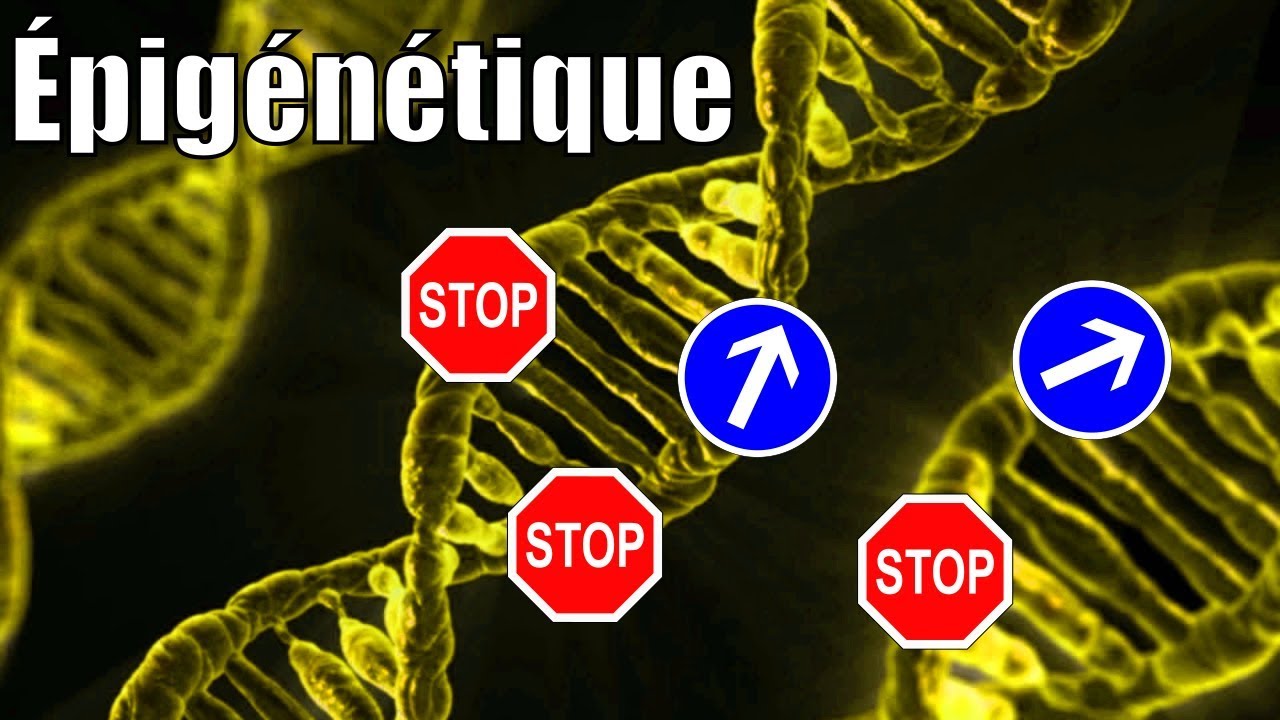
Il n'y a pas que les gènes dans la vie ! L'épigénétique, avec P'tite Jane
Genes aren't everything in life! Epigenetics, with P'tite Jane
Title history
- Il n'y a pas que les gènes dans la vie ! L'épigénétique, avec P'tite Jane — observed on 20261019-0424 UTC (PSI archive)
Keywords
Summary
136 words
Critical Evaluation
Value of the Information & Strength of the Argument
The video delivers high value by clearly explaining complex molecular mechanisms in an accessible yet precise way. It argues for the importance of epigenetics without overstating its role, correctly noting the reversibility and limited duration of epigenetic inheritance in animals. The argumentation is logically structured: from foundational concepts to specific examples, then to human studies and a critical discussion of Lamarckism. It also differentiates between rigorous science and pseudoscience, reinforcing the credibility of the content.
Scientific Rigor, Source Quality, Title Accuracy
Scientific rigor is high: the video accurately represents established knowledge, distinguishes between confirmed and speculative claims, and critiques flawed methodologies in human studies. Sources are not explicitly cited in the video, but the description provides links to the creator’s blog and a background artwork; no external scientific references are given, though the video mentions studies like the Dutch famine and Överkalix without detailed citations. The title perfectly matches the content, as it promises a discussion of non-genetic inheritance and delivers exactly that.
172 words
Title / Content Match
The title accurately reflects the central theme: epigenetics as a complementary layer to genetic determinism.
Quality & Reliability
9/10
The video provides a well-structured and rigorous presentation of epigenetics, distinguishing between established science and speculative interpretations. It explicitly warns against overinterpreting studies such as the Holocaust study, and correctly emphasizes the reversibility and weak duration of epigenetic effects in animals. The collaboration with a cell biology specialist enhances credibility.
Key Moments
Markers derived by PSI from the transcript: the creator did not define chapters.
- Introduction: Dutch famine and question of non-genetic inheritance
- Basics of DNA, transcription, translation, and gene expression
- Epigenetic mechanisms: DNA methylation and histone modifications
- Examples: Linaria flower and agouti mouse studies
- Heritability of epigenetic marks, transgenerational effects, and limitations
- Discussion of Lamarckism and epigenetics, caution on human studies
- Epigenetics in cancer research and conclusion warning against pseudoscience
Cited Sources
- Science étonnante blog — David Louapre's blog and main website, mentioned in the video description.
- Portrait de Slash (holy-wood-graffiti) — Link to a portrait artwork visible in the background, not directly related to content.
Concurring Sources
- Dutch famine of 1944–1945 — Background on the famine discussed in the video, supporting the transgenerational effects mentioned.
Contribution & Novelties
The video offers a concise yet thorough exploration of epigenetics, bridging molecular mechanisms with population-level observations and historical context. It stands out by critically evaluating human studies and explicitly addressing the neo-Lamarckian interpretation, making it a valuable educational resource that goes beyond simple factual exposition.
Pour aller plus loin :
- Epigenetics (Wikipedia) — General overview and key concepts.
- DNA methylation (Wikipedia) — Detailed molecular process and regulatory roles.
- Dutch famine of 1944–1945 (Wikipedia) — Historical event and epidemiological studies.
- Lamarckism (Wikipedia) — Historical context and modern relevance.
87 words
Radar Profile
The radar profile shows high scores in quality, reliability, and technical level, with a moderately high information quantity, indicating a balanced and dependable science communication piece.
💬 Based on the 30 comments analyzed, the tone is overwhelmingly positive, with viewers praising the educational quality and collaboration, though some mentioned the technical density and audio issues.