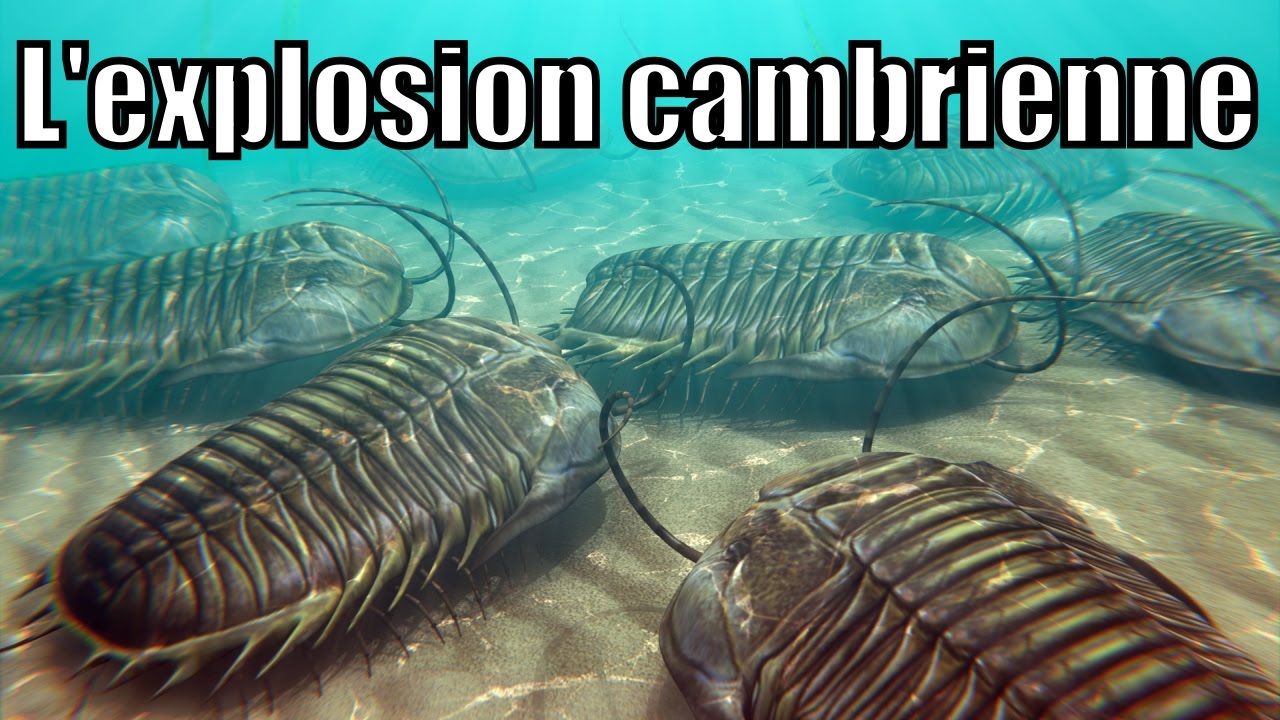
L'explosion cambrienne et les schistes de Burgess
The Cambrian explosion and the Burgess Shale
Title history
- L'explosion cambrienne et les schistes de Burgess — observed on 20261019-0425 UTC (PSI archive)
Keywords
Summary
146 words
Critical Evaluation
Value of the Information & Strength of the Argument
The video provides a clear and engaging narrative that conveys the scientific significance of the Burgess Shale. It builds its argument on historical facts—Walcott’s discovery, the later reanalysis, and the resulting taxonomic upheaval—which is a solid approach for illustrating how scientific understanding evolves. The presentation of diverse organisms is supported by visual reconstructions that aid comprehension. The discussion of hypotheses is balanced, presenting multiple plausible explanations without overclaiming certainty. The emphasis on the continued relevance and mystery of the Cambrian explosion strengthens the intellectual value of the content.
Scientific Rigor, Source Quality, Title Accuracy
The video demonstrates rigorous scientific practice by mentioning the book ‘Wonderful Life’ by Stephen Jay Gould as a major source, while explicitly noting its age and the subsequent shift to cladistic classification. It credits the Royal Ontario Museum and other artists for images and animations. The title perfectly matches the content, as the video covers both the Cambrian explosion phenomenon and the specific Burgess Shale locality. The video is part of a well-known science communication channel, and the description provides links to a blog post and external resources, enhancing its reliability. No contradictions with mainstream scientific consensus were detected.
202 words
Title / Content Match
The title accurately reflects the content, covering both the Cambrian explosion and the Burgess Shale fossils in depth.
Quality & Reliability
8/10
The video is well-researched, presents multiple hypotheses and acknowledges the limitations of older sources. It uses visual reconstructions credited to the Royal Ontario Museum and professional paleontologists. The scientific content is accurate, but some interpretations are dated, and the video itself notes this.
Key Moments
Markers derived by PSI from the transcript: the creator did not define chapters.
- Introduction: presentation of the Cambrian explosion as a biological big bang.
- Timeline from Earth's formation to the first multicellular organisms.
- Definition of bilateral symmetry and the sudden appearance of complex animals.
- Discovery of the Burgess Shale by Charles Walcott and its exceptional preservation.
- Walcott's classification of fossils into existing groups.
- Reanalysis by Whittington, Briggs, and Conway Morris; recognition of many new phyla.
- Presentation of Opabinia and Hallucigenia, with animated reconstructions.
- Description of Anomalocaris as a predator, and Wiwaxia and Pikaia.
- Discussion of possible causes: oxygen, genetics, ecological disruption; conclusion that the mystery remains.
- Acknowledgements and recommendations for further learning.
Cited Sources
- Blog post accompanying the video — Mentions cladistic methods and complements the video.
- Royal Ontario Museum – Burgess Shale — Source of fossil photos and 3D animations.
- Spinops paleontological illustrations — Illustrations by Nobumichi Tamura used in the video.
- Opabinia regalis illustration — Specific reconstruction of Opabinia.
- Anomalocaris canadensis illustration — Reconstruction of Anomalocaris.
- Triarthrus eatoni illustration — Example of a trilobite fossil reconstruction.
- Pikaia image from blogspot — Image of Pikaia used in the video.
- Anomalocaris grasping claw, Wikimedia Commons — Fossil photo credited in description.
- Wiwaxia 3D crop, Wikimedia Commons — 3D reconstruction of Wiwaxia.
- Wiwaxia corrugata fossil, Wikimedia Commons — Fossil photo of Wiwaxia.
External References
Contribution & Novelties
The video provides a compelling and accessible synthesis of the Burgess Shale faunal diversity, effectively using animated reconstructions to bring ancient animals to life. It highlights the historical misinterpretation by Walcott and the subsequent reclassification, which is a key lesson in scientific progress. The video also offers a balanced overview of current hypotheses without overstating certainty, making it a useful introduction to the topic.
Pour aller plus loin :
- Wikipédia – Explosion cambrienne — Comprehensive article on the event and its theories.
- Wikipédia – Schistes de Burgess — Detailed information on the fossil site and its significance.
- Wikipédia – Anomalocaris — Article on the famous predator.
- Wikipédia – Opabinia — Overview of the five-eyed animal.
- Wikipédia – Hallucigenia — Information on the spiny worm-like creature.
125 words
Radar Profile
The radar profile shows high scores in quality and quantity of information, with a moderately high technical level, indicating a scientifically sound but accessible presentation. Reliability is strong, reflecting the use of credible sources and careful presentation. The overall balance supports the video's status as a recommended educational resource.
💬 Très positif : les 30 commentaires analysés sont majoritairement enthousiastes, louant la clarté de la vulgarisation, les animations 3D, et l'émerveillement suscité par les créatures étranges, avec de nombreuses blagues liées à la culture populaire.