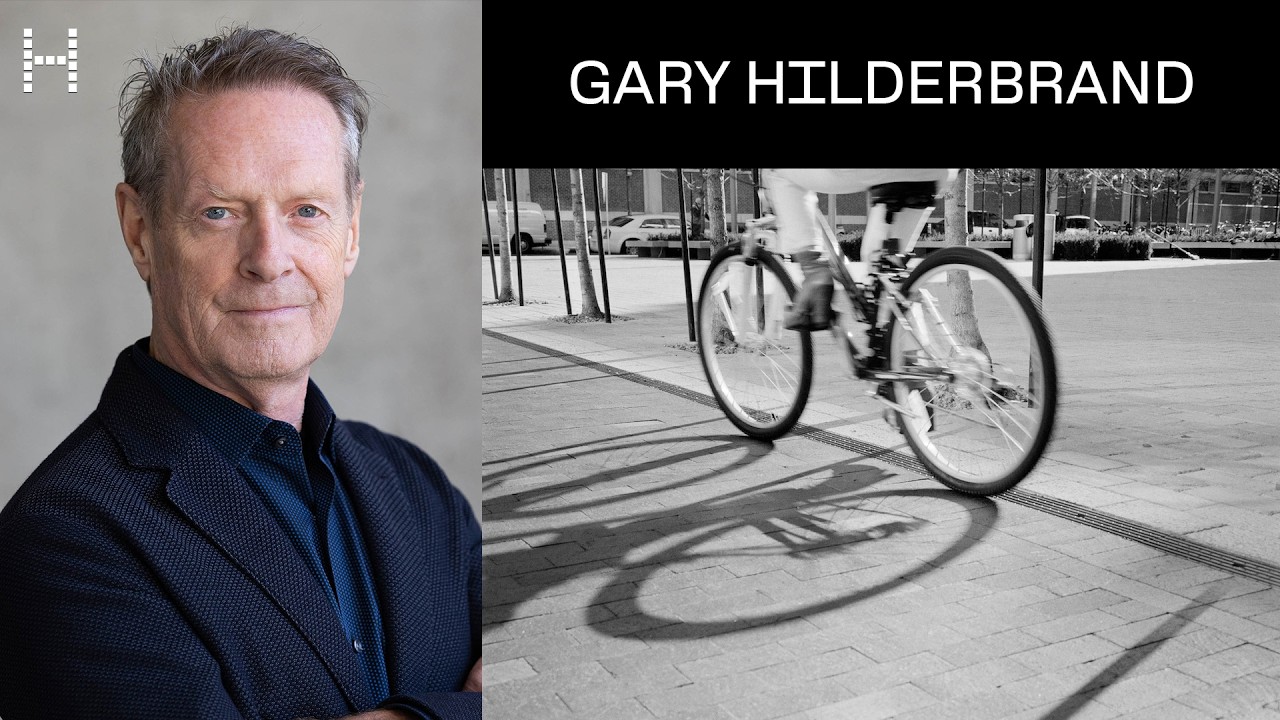
Frederick Law Olmsted Lecture: Gary Hilderbrand, " "Writing on the Surface of the Earth"
Keywords
Summary
148 words
Critical Evaluation
Value of the Information & Strength of the Argument
The lecture’s value lies in its rare combination of theoretical depth and practical application. Hilderbrand articulates a clear design philosophy centered on the ground as a medium for narrative. His argumentation is persuasive, supported by well-documented projects and references to theorists like Sverre Fehn, John Dixon Hunt, and Bruno Latour. He effectively demonstrates how a site’s history, ecology, and program can be synthesized into a cohesive design that respects and enhances the existing conditions. The progression from abstract principles to concrete examples strengthens the credibility of his claims.
Scientific Rigor, Source Quality, Title Accuracy
Hilderbrand references his own publications, as well as the works of Sverre Fehn, Christian Norberg-Schulz, and John Dixon Hunt, grounding his arguments in established landscape theory. The lecture is well-structured and meticulously detailed, reflecting high professional standards. The title ‘Writing on the Surface of the Earth’ is perfectly matched to the content, as Hilderbrand repeatedly returns to the act of imprinting design onto the landscape. The sources cited are reputable and directly relevant to the topic, although they are largely from the speaker’s own field of expertise. No discordant sources were evident.
195 words
Title / Content Match
The title accurately reflects the central theme of shaping and inscribing meaning onto the ground through landscape design.
Quality & Reliability
8/10
The lecture presents a seasoned practitioner's insights grounded in 25 years of professional work, with clear theoretical references and project documentation. While subjective, it is coherent and well-articulated.
Chapters
Cited Sources
- The Miller Garden: Icon of Modernism — One of Hilderbrand's publications mentioned in the introduction.
- Visible | Invisible: Landscape Works of Reed Hilderbrand — Another publication by the speaker, detailing the firm's work.
- Site Sight, Insight — Book by John Dixon Hunt that Hilderbrand cites for the concept of 'lie of the land'.
- Atlas of Novel Tectonics — Book by Jesse Reiser, quoted on narrative selection.
- Orbital — Novel by Samantha Harvey, referenced by Dean Whiting in her introduction.
Contribution & Novelties
This lecture contributes a practitioner’s perspective on integrating narrative and ethics into landscape design, emphasizing the critical zone and the importance of grading. It bridges academic theory and professional practice, offering a model for how landscape architects can engage with environmental and cultural challenges. The focus on the ’topos’ of site provides a framework for understanding design as an act of interpretation.
Pour aller plus loin :
- Critical Zone — Concept central to Hilderbrand’s framing of the ground and atmosphere.
- Sverre Fehn — Architect whose metaphor inspired the lecture title.
- Landscape Architecture — Overview of the discipline and its practices.
100 words
Radar Profile
The profile shows high quality of information and reliability, with moderate technical level and information quantity. This indicates a dense, expert-driven lecture with strong theoretical foundations and practical examples.