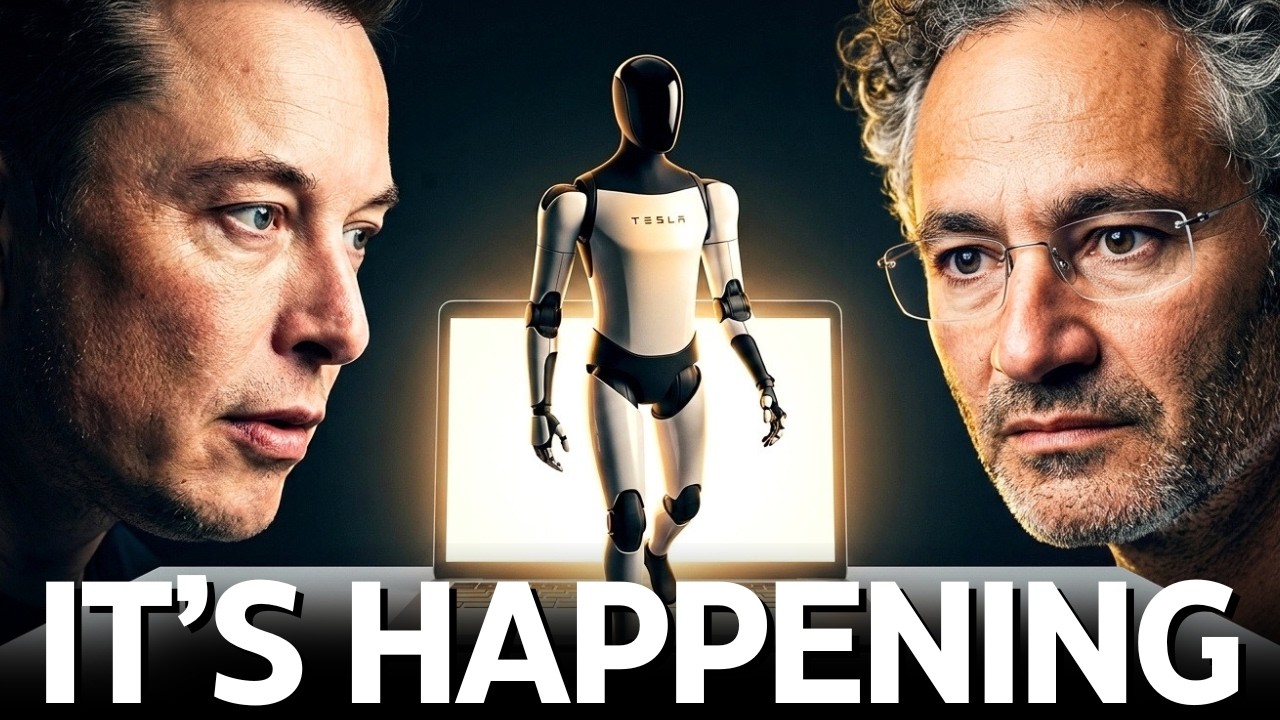
Nobody's Ready for What Elon, Bezos & Palantir Are Building
Title history
- Nobody's Ready for What Elon, Bezos & Palantir Are Building — observed on 20261110-0247 UTC (YouTube)
Keywords
Summary
156 words
Critical Evaluation
Value of the Information & Strength of the Argument
The video offers a compelling narrative that connects disparate technological bets into a coherent thesis about AI’s physical manifestation. The argumentative strength lies in the use of concrete numbers (e.g., token costs, cost per mile) and references to statements by Musk, Bezos, and Karp. However, the reasoning is selective, often omitting counterarguments or dismissing skepticism as naivety. The host’s personal investments and bias are disclosed, which adds transparency but also indicates potential emotional involvement. The value of the information is high for its synthesis of current developments, but the solidity of the argumentation is moderate due to reliance on predictions and analogies rather than empirical data.
Scientific Rigor, Source Quality, Title Accuracy
The video draws on direct quotes from public interviews (G20, Fox News, All-In podcast) but does not always provide timestamped sources or verify the accuracy of those quotes. The description includes links to the host’s books and website, which serve as self-promotional material. The title accurately reflects the content, and the video stays focused on the stated themes. No conflicting sources are presented, and the host occasionally acknowledges uncertainty but does not deeply engage with counterpoints. The absence of a formal citation list reduces scientific rigor, but the content is transparent about its speculative nature.
216 words
Title / Content Match
The title accurately reflects the content, which centers on Elon Musk, Jeff Bezos, and Palantir's AI-related ventures and their potential societal impact.
Quality & Reliability
6/10
The video presents a well-researched and coherent synthesis of recent statements from tech leaders, but relies heavily on the host's personal analysis and projections. No original data is presented; content is largely opinion and commentary on publicly known events.
Key Moments
Markers derived by PSI from the transcript: the creator did not define chapters.
- Introduction to the main claims about AI moving into the physical world.
- Elon Musk's statement about billion humanoid robots and productivity.
- Discussion of AI token cost reduction (36x in two years).
- Robo-taxi economics: comparison of cost per mile and implications for Uber.
- Space data centers: Bezos's Project Sunrise and SpaceX's orbital compute plans.
- Universal high income and the potential impact on the middle class.
- Chess analogy to argue AI may amplify human roles rather than eliminate them.
Cited Sources
- Master Plan: What Elon Musk is Actually Building — Book by the host referenced for deeper insight into Musk's projects.
- Abundance or Collapse — Book by the host discussing possible futures of society.
- Farzad's exclusive article — Companion article to the video with additional details.
- Farzad's website — Host's personal site with further content and contact info.
External References
Contribution & Novelties
The video’s original contribution lies in its synthesis of recent high-profile statements from Elon Musk, Jeff Bezos, and Alex Karp into a single narrative about AI’s physical deployment. It connects AI cost declines, robotics, and space-based compute into a cohesive thesis about the future of labor and energy. The host brings a personal perspective as a former Tesla employee and shareholder, adding insider context not commonly found in mainstream analyses.
Pour aller plus loin :
- Universal basic income — Relevant to the proposed ‘universal high income’ as a policy response to AI-driven job displacement.
- Humanoid robot — Background on the development of humanoid robots and their design challenges.
- Moore’s law — The host compares AI cost reductions to this historical trend, providing a benchmark for technological acceleration.
127 words
Radar Profile
The radar profile shows a video high in quantity of information and moderate in technical depth, with a balanced but slightly positive overall reliability. The qualitative scores are consistent with an opinionated yet well-sourced commentary.
💬 On the 30 comments analyzed, the overall sentiment is positive and curious, with many viewers expressing excitement about robotic future while a few raise concerns about economic inequality and the transition period.