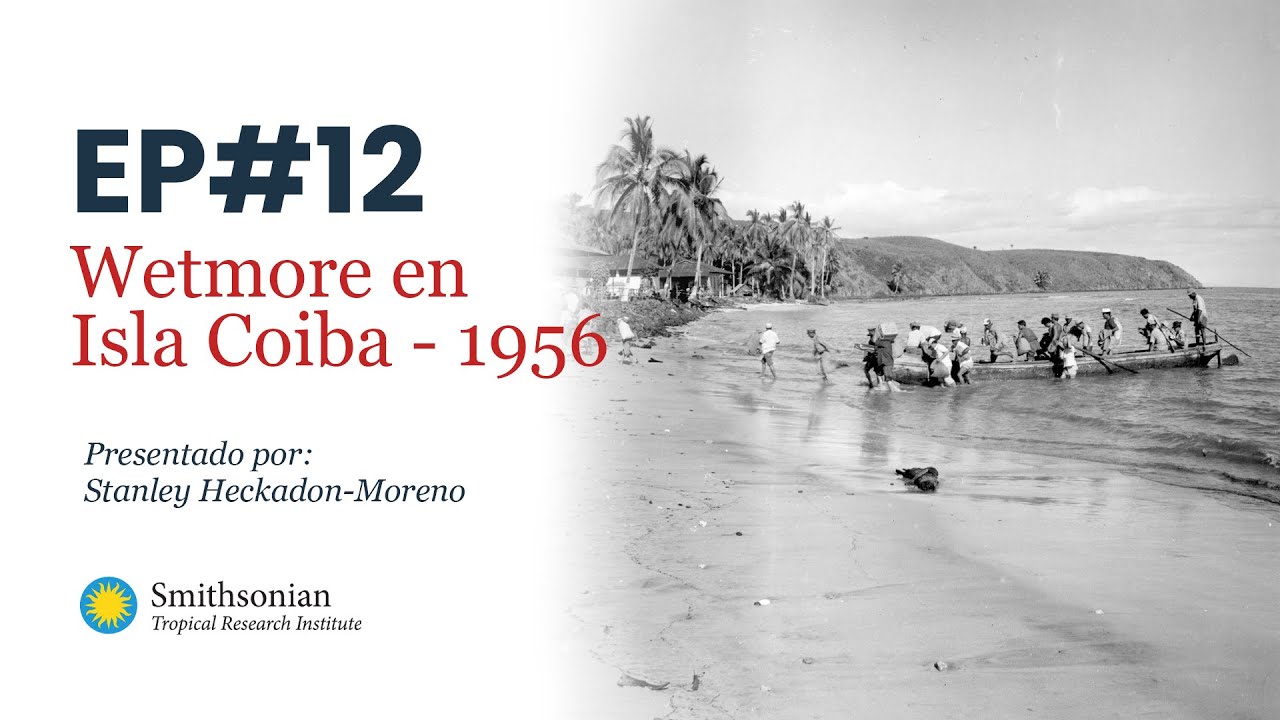
12 Alexander Wetmore en Panamá: 1956 - Isla Coiba
Title history
- 12 Alexander Wetmore en Panamá: 1956 - Isla Coiba — observed on 20261026-1337 UTC (YouTube)
Keywords
Summary
161 words
Critical Evaluation
Value of the Information & Strength of the Argument
The primary value lies in the unique historical perspective on a relatively undocumented scientific expedition, enriched by direct quotes from Wetmore’s publications and a personal interview with his assistant, Gedón Hartmann. The argumentation is built upon a solid narrative framework that interweaves geology, biology, and social history, presenting a compelling case for the significance of the 1956 expedition. While the documentary is largely descriptive, its argumentative strength comes from the authority of the institutional source (STRI) and the authenticity of the primary-source materials presented.
Scientific Rigor, Source Quality, Title Accuracy
The scientific rigor is supported by the institutional backing of the Smithsonian Tropical Research Institute and the reliance on Wetmore’s published works (specifically ‘The Birds of Isla Coiba, Panama’) and a recorded interview with expedition member Gedón Hartmann. No external links or citations are provided in the video description, which limits immediate independent verification, but the narrative is internally consistent and historically contextualized. The title ‘12 Alexander Wetmore en Panamá: 1956 - Isla Coiba’ perfectly aligns with the content, as it precisely describes the subject and timeframe of the documentary.
189 words
Title / Content Match
The title accurately reflects the content: a documentary about Alexander Wetmore's 1956 expedition to Coiba Island, Panama.
Quality & Reliability
8/10
Institutional channel (STRI) with access to primary historical documents and personal testimonies (interview with Gedón Hartmann). The narrative is based on Wetmore's published works (e.g., 'The Birds of Isla Coiba'). No external links provided in the description, limiting direct verification, but the origin and thorough historical context enhance reliability.
Key Moments
Markers derived by PSI from the transcript: the creator did not define chapters.
- Introduction to the program and the political context in Panama in 1956.
- Geological origin of Coiba as a volcanic island that collided with the isthmus.
- History of indigenous peoples on the island and their extinction due to European diseases.
- The pearl diving industry that brought fame to Coiba.
- Proposal for a leprosarium in 1890 and the establishment of the penal colony in 1919.
- Composition of the 1956 expedition team and key supporters.
- Wetmore's descriptions of the island's vegetation and birdlife.
- Daily routine of the expedition, focusing on specimen preparation.
- Introduction of the prisoner 'Templado' and his crucial role in the expedition.
- Reflection on social injustices of the penal system and closing remarks.
Cited Sources
- The Birds of Isla Coiba, Panama (1956) — Mentioned as Alexander Wetmore's publication resulting from the 1956 expedition.
Contribution & Novelties
This video contributes by bringing to light a historical scientific expedition that combined rigorous ornithological fieldwork with a poignant social narrative set in a penal colony. It offers valuable insights into the history of Panamanian science and the early conservation perspective of Alexander Wetmore, using rare primary sources. The presentation of the prisoner ‘Templado’ highlights the often-overlooked local contributions to scientific exploration.
Pour aller plus loin:
- Alexander Wetmore — Biography of the ornithologist leading the expedition.
- Coiba — Information on the island, its national park status, and its history as a penal colony.
- Island biogeography — The scientific framework for understanding species diversity on islands like Coiba.
107 words
Radar Profile
The profile shows high scores for fiabilite_globale and qualite_information (8/10 each), reflecting the authoritative institutional source and the use of primary historical documents. The niveau_technique score is low (4/10), indicating that the content is presented in an educational, accessible narrative style rather than a highly technical scientific lecture. Quantite_information (7/10) indicates a substantial but not exhaustive amount of detail.