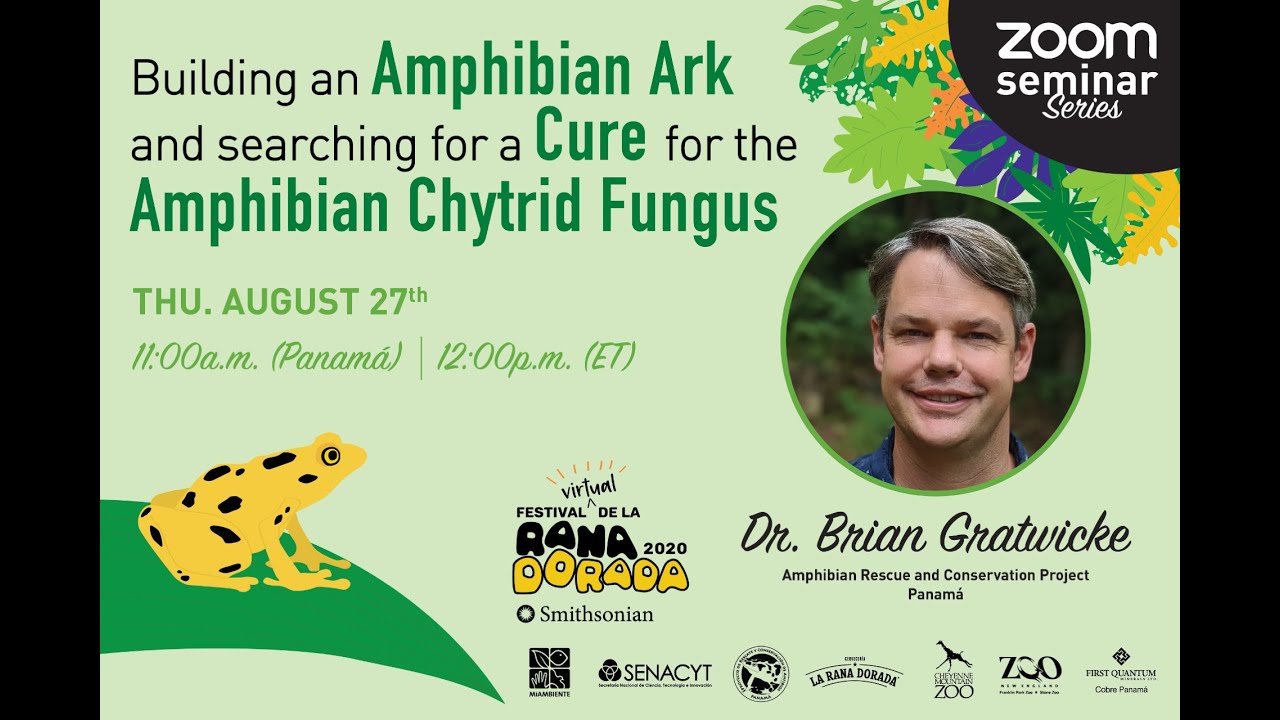
Zoom Seminar Series by Dr. Brian Gratwicke
Title history
- Zoom Seminar Series by Dr. Brian Gratwicke — observed on 20261026-2337 UTC (YouTube)
Keywords
Summary
195 words
Critical Evaluation
Value of the Information & Strength of the Argument
The presentation provides substantial value by transparently sharing both successes and failures of a conservation research program. It offers detailed insights into the practical challenges of ex-situ amphibian breeding, including nutritional and reproductive issues, and critically evaluates hypotheses such as probiotic therapy and genetic tolerance. The argumentation is logical and evidence-based, with references to specific experiments and outcomes, though some data (e.g., gene expression graphs) are only briefly explained. The speaker effectively communicates complexities without oversimplifying, making the talk informative for a scientific audience.
Scientific Rigor, Source Quality, Title Accuracy
The speaker draws on his own research and that of collaborators, and the content aligns with peer-reviewed literature on amphibian declines and chytridiomycosis. However, no explicit external sources are cited during the talk, and the description lacks references. The title is overly generic and does not convey the specific subject matter; the provided description better frames the talk. The overall scientific rigor is high, but the lack of citations diminishes its standalone credibility for viewers seeking to verify claims.
178 words
Title / Content Match
The generic title 'Zoom Seminar Series by Dr. Brian Gratwicke' partially reflects the content; the actual talk focuses on the amphibian chytrid crisis, rescue efforts, and research toward a cure. The title is underinformative but not misleading.
Quality & Reliability
8/10
Content from a renowned conservation biologist affiliated with the Smithsonian Institution, presenting a comprehensive overview of a long-term conservation project. The talk is well-structured, data-informed, and aligns with published research in amphibian conservation. No significant errors or misleading claims detected.
Key Moments
Markers derived by PSI from the transcript: the creator did not define chapters.
- Introduction of Dr. Brian Gratwicke and his background
- Overview of the amphibian chytrid crisis and impact in Panama
- Construction and layout of the Panama Amphibian Rescue Center
- Research on spindly leg syndrome and calcium supplementation
- Cryopreservation of amphibian sperm and hormone treatments
- Probiotic bacteria and genetic modification experiments that failed
- Genomic study of surviving vs. susceptible frogs, indicating tolerance
- Selective breeding for stronger skin secretions and ancient DNA project
- Use of automated audio recorders to locate surviving frog populations
- Reintroduction trial with radio-tracking revealing dispersal and mortality
Contribution & Novelties
The talk provides an original, first-hand account of a multi-faceted conservation strategy, including novel research on probiotic failures, immune tolerance mechanisms, and selective breeding for antifungal skin secretions. It highlights the practical realities of ex-situ conservation and the iterative process of testing and discarding hypotheses.
Pour aller plus loin :
- Chytridiomycosis — Overview of the disease and its impact on amphibians.
- Amphibian decline — Background on global amphibian population losses.
- Panama Amphibian Rescue and Conservation Project — Specific details about the project discussed in the talk.
- Probiotic therapy in amphibian conservation — Concept of using beneficial bacteria to fight pathogens, though note the accessible article is generic.
107 words
Radar Profile
The radar profile shows uniformly high scores (7-8) across information quantity, quality, technical level, and reliability, indicating a well-rounded and credible presentation. The slight dip in technical level suggests the talk is accessible yet still sufficiently detailed for a informed public.