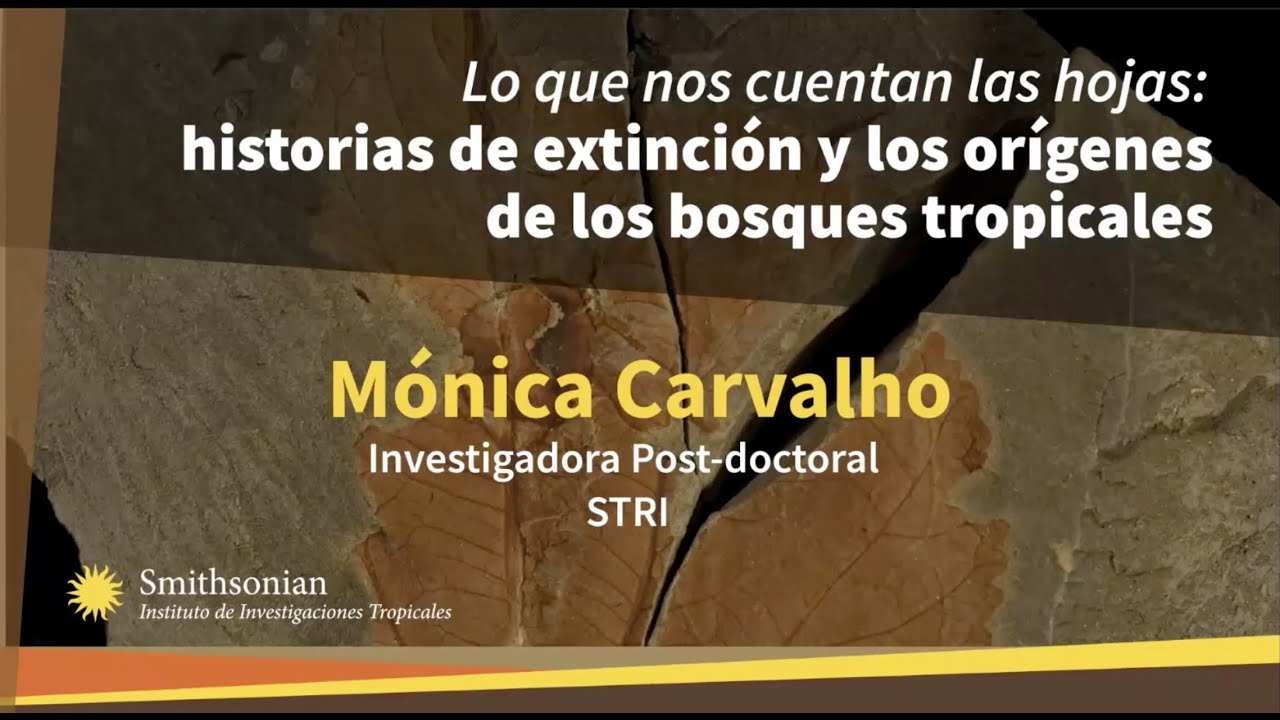
STRI Zoom Webinar: Mónica Carvalho
Title history
- STRI Zoom Webinar: Mónica Carvalho (PSI archive)
- STRI Zoom Webinar: Mónica Carvalho — observed on 20261030-1154 UTC (YouTube)
Keywords
Summary
165 words
Critical Evaluation
Value of the Information & Strength of the Argument
The value of the information presented is high, as it provides new empirical data on a poorly known region (tropics) for a major extinction event, filling a significant gap in paleobotanical knowledge. Mónica Carvalho’s argumentation is logically structured: she introduces the significance of leaf traits, explains the K-Pg event, describes her rigorous field and laboratory methods (including collecting fossils from clay and coal mines, and using leaf chemistry and venation to infer forest structure), and presents clear comparative results between pre- and post-extinction floras. The evidence strongly supports her conclusions about changes in forest structure (open vs. closed canopy) and compositional shifts, with post-extinction assemblages analogous to modern tropical forests. The reconstruction of insect herbivory patterns adds depth, though the talk remains an overview rather than a detailed statistical analysis.
Scientific Rigor, Source Quality, Title Accuracy
The scientific rigor is high: the presenter is a trained paleobotanist with a PhD from Cornell, and the research was conducted at a major Smithsonian institute. The methods, including use of leaf geochemistry and foliar damage, are standard in the field, but no specific references to published papers are given in the talk or in the description, reducing the verifiability. The title is overly broad, but the content matches the described topic. No audience comments were provided (or analyzed), so public reception could not be assessed.
231 words
Title / Content Match
The title 'STRI Zoom Webinar: Mónica Carvalho' is very generic, but the content does match the announced topic of leaf fossils and tropical forest origins.
Quality & Reliability
8/10
Presentation by a specialist researcher from a reputable institution (Smithsonian Tropical Research Institute). The content is well-structured and based on original data collected over 20 years. Minor transcription inaccuracies slightly affect precision, but overall highly reliable.
Key Moments
Markers derived by PSI from the transcript: the creator did not define chapters.
- Introduction to the webinar and Mónica Carvalho's background.
- Discussion of leaf diversity and why leaves carry ecological information.
- Description of the Cretaceous-Paleogene asteroid impact and its global effects.
- Fieldwork methods: searching for fossil leaves in mining sites and road cuts in Colombia.
- Overview of main results: 45% plant extinction and recovery time of 7 million years.
- Comparison of pre- and post-extinction forest structure and composition.
Contribution & Novelties
This talk provides original, previously understudied evidence on the effects of the K-Pg extinction on tropical forests, specifically demonstrating that tropical plant diversity loss was higher than in higher latitudes and that post-extinction forests rapidly resembled modern rainforests in structure and composition. This contributes to understanding how tropical ecosystems respond to extreme perturbations and the timescales of recovery.
Pour aller plus loin :
- Smithsonian Tropical Research Institute — Official website of the organizing institution, relevant for understanding the context and potential publications.
- Cretaceous–Paleogene extinction event — Wikipedia article summarizing the event, its causes, and global impacts.
- Paleobotany — Overview of the field of studying fossil plants, including methods and significance.
110 words
Radar Profile
The radar profile is fairly balanced with high scores across all dimensions, indicating that the video provides substantial, well-grounded scientific content with strong technical depth and reliability, while maintaining a clear and organized presentation.