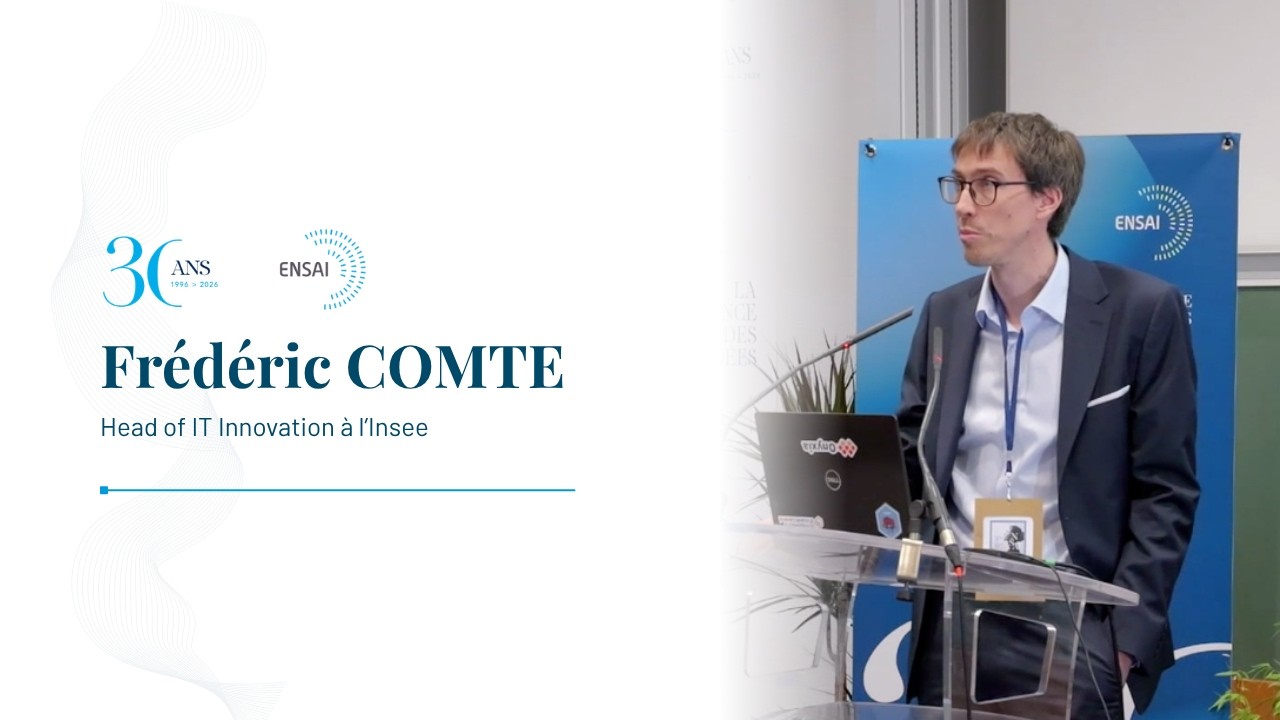
Frédéric Comte - Onyxia, la plateforme open source de traitement des données statistiques
Title history
- Frédéric Comte - Onyxia, la plateforme open source de traitement des données statistiques — observed on 20261110-0712 UTC (YouTube)
Keywords
Summary
210 words
Critical Evaluation
Value of the Information & Strength of the Argument
The talk provides valuable insight into the practical challenges of building a data platform within a public statistical institute. The argumentation is solid, based on the speaker’s direct experience, from his early days in cybersecurity to leading the division that created Onyxia. He effectively illustrates the friction between IT operations and data scientists, and justifies the need for a platform like Onyxia by highlighting the shift from monolithic tools to a modern, containerized, object-storage-driven stack. The reasoning is clear and pragmatic, supported by concrete examples such as the cost of SAS licenses and the difficulties of deploying machine learning APIs. The talk is not a mere theoretical overview but a practitioner’s account, giving it high practical value.
Scientific Rigor, Source Quality, Title Accuracy
The talk is largely based on the speaker’s professional experience, and he references technologies like SAS, Java, Python, containers, Docker, and object storage without formal citations. He mentions the cost of SAS (>1M € per year) as an internal fact. The only external link provided in the description is the ENSAI LinkedIn page, which is not directly a scientific source. The title is accurate and well-matched to the content. The talk is presented as a conference talk, not a rigorous academic lecture, so the lack of formal references is acceptable for the genre. No analysis of comments is possible because no comments were provided.
236 words
Title / Content Match
The title accurately reflects the content: a presentation of Onyxia as an open-source platform for statistical data processing.
Quality & Reliability
7/10
The speaker is a senior expert at INSEE (Head of IT Innovation) with hands-on experience in developing the platform. The talk is a professional account of the platform's genesis and technical choices, not a peer-reviewed study. Claims about costs and timelines are anecdotal but credible given his role.
Key Moments
Markers derived by PSI from the transcript: the creator did not define chapters.
- Introduction: Frédéric Comte introduced as Head of IT Innovation at INSEE.
- Speaker's background: ENSAI graduate, early focus on digital and Java, later cybersecurity.
- Culture of ticketing and security-first mindset slows innovation.
- The problem of testing tools: security before functional value.
- Open innovation platform for non-sensitive data.
- The 'mur de confusion' between dev, ops, and data science teams.
- Evolution from SAS era to modern ecosystems (R, Python).
- The container revolution: from VMs to containers, Docker, portability.
- Big data paradigm shift to modern data stack with object storage.
- Onyxia: extending the concept, self-service environments, and internal data scientist platform.
Cited Sources
- ENSAI LinkedIn — The only external link in the video description, pointing to the ENSAI school's LinkedIn page.
Contribution & Novelties
The talk provides a first-person account of the design and rationale behind Onyxia, an open-source platform developed by INSEE. Beyond the technical description, it highlights the cultural and organizational challenges faced by large institutions in adopting modern data tools. The speaker’s perspective as a former security expert turned advocate for data scientists offers a unique approach to balancing governance and innovation.
Pour aller plus loin :
- Onion platform GitHub — Official repository for Onyxia, relevant for those seeking technical details.
- Internal Developer Platform (Wikipedia) — Concept referenced by the speaker as IDP, relevant for understanding platform engineering.
- Docker (Wikipedia) — Container technology core to Onyxia’s architecture.
- Amazon S3 (Wikipedia) — Object storage service mentioned as paradigm for modern data stack.
120 words
Radar Profile
The profile shows a balanced distribution with slight emphasis on quantity and quality of information, moderate technical depth, and overall reliability. The speaker's expertise is evident, but the lack of formal references and the focus on personal experience limits the technical depth.