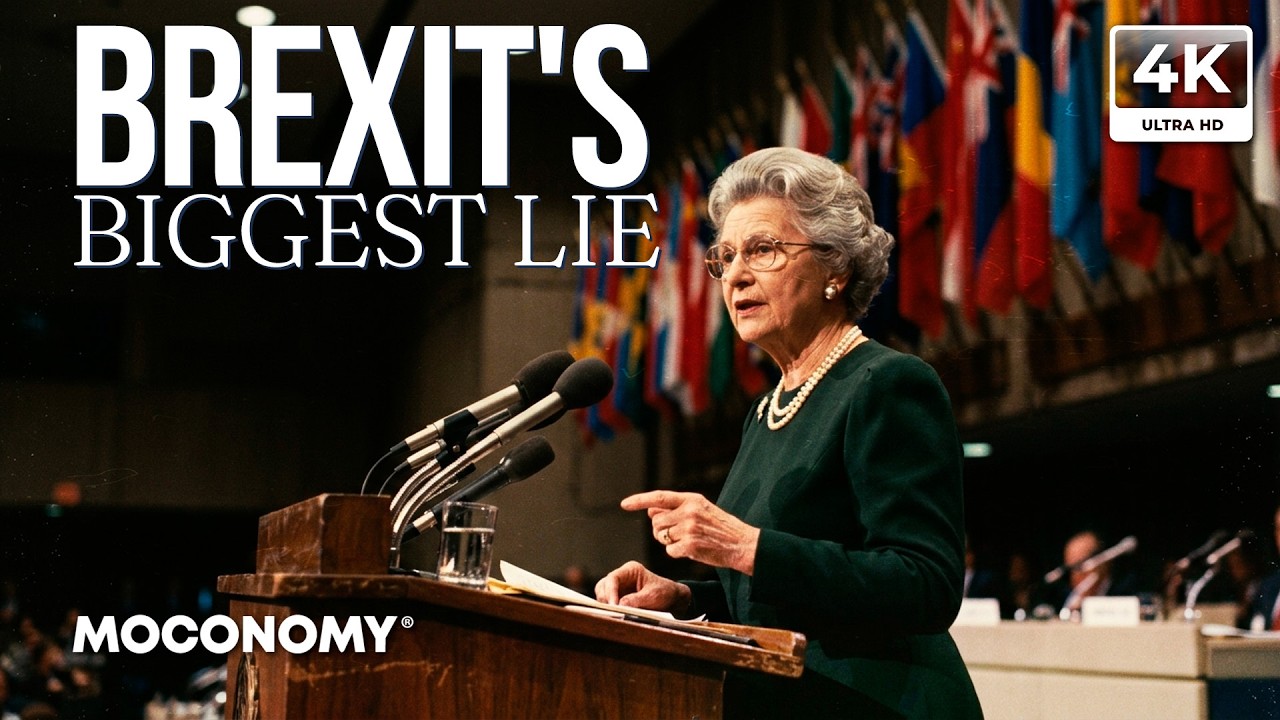
Britain Left the EU for This? The Truth About the Commonwealth | no one can define | 4K
Keywords
Summary
180 words
Critical Evaluation
Value of the Information & Strength of the Argument
The documentary’s value lies in its clear, evidence-based demolition of a popular political myth. It effectively uses trade statistics and expert commentary to argue that the Commonwealth was never a viable economic alternative to the EU. The argumentation is logical and builds systematically from historical context to contemporary analysis, avoiding emotional appeals. The inclusion of multiple expert opinions, including a historian and a political scientist, adds credibility. However, the film does not provide direct citations to primary sources, which limits verification. The narrative is persuasive, but it could benefit from explicit references to academic works or official trade data.
Scientific Rigor, Source Quality, Title Accuracy
The documentary demonstrates reasonable scientific rigor through the use of historical records, archival footage, and expert interviews. It acknowledges complexities, such as the Commonwealth’s role in anti-apartheid movements, and does not oversimplify. However, the absence of a bibliography or references to specific studies weakens its academic footing. The title is well-aligned with the content, accurately capturing the central thesis that Brexit’s Commonwealth promise was an illusion. The film does not overstate its claims and carefully distinguishes between what the Commonwealth is and is not, which enhances its credibility. Public comments were not analyzed for this review.
210 words
Title / Content Match
The title accurately reflects the content, which debunks the Brexit promise of the Commonwealth as an alternative to the EU.
Quality & Reliability
8/10
The documentary provides a well-structured historical and political analysis with expert interviews, but lacks explicit citations or references to academic sources. The statistics used (e.g., 9% vs 43%) are commonly cited, but not sourced in the film.
Key Moments
Markers derived by PSI from the transcript: the creator did not define chapters.
- Introduction of Brexit promise and the Commonwealth as alternative
- Historical background of British Empire and decolonization
- Creation of Commonwealth and India's pivotal membership in 1949
- Discussion of what the Commonwealth is not: no military, no trade bloc, no legal framework
- Commonwealth's role against apartheid and human rights controversies
- Brexit-era trade statistics and the illusion of a 'global Britain'
Cited Sources
- World Economy Playlist — Related playlist from the channel featuring economic documentaries
- Originals Playlist — Playlist of original documentaries from Moconomy
- Related documentary 1 — Suggested related documentary from the channel
- Related documentary 2 — Suggested related documentary with timestamp
- Related documentary 3 — Suggested related documentary with timestamp
Contribution & Novelties
The documentary offers a clear and accessible synthesis of the Commonwealth’s historical evolution and its geopolitical irrelevance to Brexit. It challenges the nostalgic narrative prevalent in British political discourse by providing concrete economic data and expert analysis. The film’s originality lies in its focus on the paradox that the institution benefits small states more than the UK itself, a point often overlooked.
Pour aller plus loin :
- Commonwealth of Nations — Overview of the organization’s history, membership, and structure.
- Statute of Westminster 1931 — Legal foundation of the Commonwealth.
- Decolonization — Context for the post-war transformation of empires.
- Brexit — Background on the UK’s departure from the EU.
108 words
Radar Profile
The radar profile shows high scores in information quantity and quality, moderate technical level, and slightly lower reliability due to lack of explicit sources. This indicates a well-argued documentary that is accessible to a general audience, but not fully verifiable without additional references.