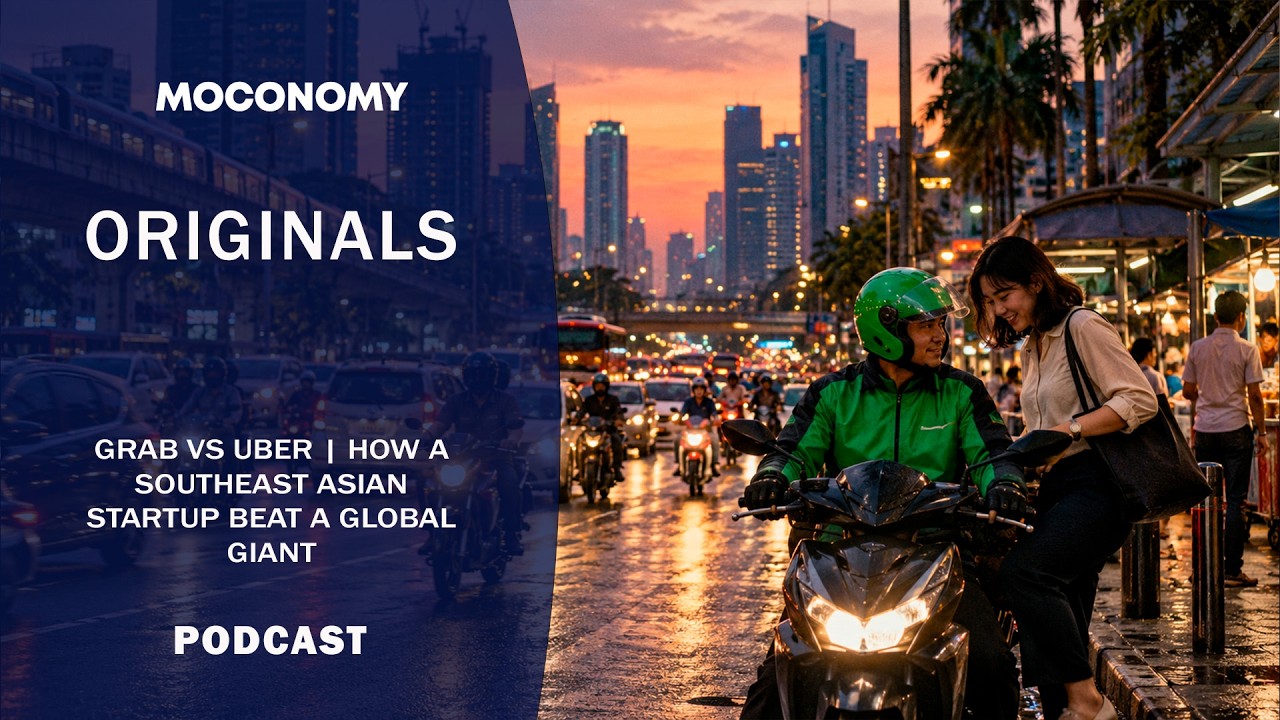
Grab vs Uber | How a Southeast Asian Startup Beat a Global Giant
Keywords
Summary
156 words
Critical Evaluation
Value of the Information & Strength of the Argument
The value of the information lies in the firsthand testimonies from former Uber and Grab employees, offering unique insights into the internal decision-making processes. The argumentation is solid: the documentary effectively builds a case for Grab’s hyperlocal strategy as the decisive factor, contrasting it with Uber’s uniform global app. It uses specific examples like GrabBike and cash payments to illustrate how local adaptation outperforms scale. However, it could be strengthened by citing more quantitative data on market shares or funding amounts. The narrative is engaging and logically structured, but the reliance on anecdotal evidence and the omission of independent sources limit its academic rigor.
Scientific Rigor, Source Quality, Title Accuracy
The documentary does not cite external written sources, but it does reference interviews and internal perspectives. The quality is acceptable for a popular business documentary; however, it lacks formal citations to reports or financial records. The title accurately reflects the content, focusing on the competition and eventual exit. The pacing is effective, but the lack of objective data and the absence of counterarguments or critical scrutiny of Grab’s own challenges (e.g., driver welfare issues) reduce its overall scientific rigor. The documentary is more of a storytelling piece than an analytical study.
210 words
Title / Content Match
The title accurately reflects the content, a detailed comparison of Grab and Uber's competition in Southeast Asia.
Quality & Reliability
7/10
The documentary relies on interviews with former Uber and Grab employees, providing first-hand accounts, but lacks citations to official data or reports. It is informative but not rigorously sourced.
Key Moments
Markers derived by PSI from the transcript: the creator did not define chapters.
- Introduction to the rivalry between Uber and Grab in Southeast Asia.
- Uber's early expansion and regulatory challenges in various countries.
- Uber faces copycat competitors and internal controversies.
- Grab's founding, hyperlocal strategy, and recruitment tactics in Singapore.
- Price war between Uber and Grab, exacerbated by Uber's scandals.
- Uber exits Southeast Asia, transferring its operations to Grab.
Cited Sources
- Generation Startup | Building a Billion-Dollar Dream — Mentioned in the video description as a related Moconomy documentary.
- The World According to Amazon | How Amazon Became More Powerful Than Governments — Mentioned in the video description as a related Moconomy documentary.
- Inside Anthropic: The $965 Billion AI Titan | Claude, AI Safety and Superintelligence | 4K — Mentioned in the video description as a related Moconomy documentary.
Contribution & Novelties
The documentary offers a compelling narrative on how a regional startup defeated a global giant through local focus. It provides new insights into the operational differences and the importance of cash-based economies. However, it does not present original data, mostly synthesizing interviews into a coherent story.
Pour aller plus loin :
- Grab Holdings — For an overview of Grab’s corporate history and evolution.
- Uber — To understand Uber’s global strategy and controversies.
- Transportation network company — For the broader concept of ride-hailing platforms.
83 words
Radar Profile
The radar profile suggests a documentary rich in descriptive content but moderate in technical depth and source reliability, reflecting its popular storytelling approach.