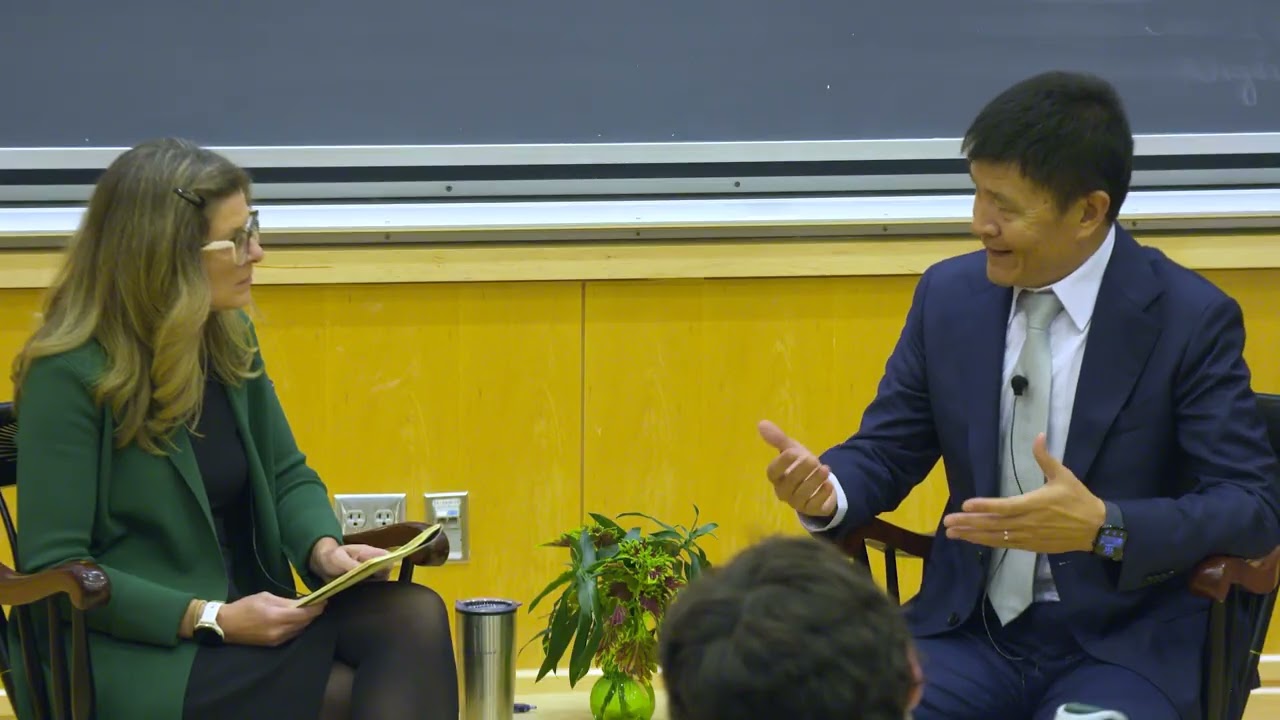
A Student Stands: From Tiananmen to Today
Title history
- A Student Stands: From Tiananmen to Today — observed on 20261025-1516 UTC (YouTube)
Keywords
Summary
167 words
Critical Evaluation
Value of the Information & Strength of the Argument
The value of the information lies in Zhou’s first-hand perspective as a key participant, offering unique insights into the internal dynamics of the 1989 protests and the mindset of activists. He provides a coherent narrative linking historical events to contemporary digital authoritarianism, supported by specific examples such as the Zoom surveillance incident and AI-generated propaganda. The argumentation is persuasive but rests heavily on personal testimony and ideological interpretation rather than neutral analysis. The discussion is rich in qualitative detail but lacks empirical data or comparative studies, and the reasoning is sometimes speculative, particularly regarding internal CCP politics. The Q&A portion adds depth by addressing critical questions about military loyalty and institutional change, though the responses remain within an opposition activist framework.
Scientific Rigor, Source Quality, Title Accuracy
The rigor is limited by the nature of the content as a personal account. Zhou references specific events (e.g., the 26 April editorial, his arrest, the 2000 lawsuit) but provides no primary documentation. He mentions sources like The Economist and his own organization’s reports, but these are not cited with URLs or verifiable details. The title matches the content accurately, and the discussion remains focused on the stated themes. The event is hosted by reputable academic institutions (Dartmouth’s Dickey Center, Alexander Hamilton Society), lending a veneer of credibility, but the content is fundamentally a persuasive political testimony rather than a balanced academic analysis.
239 words
Title / Content Match
The title accurately reflects the content: the speaker, a former Tiananmen student leader, connects his 1989 experience to current digital authoritarianism and China's trajectory.
Quality & Reliability
6/10
First-hand testimony from a direct participant, but inherently subjective and not independently verifiable. The account is detailed and consistent, yet relies on personal memory and interpretation.
Key Moments
Markers derived by PSI from the transcript: the creator did not define chapters.
- Introduction of Zhou Fengsuo and his background by the moderator
- Zhou describes the origins of the Tiananmen protests as mourning for Hu Yaobang and the initial demands
- Discussion of the crackdown, the role of Deng Xiaoping, and the massacre's brutality
- Zhou analyzes why China diverged from other communist states, criticizing Western trade policies
- Digital totalitarianism: surveillance, AI, and the Zoom incident; resistance through technology
- Q&A: military loyalty, generational change, and possibilities of internal reform
Cited Sources
- The Economist article on China's political future — Mentioned during Q&A about internal CCP dynamics
- Digital Rights Report (HRIC Substack) — Zhou refers to his organization's monthly publication
- Human Rights in China (HRIC) — Organization he leads, no specific link given
Concurring Sources
- Wikipedia: Tiananmen Square protests — Corroborates the basic timeline and events described by Zhou.
- Wikipedia: Digital authoritarianism — Aligns with Zhou's arguments about the use of technology for repression.
Dissenting Sources
- Official Chinese government statements on 1989 — The CCP denies the massacre and frames the events as a counter-revolutionary riot, conflicting with Zhou's account.
Contribution & Novelties
This talk provides an intimate, first-hand narrative of the Tiananmen events, blending historical memory with contemporary analysis of digital authoritarianism. It offers a unique perspective on how activists perceive the evolution of CCP control, from physical repression to algorithmic surveillance. The discussion of AI-generated media as a tool for protest (e.g., the video ‘Imagine Democracy in China’) is a novel insight into creative resistance.
Pour aller plus loin :
- Tiananmen Square protests — Offers background and historical context for the events discussed.
- Human Rights in China — Provides information on the organization Zhou directs, a key player in advocacy.
- Digital authoritarianism — Explores the broader concept of tech-enabled state control, central to the talk.
- Great Firewall (China) — Pertains to the censorship infrastructure Zhou discusses.
125 words
Radar Profile
The radar profile shows high scores in quantity and value of information, reflecting the detailed personal narrative and substantive political analysis, but lower scores in technical level and reliability due to the subjective nature of the testimony and lack of verifiable sources.