What if your pain has a purpose? | Dr. Sunita Punjabi, PhD | TEDxButterfish Cove
Keywords
Summary
186 words
Critical Evaluation
Value of the Information & Strength of the Argument
The value of the information lies in its motivational framework: it reframes pain as a source of strength and direction. The argumentation follows a narrative arc that is emotionally compelling and accessible, using personal stories to illustrate theoretical points. However, scientific claims are presented without detailed study details or statistical backing, weakening the argumentative solidity. The speaker’s use of brain mapping and references to research adds credibility, but the lack of precise citations and the overgeneralization of findings (e.g., the ‘amygdala loop’) reduce its scientific weight. The core message—that examining personal adversity can reveal core values and purpose—is supported by psychological concepts like post-traumatic growth and meaning-making, yet the talk does not engage with the scientific literature in depth. Overall, it is an inspiring perspective piece rather than a rigorous scientific review.
Scientific Rigor, Source Quality, Title Accuracy
Along with the title being well-matched, the talk’s scientific rigor is moderate. The speaker cites institutions like the University of Chicago, CDC, and HeartMath, but does not provide specific citations or study names, making verification difficult. The personal stories and forward-looking statements are presented as established fact, and the concept of an ’electrical current’ driving purpose is oversimplified. The talk is more of a personal testimony with scientific gloss than a balanced scientific review. However, the limited sources that are mentioned are credible, and the speaker’s credentials and clinical experience lend some weight. Adequacy between title and content is strong, as the entire presentation is dedicated to the thesis that pain can lead to purpose. The audience likely finds it motivating, but critical viewers would note the lack of rigorous source documentation.
279 words
Title / Content Match
The title perfectly matches the content, as the speaker directly explores how pain and adversity can reveal purpose.
Quality & Reliability
6/10
The talk blends personal narrative with references to neuroscience and positive psychology, but lacks detailed citations and rigorous evidence; claims are illustrative rather than systematically supported.
Key Moments
Markers derived by PSI from the transcript: the creator did not define chapters.
- Introduction with the myth of Sisyphus and the concept of purpose.
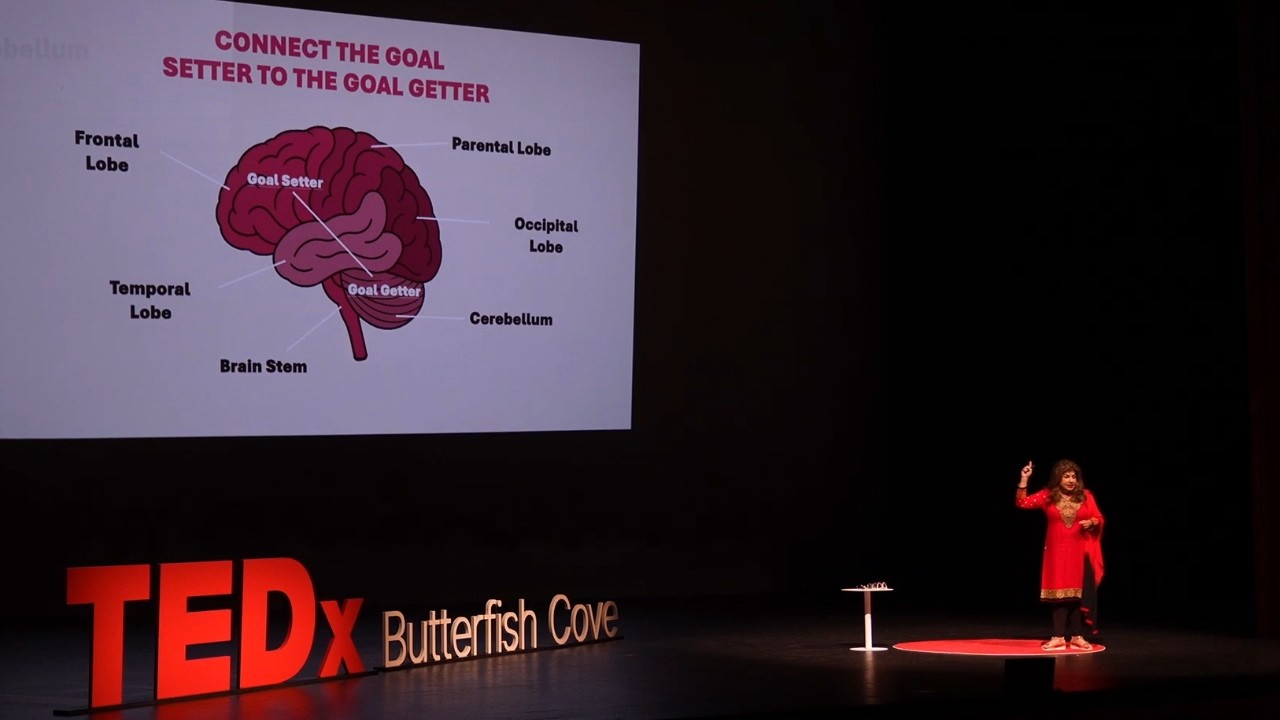
- Discussion of brain mapping and neuroplasticity; introducing the idea of training the brain.
- Personal story: car accident, MRI revealing smaller brain, and the neurological diagnosis.
- Immigrant childhood story and how she made up the meaning that she didn't belong.
- Examples of people whose pain led to callings: teacher, nurse, veteran, attorney.
- Research references: HeartMath Institute, University of Chicago, and the CDC on happiness.
- Interactive line demonstration and final challenge to turn pain into purpose.
Cited Sources
- TEDx Talk page — Provided in the video description as the official TEDx website.
- HeartMath Institute — Mentioned in the talk as source for the 'amygdala loop' and heart-brain coherence.
- University of Chicago study on emotional arousal and narrative memory — Referenced in the talk regarding how emotional events enhance memory.
- Center for Disease Control (CDC) study on happiness — Cited in the talk to support the idea that happiness cannot be pursued directly.
Concurring Sources
- Post-traumatic growth research — Supports the idea that adversity can lead to personal growth and a redefined sense of purpose.
- Center for Disease Control study on happiness (mentioned in talk) — The talk cites this study to argue that happiness is a byproduct of meaningful endeavor.
Dissenting Sources
- Potential skepticism on 'amygdala loop' concept — The neural mechanism proposed ('electrical current' driving purpose) is not a widely recognized scientific construct and lacks empirical support in mainstream neuroscience literature.
Contribution & Novelties
The talk offers a unique integration of personal narrative with neuroscience to argue that adversity can be deliberately repurposed into a life mission. The speaker’s framing of purpose as an ’electrical current’ that drives behavior is a creative metaphor, though scientifically imprecise. The practical takeaway—examining past pain to uncover underlying values—is actionable and resonates with existing psychological concepts. It contributes a motivational perspective that encourages listeners to see their struggles as assets.
Pour aller plus loin :
- Neuroplasticity — The brain’s ability to reorganize itself, foundational to the speaker’s claims.
- Amygdala — Key brain region involved in emotional processing, central to the talk’s discussion.
- Post-traumatic growth — Research on how people can develop positively after trauma, aligning with the talk’s message.
- Meaning-making — Psychological process of constructing meaning from experiences, integral to the speaker’s argument.
135 words
Radar Profile
The radar profile shows moderate scores across information quantity and quality, with a lower technical level and moderate reliability. This indicates a talk that is engaging and informative at a surface level but lacks deep scientific depth and rigorous sourcing, making it more motivational than strictly educational.