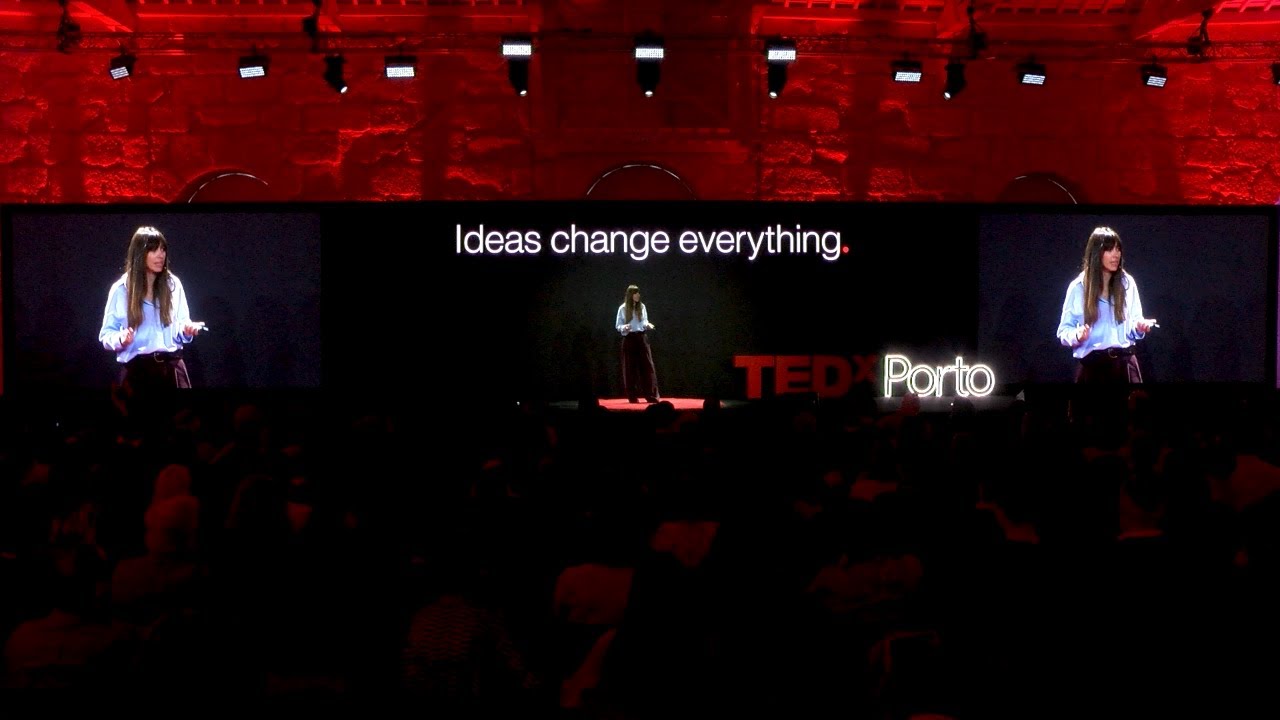
Adolescentes y pantallas: el precio invisible | Oiane Sagasti | TEDxPorto
Teenagers and screens: the invisible price | Oiane Sagasti | TEDxPorto
Keywords
Summary
168 words
Critical Evaluation
Value of the Information & Strength of the Argument
The talk delivers a strong emotional message backed by dramatic anecdotes and a few official statistics. The argumentation is persuasive: the speaker builds a clear causal chain from screen overuse to emotional incapacity and self-harm, then to mental health crises. She effectively uses a personal family story to humanize the issue. However, the reasoning relies on correlation rather than demonstrated causation, and she does not mention ongoing scientific debates or counter-evidence. The solutions she proposes are common-sense and feasible, but they lack nuance about individual differences and potential benefits of screens. The value lies in raising awareness and prompting parental vigilance, but the scientific rigor is limited by the reliance on selective data and personal interpretations.
Scientific Rigor, Source Quality, Title Accuracy
The speaker references official bodies (WHO, UNICEF, Spanish Ministry of Health, ANAR Foundation) but does not provide precise citations or study details. The description includes links to TEDx guidelines only, not to the cited data. The title is accurate and matches the content. The TEDx disclaimer explicitly states that the talk falls outside content guidelines and that the views are personal, which reduces its scientific credibility. There is no mention of contradictory studies or nuance, and the speaker does not engage with the ongoing research on the complex relationship between screens and mental health.
225 words
Title / Content Match
The title accurately reflects the content, which focuses on the hidden harms of screen use on adolescent mental health.
Quality & Reliability
5/10
The talk presents alarming statistics from official sources but relies heavily on anecdotal evidence and personal documentary experience. The TEDx disclaimer notes that content falls outside standard guidelines, and the speaker's views are not fully supported by peer-reviewed studies. While relevant and impactful, the lack of precise citations and heterogeneous data limits reliability.
Key Moments
Markers derived by PSI from the transcript: the creator did not define chapters.
- Introduction of the family story and discovery of self-harm photos
- Statistics on adolescent self-harm: 18% rate in Spain and Portugal
- Explanation of emotional learning and how screens prevent it
- Impact of social media on self-esteem and comparison to global standards
- Dangerous content on platforms and the 'infinite scroll' toxicity
- Three practical solutions: education, reconnecting with offline childhood, and parent congruency
Cited Sources
- TEDx Content Guidelines — Referenced as the manual for TEDx organizers, providing context for the talk's possible deviation from standard content guidelines.
- TEDx official page — General link to TEDx program, mentioned in the description as source for more information.
Contribution & Novelties
The talk contributes by translating the findings of a documentary into a public health warning, emphasizing the emotional incapacity caused by screen overuse. It highlights the phenomenon of self-harm among adolescents as a little-known consequence of hyperconnection. The novelty lies in the personal narrative combined with aggregated statistics, though the scientific basis is not strong.
Pour aller plus loin :
- Screen time and mental health — Pertinent to the core topic, though the talk does not discuss the nuances of research.
- Adolescent self-harm — Directly related to the central example, useful for background.
- Social comparison theory — Relevant to the discussion of self-esteem damage from social media.
- The debate on digital media effects is ongoing; see Digital media use and mental health for a balanced view.
126 words
Radar Profile
The radar profile shows a moderate quantity of information but lower quality and reliability, reflecting the talk's anecdotal and non-systematic nature. The technical level is low, suitable for a general audience, but this limits its scientific depth. Overall, the talk is effective in raising awareness but lacks rigorous evidence.