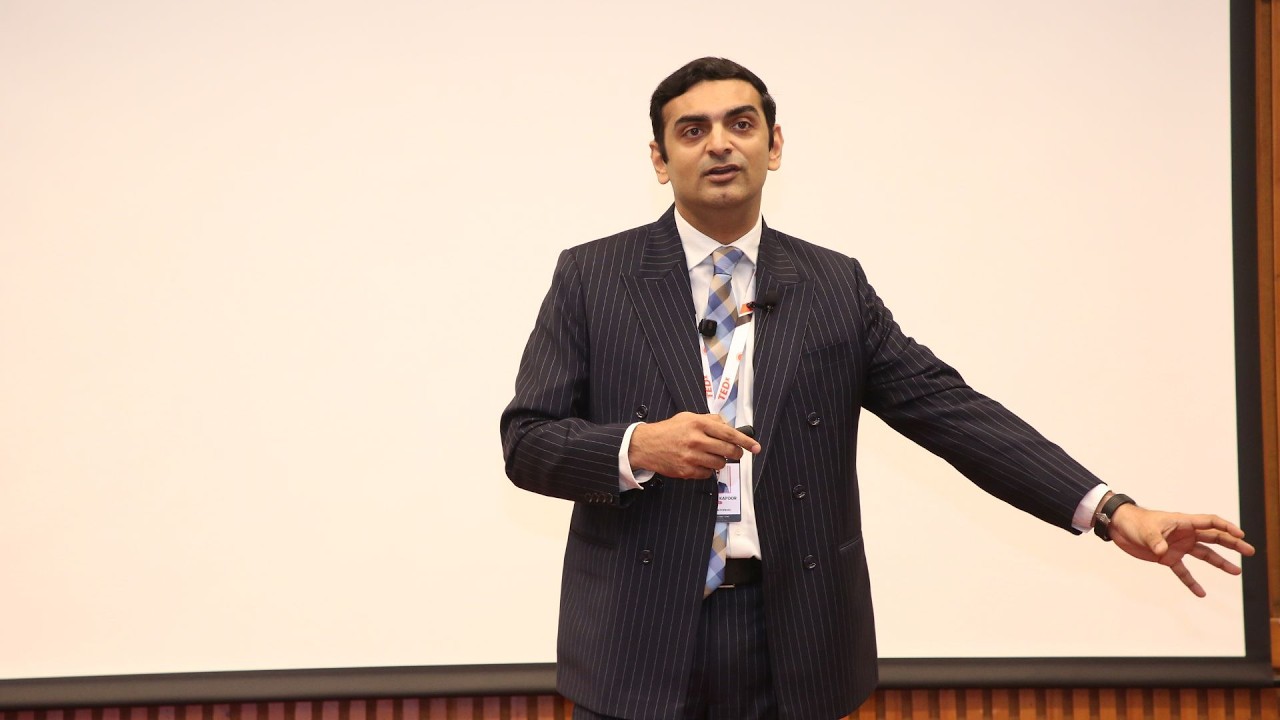
Who Leads When the Plan Fails? | Dr. Aakaar Kapoor | TEDxIPEC
Title history
- Who Leads When the Plan Fails? | Dr. Aakaar Kapoor | TEDxIPEC — observed on 20261027-0204 UTC (YouTube)
Keywords
Summary
173 words
Critical Evaluation
Value of the Information & Strength of the Argument
The talk provides valuable, real-world insights into entrepreneurship and leadership, particularly within family businesses. The argumentation is anecdotal but compelling, as the speaker uses concrete examples from his own journey—such as the call center transformation and the GPS analogy—to illustrate his points. The value lies in the practical advice on handling failure, separating core purpose from specific plans, and the importance of continuous learning and openness to criticism. The speaker builds his case through relatable narratives and references to well-known figures like Steve Jobs and Amitabh Bachchan, which strengthens his message despite a lack of quantitative evidence.
Scientific Rigor, Source Quality, Title Accuracy
The talk is not supported by formal sources; the only external reference is the TEDx platform itself. The speaker’s credibility derives from his professional background and personal experience rather than cited literature. The title is fully consistent with the content, which directly addresses who leads when plans fail. The narrative is coherent and well-structured, though the absence of verifiable evidence limits its scientific rigor. The talk relies on the authority of experience, which is appropriate for a TEDx format but should not be mistaken for empirical research.
199 words
Title / Content Match
The title accurately captures the central theme of leadership accountability and adaptive decision-making when plans fail, aligning well with the content.
Quality & Reliability
6/10
The talk is a personal narrative based on the speaker's entrepreneurial and medical experience, offering practical insights but lacking empirical evidence or external validation. It is reliable as an authentic testimony, though not as a scientifically rigorous source.
Key Moments
Markers derived by PSI from the transcript: the creator did not define chapters.
- Introduction: challenge of explaining new ideas to an experienced team.
- Background on City X-ray Clinic and second-generation entrepreneur struggles.
- First decision: setting up a call center, facing initial difficulties and investments.
- Lesson 1: Separate purpose from plan; GPS rerouting analogy.
- Lesson 2: Networking beyond walls; examples of student and Amitabh Bachchan.
- Lesson 3: Change in people; involve team in problem-solving.
- Lesson 4: Responsibility for the next step; urgency and ownership.
- Conclusion: who leads? Owning decisions, persistence, and focus.
Cited Sources
- TEDx Program — The talk is part of the independently organized TEDx event, referenced in the video description.
Contribution & Novelties
The talk offers a personal framework for leadership during failure, emphasizing three concrete lessons: separating purpose from plan, networking beyond organizational boundaries, and bringing people along through inclusive problem-solving. It provides a practical, non-technical perspective grounded in the speaker’s dual roles as clinician and entrepreneur. The originality lies in blending medical precision with business resilience, illustrating how to maintain credibility while leading change.
Pour aller plus loin :
- Adaptive leadership — Relevant to the speaker’s emphasis on adjusting plans and behaviors in response to challenges.
- Growth mindset — Underpins the idea of learning from failure and remaining open to criticism.
- Family business — Contextualizes the second-generation succession challenges discussed in the talk.
112 words
Radar Profile
The profile shows moderate scores in information quantity and quality, reflecting a talk rich in anecdotal content but lacking scientific depth. The low technical level and moderate reliability suggest a primarily inspirational and experience-driven presentation, with limited formal evidence.