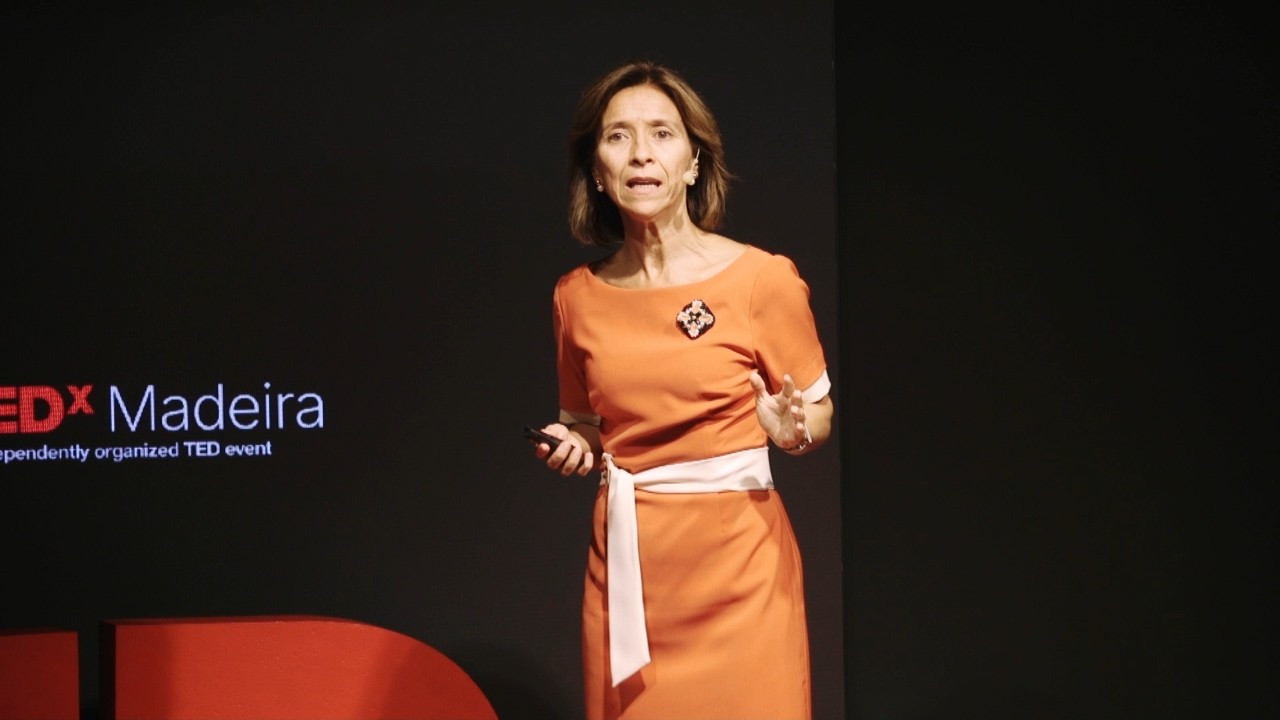
Reescrevendo a Longevidade | Paula Margarido | TEDxMadeira Salon
Rewriting Longevity | Paula Margarido | TEDxMadeira Salon
Title history
- Reescrevendo a Longevidade | Paula Margarido | TEDxMadeira Salon — observed on 20261101-0403 UTC (YouTube)
Keywords
Summary
200 words
Critical Evaluation
Value of the Information & Strength of the Argument
The talk provides value through authentic personal narratives that illustrate the central message: the elderly are not instruments of utility but persons of worth. Margarido’s argument rests on the principle of respect for human dignity, supported by touching examples that appeal to empathy. She effectively contrasts the idealized vision of retirement with the reality of social isolation and neglect, which strengthens her case. The reasoning is logical and coherent, though it remains at an anecdotal level without empirical evidence. The call to action—to prepare for the transition to retirement and to engage actively with the elderly—is practical and motivational. The speaker’s credibility stems from her legal background and her government role in social inclusion, adding weight to her advocacy.
Scientific Rigor, Source Quality, Title Accuracy
The talk is not scientifically rigorous; it relies on personal experience and emotional testimony rather than data or academic references. The only external source mentioned is a quote from Cardinal Clemente Mendoça, which is used to reinforce the philosophical dimension. The title adequately matches the content, as it succinctly captures the speaker’s redefinition of longevity. No external sources are cited in the description except the general TEDx link, so the factual basis is limited. The talk is best viewed as a persuasive ethical appeal rather than an evidence-based analysis. There are no comments provided, so public reception cannot be analyzed.
234 words
Title / Content Match
The title accurately reflects the content, as the speaker redefines longevity as a period of continued value and contribution rather than decline.
Quality & Reliability
7/10
The talk is a personal and professional reflection by a lawyer and government official, offering a consistent and compassionate perspective on aging. It lacks empirical data or scientific references, but the arguments are well-structured and grounded in real-life experiences, making it credible within its scope.
Key Moments
Markers derived by PSI from the transcript: the creator did not define chapters.
- Introduction to her background and family, emphasizing the importance of intergenerational respect.
- Raises the question of whether longer life implies quality, and discusses societal attitudes toward the elderly.
- Anecdote about her grandmother and life lessons she learned about care and respect.
- Story of her aunt who died in a hospital corridor, illustrating the consequences of neglect.
- Tells the story of a 70-year-old man caring for his disabled daughter and wife, highlighting his dedication and love.
- Quotes Cardinal Clemente Mendoça: 'We grow old to live, not to die.'
- Concluding call to reimagine longevity, emphasizing that we should imagine, discover, and learn until the end of life.
Cited Sources
- TEDx Talks — General TEDx platform link provided in the video description.
Contribution & Novelties
The talk presents a fresh perspective on longevity by framing it as an opportunity for continued personal and social growth rather than a period of decline. It challenges the utilitarian view of value based on productivity and offers a humanistic approach centered on dignity and care. The personal stories bring an emotional and authentic dimension that appeals to a broad audience.
Pour aller plus loin :
- Ageism — Societal discrimination against the elderly, directly relevant to the talk’s critique of viewing older people as burdens.
- Active ageing — A policy framework that emphasizes the importance of social participation and health in later life, aligning with the speaker’s call for a more engaged aging process.
- Care ethics — A philosophical approach that prioritizes interpersonal care and responsibility, underpinning the speaker’s emphasis on compassion and mutual support.
135 words
Radar Profile
The radar profile shows a balanced but moderate performance, with higher scores on information quality and reliability compared to quantity and technical depth. This indicates that the talk is meaningful and credible but lacks comprehensive data or advanced technical content, characteristic of a personal testimony rather than a scientific lecture.