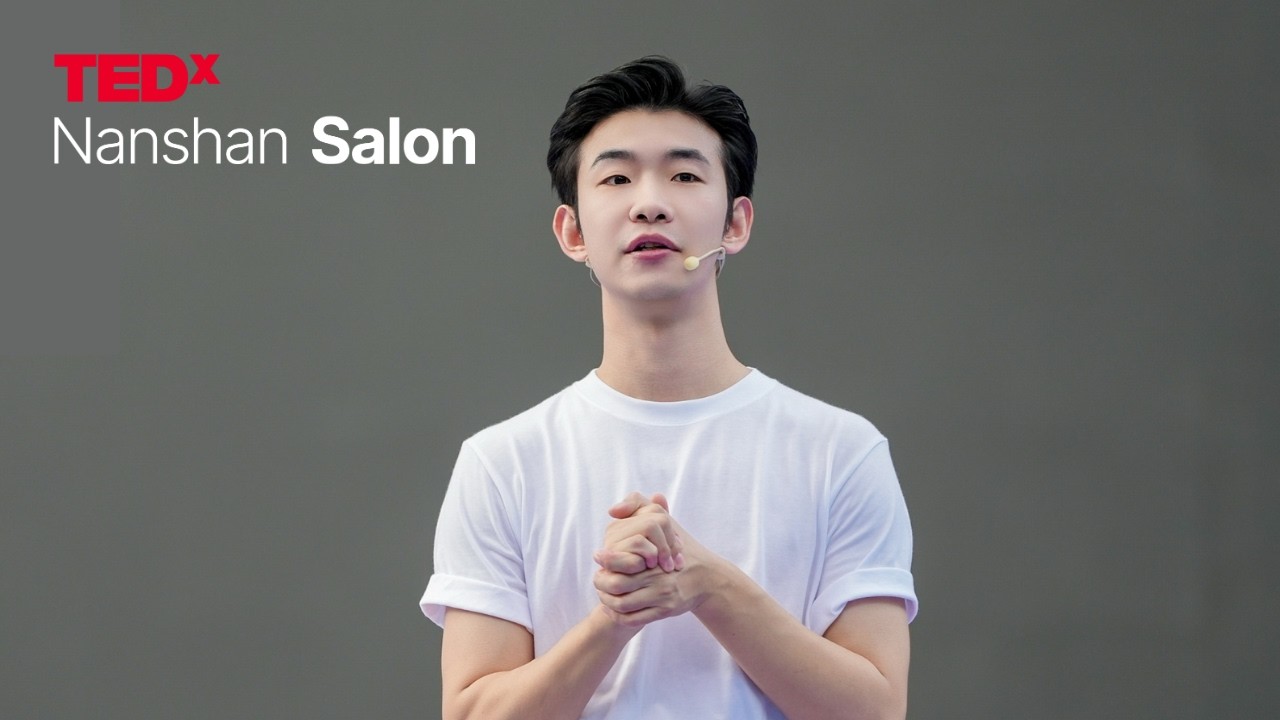
空隙里的答案:生活如何化为舞台的灵感? | 沈员 胡 | TEDxNanshan Salon
Answers in the Spaces: How Life Transforms into Stage Inspiration? | Hu Shenyuan | TEDxNanshan Salon
Title history
- 空隙里的答案:生活如何化为舞台的灵感? | 沈员 胡 | TEDxNanshan Salon — observed on 20261026-1236 UTC (YouTube)
Keywords
Summary
121 words
Critical Evaluation
Value of the Information & Strength of the Argument
The talk offers a compelling personal narrative that emphasizes the importance of life experiences in artistic creation. The speaker argues convincingly that professional skill alone is insufficient for meaningful expression; instead, the ‘gap’—the space between profession and life—allows audiences to connect their own stories. His examples, such as the simple hand wave replacing complex techniques, illustrate his point effectively. The argument is well-structured, moving from personal anecdotes to broader artistic principles, though it remains subjective and anecdotal rather than empirically grounded.
Scientific Rigor, Source Quality, Title Accuracy
The title accurately captures the theme of finding answers in life’s gaps. The talk references historical figures and places like Dunhuang, but no specific sources are cited beyond the general TEDx platform. The speaker’s credibility as a dance artist adds weight to his personal testimony, but the content is primarily experiential rather than rigorously sourced. Overall, the presentation is coherent but lacks verifiable references for its claims.
163 words
Title / Content Match
The title accurately reflects the content, discussing the 'gap' as a source of inspiration and answers in life and art.
Quality & Reliability
8/10
The talk is from TEDx Talks, a well-known platform, and the speaker is a professional dancer and choreographer. The content is personal experience and artistic philosophy, which is reliable but not scientifically verifiable.
Key Moments
Markers derived by PSI from the transcript: the creator did not define chapters.
- The speaker describes his early obsession with technical perfection in dance practice.
- He tells the story of his mother's waving gesture and how it became a central motif in his work 'Childhood'.
- He explains the three layers of 'gap': leaving space, seeing, and choosing.
- He discusses his approach to training dancers by observing everyday life, like walking in the street.
- He references his work 'Dunhuang Return' and the focus on ordinary people versus grand symbols.
- He concludes by asking the audience to find their own 'rehearsal room' and step outside to see the gaps.
Cited Sources
- TEDx Program — Official information about the TEDx event format and community.
Concurring Sources
- TEDx Talks — The official channel of TEDx Talks, hosting this video.
Contribution & Novelties
The talk introduces a fresh perspective on artistic creativity by emphasizing the ‘gap’ between professional expertise and everyday life. It offers a actionable framework for artists and creators to find inspiration outside their technical domain. To explore further:
- TEDx Program – Overview of the TEDx initiative.
- The concept aligns with the philosophy of ‘ma’ (間) in Japanese aesthetics, which values empty space. (No specific URL provided, but this is a known cultural concept.)
- For dance-specific inspiration, one could look at works by Pina Bausch, who also drew from everyday gestures. (No URL given, but widely documented.)
98 words
Radar Profile
The radar chart would show relatively high scores in quality and reliability (around 8), moderate in quantity (7) and technique (6). This indicates a well-presented expert opinion with meaningful content, though not highly technical or data-driven.