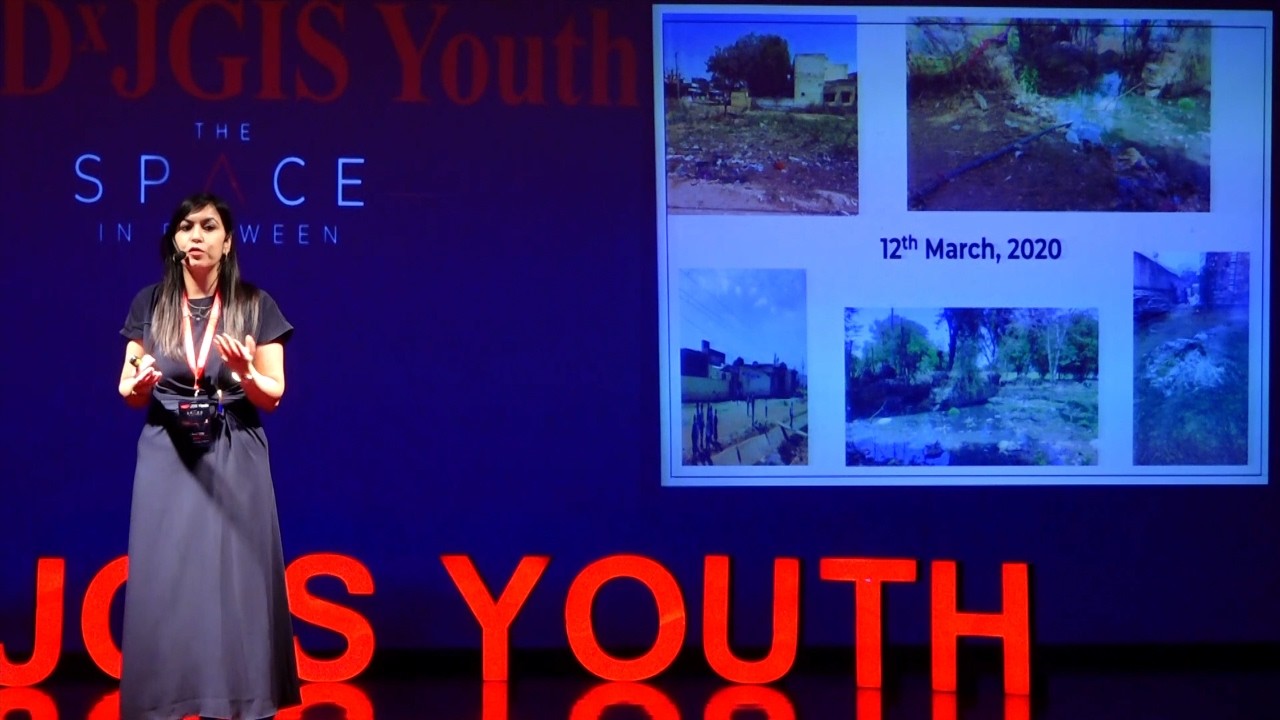
Why Not? The Question That Changes Everything | Dr. Sudipti Arora | TEDxJGIS Youth
Title history
- Why Not? The Question That Changes Everything | Dr. Sudipti Arora | TEDxJGIS Youth — observed on 20261026-1738 UTC (YouTube)
Keywords
Summary
159 words
Critical Evaluation
Value of the Information & Strength of the Argument
The value of the information lies in the authenticity of the speaker’s personal journey, which serves as a relatable example of perseverance and adaptive goal-setting. The argumentation is not empirical but persuasive, built on narrative storytelling and a clear logical progression: initial failures led to unexpected opportunities, and a consistent attitude of ‘why not’ enabled her to take risks. The most compelling point is the reframing of the law of attraction—introducing ‘act’ as an essential component—which grounds an otherwise mystical concept in practical effort. However, the talk is inspirational rather than rigorous; it does not provide broad evidence or address potential counterarguments, limiting its scientific value.
Scientific Rigor, Source Quality, Title Accuracy
The scientific rigor is moderate: the talk is not a research presentation but a personal account. The speaker cites no external sources; the only reference is her own experience and the TEDx platform. She mentions specific institutions (IIT Roorkee, University of Oxford) and achievements, which are verifiable, but does not provide citations. The title is highly adequate, as the entire talk revolves around the question ‘Why not?’ used as a mantra to challenge limitations. The content matches the title perfectly. There is no formal argumentation or data analysis, but the anecdotal evidence is consistent and coherent.
217 words
Title / Content Match
The title precisely captures the central motif of the talk—questioning limitations with 'Why not?'—and is fully reflected in the content.
Quality & Reliability
6/10
The talk is a first-person account of the speaker's professional and personal journey, providing anecdotal evidence rather than systematic scientific data. However, the speaker is a credentialed environmental scientist with concrete achievements (PhD, patent, national projects), lending credibility to her narrative. The content is inspirational but not rigorous in a scientific sense.
Key Moments
Markers derived by PSI from the transcript: the creator did not define chapters.
- Opening activity: audience asked to close eyes and imagine their future, setting the stage for introspection.
- Speaker shares her initial dream of becoming a doctor and the failure in NEET, leading to shift toward biotechnology.
- Narrative about choosing a risky PhD path over a stable government job, and the challenges in the lab (rats eating worms).
- Discussion of her work in villages and the realization that science must be taken to people; securing funding for zero-waste village model.
- Oxford story: repeated applications, visualizing, and finally getting the Chevening fellowship; emphasis on 'act' in manifestation.
Cited Sources
- TEDx Program — Talk delivered at a TEDx event independently organized under the TEDx license.
Contribution & Novelties
The talk’s original contribution is the emphasis on the missing ‘act’ in the popular manifestation framework, ‘ask, believe, receive’. By inserting action as a crucial step, Arora grounds a widely mystical concept in practical effort, making it more actionable for the audience. Her personal story of repeated failures (NEET, GATE, fellowship rejections) and eventual achievements via persistence and concrete steps adds authenticity, but the idea is not entirely novel; it aligns with known psychological concepts like growth mindset and self-efficacy, albeit presented through a personal lens.
Pour aller plus loin :
- Law of attraction (New Thought) — Context for the idea she critiques and modifies.
- Growth mindset — Psychological foundation for viewing failures as learning opportunities.
- Vision board — Her personal practice for visualizing goals, placed within a broader self-help tradition.
131 words
Radar Profile
The radar profile shows moderate scores across the board, with quality and reliability slightly higher than quantity and technique, reflecting the talk's nature as an inspirational personal narrative rather than a dense technical exposition. The lowest scores in technical level indicate a broad, non-specialist audience. This profile aligns with an engaging motivational talk that prioritizes storytelling over empirical rigor.