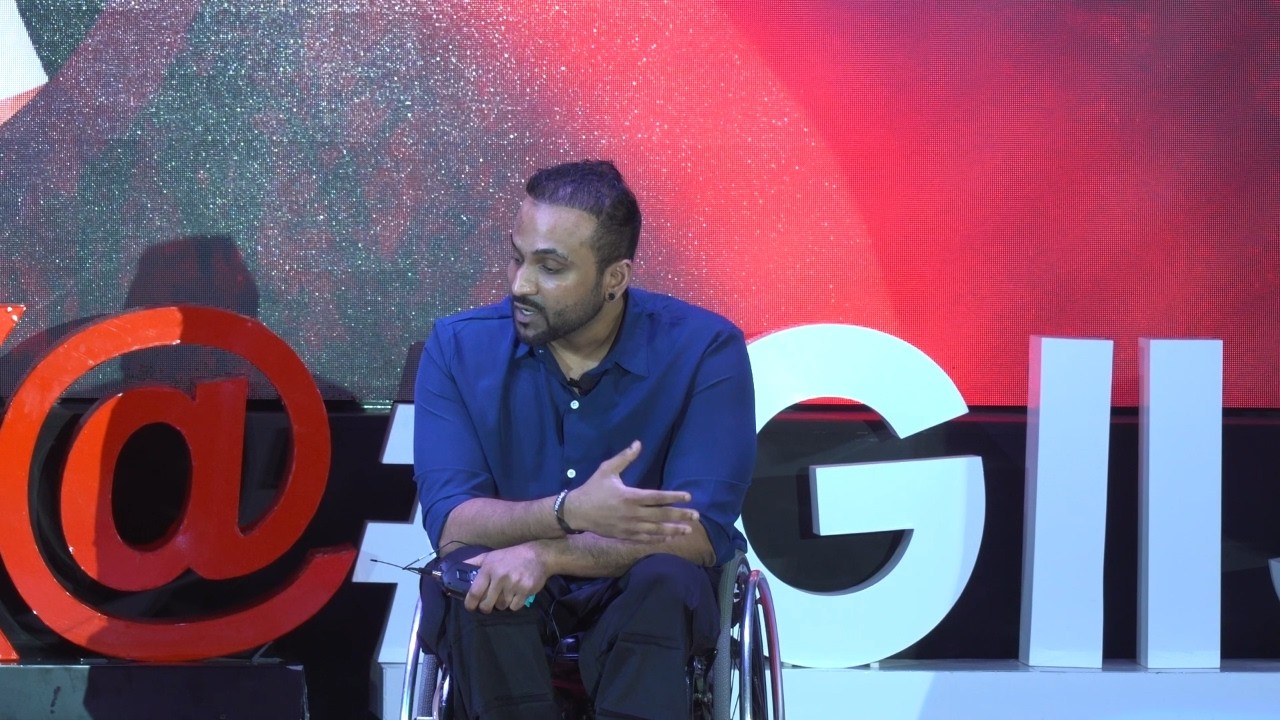
What if you saw it differently? | Sujith Koshy Varghese | TEDxGIIS Dubai
Title history
- What if you saw it differently? | Sujith Koshy Varghese | TEDxGIIS Dubai — observed on 20261027-0211 UTC (YouTube)
Keywords
Summary
146 words
Critical Evaluation
Value of the Information & Strength of the Argument
The value of this talk lies in its authentic personal testimony and motivational appeal. The speaker effectively uses storytelling to illustrate how shifting perspective can transform one’s approach to adversity. His argument is built on concrete experiences—from the accident to incremental achievements—which makes the message relatable and compelling. However, the argumentation relies heavily on anecdotal evidence and subjective interpretation rather than empirical data. The references to figures like Roger Bannister and Simon Sinek serve as illustrative analogies but are not deeply analyzed. The emphasis on resilience, discipline, and purpose is well-articulated, offering practical advice, but the lack of scientific grounding limits its persuasive force for a critical audience.
Scientific Rigor, Source Quality, Title Accuracy
The talk demonstrates moderate scientific rigor. The speaker cites personal experiences and references a few well-known examples (Dewey Bozella, Roger Bannister, Simon Sinek) but does not provide verifiable sources or a comprehensive literature review. The TEDx platform itself is not a scientific source, and the link provided (https://www.ted.com/tedx ) is generic. The title ‘What if you saw it differently?’ is broadly appropriate and aligned with the content, but it could be more specific. The talk does not appear to contain any advertising or sponsored content. Overall, the content is inspirational rather than scientifically rigorous, which is reflected in the moderate scores.
224 words
Title / Content Match
The title 'What if you saw it differently?' directly reflects the talk's core theme of shifting perspective, which is well illustrated throughout the speaker's journey.
Quality & Reliability
5/10
The talk is a personal narrative without scientific evidence or peer-reviewed sources. It references anecdotal examples (Dewey Bozella, Roger Bannister, Simon Sinek) but does not provide rigorous verification. The message is coherent and inspiring, but the reliability of the information as factual science is low.
Key Moments
Markers derived by PSI from the transcript: the creator did not define chapters.
- Introduction and the question of how two people see the same situation differently.
- Chapter 1: Rock bottom - the bike accident, coma, rehabilitation, and feelings of loneliness.
- Chapter 2: The perspective shift - watching the Dewey Bozella video and the decision to fight limitations.
- Chapter 3: Discovery - climbing the 18 steps, gym training, and the journey to become a personal trainer.
- Chapter 4: Fear and failures - dealing with setbacks in the gym and on stage.
- Chapter 5: Purpose - the importance of 'why' and the four key elements: resilience, purpose, focus, and discipline.
- Conclusion: Encouragement to see challenges as moments, not identity, and the quote by Andre Gide.
Cited Sources
- TEDx Talks — The talk was given at a TEDx event and this link provides information about TEDx programs.
Contribution & Novelties
The talk offers a personal and emotionally engaging narrative of overcoming disability through a mindset shift. While it does not present novel scientific discoveries, its strength lies in the relatable application of established concepts like resilience and purpose. The speaker’s journey provides a concrete example of post-traumatic growth and the power of reinterpreting one’s circumstances.
Pour aller plus loin :
- List of cognitive biases - Wikipedia — Relevant to understanding how perception shapes reality, a key theme of the talk.
- Post-traumatic growth - Wikipedia — Directly connects to the speaker’s growth after trauma.
- Growth mindset by Carol Dweck — The concept of seeing abilities as developable aligns with the talk’s emphasis on unlocking potential.
- Start with Why by Simon Sinek — The talk explicitly references Sinek’s golden circle model.
129 words
Radar Profile
The radar chart shows relatively low scores in reliability and technical depth, reflecting the anecdotal nature of the content. However, the quantity of information is moderate, indicating a good amount of personal storytelling. Overall, the profile suggests a motivational talk more focused on inspiration than scientific analysis.