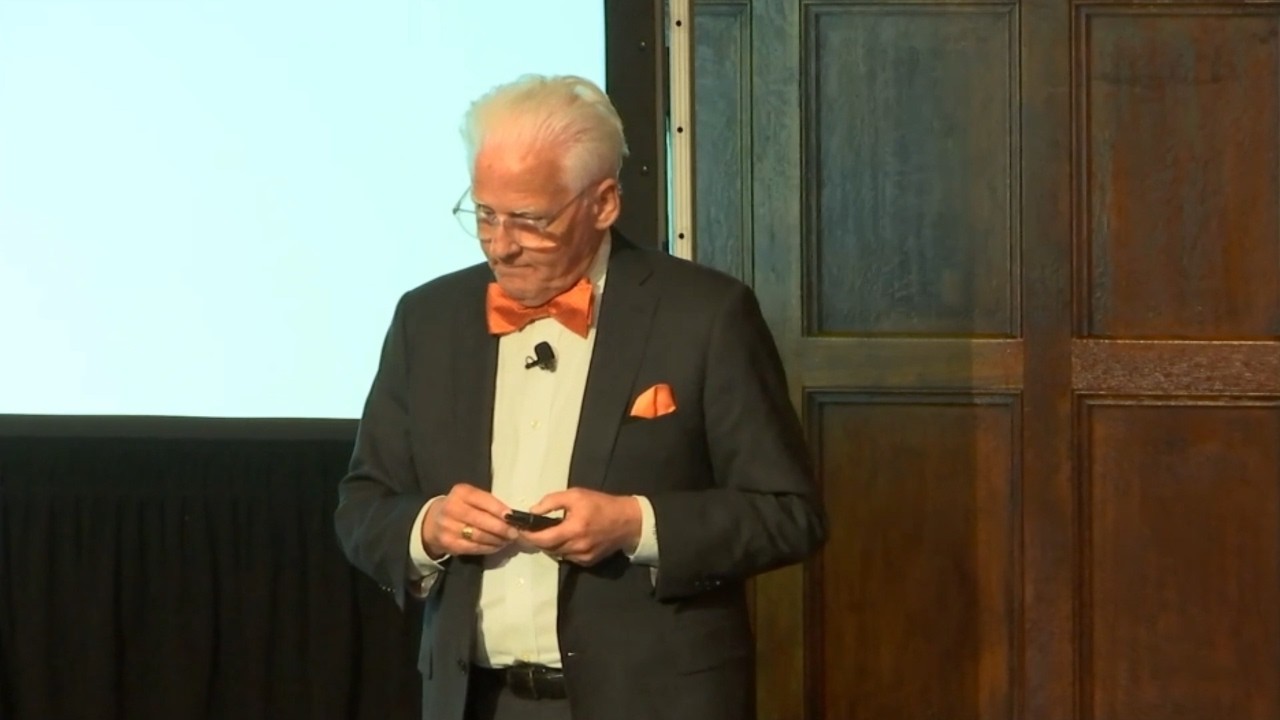
Stop Innovating. Start Inventing. | Steve Anderson | TEDxBackBay
Title history
- Stop Innovating. Start Inventing. | Steve Anderson | TEDxBackBay — observed on 20261104-2229 UTC (YouTube)
Keywords
Summary
174 words
Critical Evaluation
Value of the Information & Strength of the Argument
The talk provides a compelling value by reframing innovation vs. invention in business strategy, supported by concrete Amazon examples and the recent AI-driven case of Sabrine Matos. The argumentation is persuasive, building from a high-profile failure to a personal narrative, which humanizes the concepts. The logical flow is clear, but some claims, such as the assertion that ’the riskiest thing you can do is play it safe,’ are presented as universal without robust empirical backing. The emotional appeal strengthens the message but occasionally overshadows rigorous analysis.
Scientific Rigor, Source Quality, Title Accuracy
The talk relies on widely-known business cases and the speaker’s own expertise, but does not cite formal academic sources or provide data beyond anecdotes. The Amazon stories are well-documented in public records, but the speaker does not reference specific shareholder letters or reports, reducing verifiability. The title is catchy and aligns with the content, though a more precise title might reflect the nuance of complementing innovation with invention. No public comments were provided for analysis.
176 words
Title / Content Match
The title 'Stop Innovating. Start Inventing.' accurately reflects the core message, though the content nuances it by advocating for a balance rather than a complete halt to innovation.
Quality & Reliability
6/10
The talk draws on established examples (Amazon's Fire Phone, AWS) and personal experience, but relies heavily on anecdotal evidence and lacks formal citations. The scientific rigor is moderate, appropriate for a TEDx talk aimed at practitioners.
Key Moments
Markers derived by PSI from the transcript: the creator did not define chapters.
- Introduction of the Fire Phone failure as an example of Amazon's risky bet.
- Transition to the Echo and Alexa, turning the failure into a success.
- Definition of innovation vs invention and the risk of playing it safe.
- Examples of Amazon inventions: one-click shopping and AWS.
- How AI reduces the cost of discovering failure, introducing Sabrine Matos and Plank.
- Two mindset shifts: embracing successful failure and long-term thinking.
- Personal story of Von Willebrand disease and the new clinical trial.
- Concluding call to action: ask the question and embrace successful failure.
Cited Sources
- The Bezos Letters: 14 Principles to Grow Your Business Like Amazon — Book by the speaker, referenced in the video description as a source of the principles discussed.
- TEDx Talks — The official TEDx platform, providing context for the talk format.
Concurring Sources
- Amazon's Fire Phone failure and subsequent Echo success — Publicly documented case study supporting the talk's claims about Amazon's experimental culture.
Contribution & Novelties
The talk presents the concept of ‘successful failure’ as a structured approach to risk-taking, differentiating between innovation and invention. It integrates AI as a democratizing factor for invention, illustrated by a real-world example. The personal narrative adds originality, connecting business strategy to medical research and hope.
Pour aller plus loin :
- Disruptive Innovation — Concept related to how new inventions can replace existing markets.
- Lean Startup — Methodology emphasizing experimentation and learning from failure, complementary to the talk’s message.
- Blue Ocean Strategy — Framework for creating uncontested market space, akin to invention.
- Effectuation — Decision-making logic for entrepreneurs that embraces uncertainty and failure.
103 words
Radar Profile
The radar profile shows a balanced distribution across quantity, quality, technical level, and reliability, with a moderate overall score. This reflects a talk that is informative but not deep, relying on anecdotal evidence rather than rigorous research.