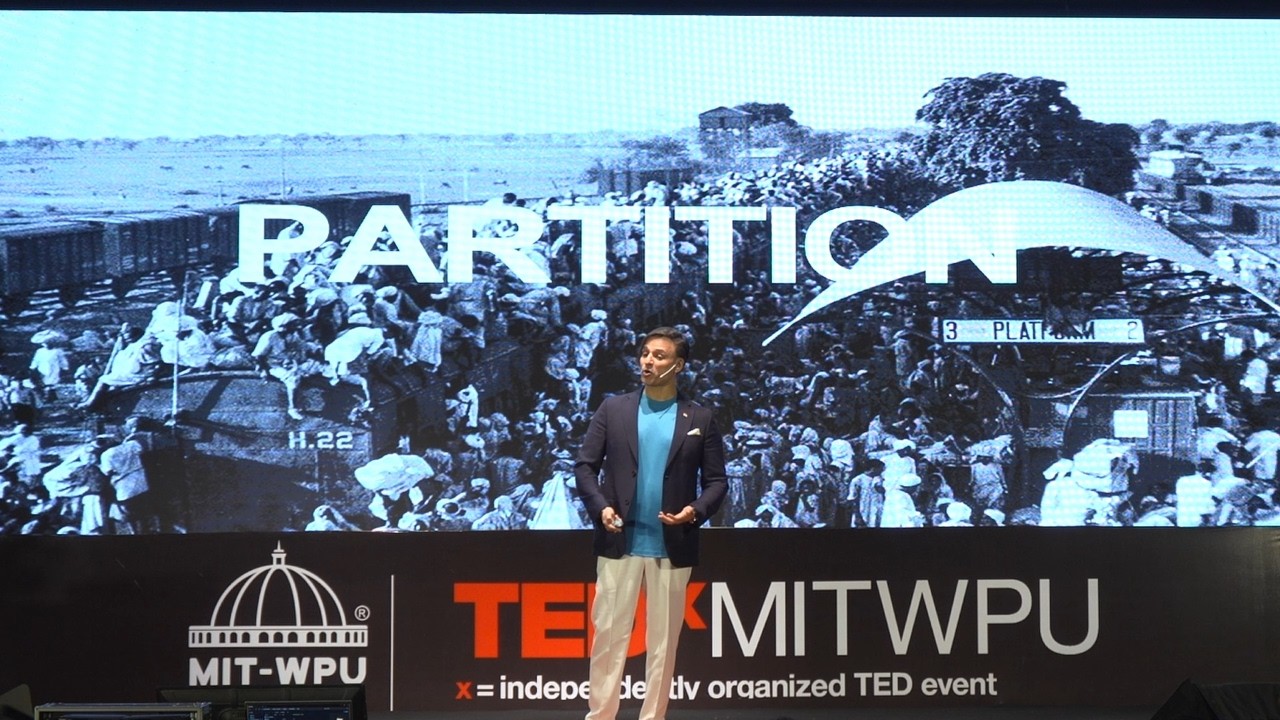
The Art of Failing Forward, by Dr. Vivek Anand Oberoi | Vivek Oberoi | TEDxMITWPU
Keywords
Summary
183 words
Critical Evaluation
Value of the Information & Strength of the Argument
The core value lies in Oberoi’s authentic personal narratives, which vividly illustrate the principle of failing forward. His storytelling is engaging and emotionally resonant, making abstract concepts relatable. However, the argumentation is purely anecdotal; there are no citations of psychological or scientific studies to support the claims about mindset and resilience. The logical structure is sound—defining the concept, contrasting behaviors, and providing case studies—but it remains a subjective viewpoint rather than a systematic analysis. The inclusion of Zugunruhe as a biological metaphor adds interesting depth, yet it is presented without citation to the underlying research. Overall, the talk offers inspiration and practical anecdotes, but its evidentiary basis is weak.
Scientific Rigor, Source Quality, Title Accuracy
The talk makes no attempt to ground its ideas in scientific literature, which is typical for motivational speeches but limits its scientific rigor. The only source mentioned is the TEDx website, and no external references are provided. The title ‘The Art of Failing Forward’ is appropriate and directly relates to the content, which consistently describes how to use failure constructively. The humorous anecdotes and family legends are engaging but cannot be independently verified, and the speaker himself admits to embellishing stories in some instances. As a TEDx presentation, it focuses on personal experience rather than academic research, so the expectations for rigorous sourcing are lower, yet the talk would benefit from incorporating at least some psychological principles on growth mindset or resilience to strengthen its credibility.
250 words
Title / Content Match
The title accurately reflects the talk's central theme of using failures as stepping stones for growth.
Quality & Reliability
4/10
The talk is a personal motivational narrative with unlikely verifiable scientific claims; it relies on anecdotal evidence and individual experiences rather than external research.
Key Moments
Markers derived by PSI from the transcript: the creator did not define chapters.
- Introduction: defining 'failing forward' and contrasting with 'failing backward'.
- Story of grandfather Anand Swaroop Oberoi: leaving family wealth to join freedom struggle, being exiled to Quetta, and rebuilding his life.
- Father Suresh Oberoi's journey: defying family expectations to become an actor at FTII despite being deemed a failure.
- College anecdote about pocket money and a date, leading to unexpected opportunity as an event host.
- Casting story for the film Company: dressing as a slum dweller and confronting Ram Gopal Varma to get the lead role.
- Conclusion: embracing the 'outlaw' mindset, emphasizing the importance of breaking norms and failing forward.
Cited Sources
- TEDx Program — The talk is part of a TEDx event, and this link provides general information about the TEDx initiative.
Contribution & Novelties
The talk’s originality lies in Oberoi’s personal reinterpretation of the ‘failing forward’ concept, linking it to his family’s legacy and Indian cultural references. The metaphor of Zugunruhe—an actual biological phenomenon in migratory birds—serves as a unique analogy for stepping out of comfort zones, though it is not explored in depth. The narrative of his grandfather’s exile and reinvention adds historical context, making the message more memorable. However, the core idea of learning from failure is well-known in personal development literature, so the novelty is chiefly in the storytelling rather than in conceptual innovation.
Pour aller plus loin :
- Growth mindset — Carol Dweck’s research on how viewing abilities as developable affects motivation and resilience.
- Kaizen — The Japanese philosophy of continuous improvement, which Oberoi briefly mentions as a parallel to constant learning.
- Zugunruhe — The biological term for migratory restlessness, providing scientific context to Oberoi’s metaphorical use.
- Resilience (psychology) — The capacity to recover from difficulties, central to the talk’s message of bouncing back from failure.
166 words
Radar Profile
The profile shows low scores in technical level and reliability, reflecting the anecdotal nature of the talk, while quantity of information is moderate due to rich personal stories. The overall shape suggests a motivational discourse rather than a scientific exposition, with strengths in engagement but weaknesses in evidence.