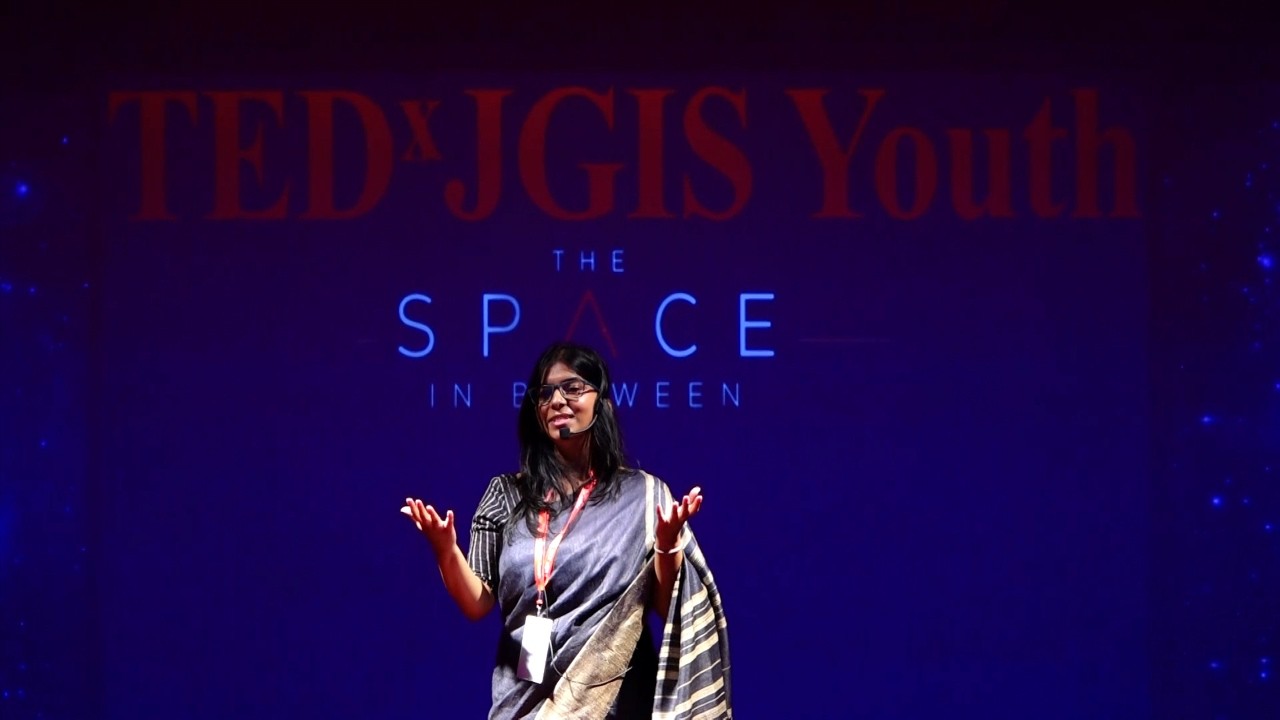
Beyond Bouncing Back: What Disasters Teach Us About Resilience | Dr. Prerna Singh | TEDxJGIS Youth
Title history
- Beyond Bouncing Back: What Disasters Teach Us About Resilience | Dr. Prerna Singh | TEDxJGIS Youth — observed on 20261026-1738 UTC (YouTube)
Keywords
Summary
232 words
Critical Evaluation
Value of the Information & Strength of the Argument
The value of the information lies in its clear reframing of resilience from a static ‘bounce back’ to a dynamic, systems-oriented approach. Singh effectively uses analogies and personal experience to make the concept accessible, and her argument is logically structured: she first critiques the insufficiency of quick restoration, then introduces ‘build back better,’ and finally emphasizes the need to identify the core goal. She supports her points with a brief reference to EMDAT statistics and her own published research, though she does not provide numerical details. The argumentation is persuasive in advocating for a broader set of solutions, even if it remains at a high level without delving into technical specifics.
Scientific Rigor, Source Quality, Title Accuracy
The scientific rigor is moderate. Singh cites the EMDAT international disaster database to underscore that disasters regularly affect over 100 million people annually, but she does not provide further sources or data. Her own PhD work is mentioned but not explained in depth, and no external references are offered. The title is highly apt: it directly reflects the speaker’s goal of moving beyond the resilient-as-bounce-back metaphor, and the content systematically unpacks this idea. The talk is well-structured and the argument is consistent, though it relies more on anecdotal evidence than on comprehensive scientific review.
220 words
Title / Content Match
The title accurately captures the central thesis: moving beyond the simplistic 'bounce back' notion to a more nuanced, systems-based view of resilience, as developed through disaster examples.
Quality & Reliability
7/10
The speaker is an expert in infrastructure resilience and climate adaptation, and the talk presents a coherent, research-informed perspective. However, it relies on anecdotal examples and lacks detailed citations beyond a single reference to the EMDAT database, making it solid but not deeply sourced.
Key Moments
Markers derived by PSI from the transcript: the creator did not define chapters.
- Introduction: flood-damaged school in Himachal Pradesh, the question of rebuilding.
- Analogy with missing an exam due to traffic to illustrate disruption and recovery.
- Definition of resilience as 'bounce back' and its limitations when disruptions become frequent.
- Introduction of 'build back better' and the importance of a systems lens.
- Explanation of the modified resilience triangle and her PhD research.
- Personal reflection: finding hope through close engagement with disaster-affected communities.
Cited Sources
- TEDx Talks — Platform for independently organized TEDx events; the talk is part of this series.
Contribution & Novelties
This talk contributes a clear, accessible articulation of shifting resilience paradigms—from ‘bounce back’ to ‘build back better’—and emphasizes a systems-thinking approach that prioritizes the overarching goal over single-point reinforcement. The speaker personalizes this by sharing her own research on a ‘modified resilience triangle,’ which offers a quantitative framework for evaluating flexible multi-pathway responses, though the technical details are omitted. Her insight that engaging with affected communities can generate hope against climate anxiety adds an emotional and motivational dimension often absent in technical discussions.
Pour aller plus loin :
- Resilience (engineering and built environment) — Provides a technical overview of resilience concepts in infrastructure, directly relevant to the speaker’s specialty.
- Build back better — Explains the international policy framework associated with post-disaster recovery, which the talk references conceptually.
- Systems thinking — Offers a broader context for the systems-lens approach she advocates, useful for understanding the shift from linear to holistic solutions.
150 words
Radar Profile
The radar profile shows moderate to high scores across most dimensions, with a noticeable dip in niveau technique (5), reflecting the talk's accessible, non-specialist level. The balanced values for quantity and quality of information indicate that the talk delivers well-structured, relevant content without overwhelming technical depth, making it effective for a general audience.