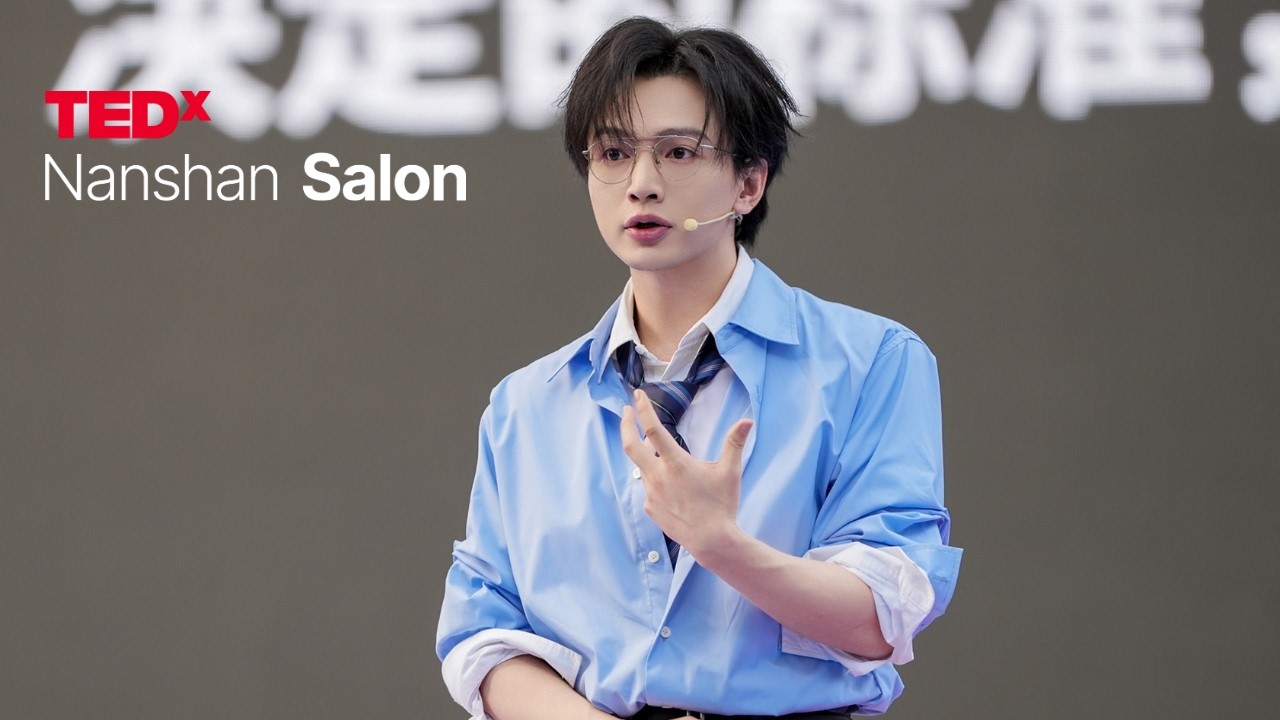
从音乐创作到AI对话,如何成为自己的语境工程师? | 润泽 叶 | TEDxNanshan Salon
From Music Creation to AI Dialogue, How to Become Your Own Context Engineer? | Runze Ye | TEDxNanshan Salon
Title history
- 从音乐创作到AI对话,如何成为自己的语境工程师? | 润泽 叶 | TEDxNanshan Salon — observed on 20261026-1151 UTC (YouTube)
Keywords
Summary
186 words
Critical Evaluation
Value of the Information & Strength of the Argument
The talk provides thoughtful insights into creativity, personal judgment, and AI interaction. The speaker’s argumentation is based on personal experience, which gives authenticity but lacks empirical support. He introduces a novel idea—context engineering—and applies it coherently to both music and AI. However, the reasoning is anecdotal and not rigorously structured, with limited counterarguments. The practical suggestions, such as daily curiosity exercises and building a sample library, are actionable but relatively generic.
Scientific Rigor, Source Quality, Title Accuracy
No external sources are cited beyond the TEDx platform itself. The talk is anecdotal, and the speaker does not reference research or data, which limits scientific rigor. The title accurately mirrors the content, and the presentation is well-organized but relies on personal narrative. There are no comments provided, so public reception cannot be assessed.
140 words
Title / Content Match
Title accurately reflects the content, which bridges music creation and AI dialogue through the lens of personal context-building.
Quality & Reliability
6/10
Personal narrative with subjective insights; no empirical data or verifiable claims, but coherent reasoning and practical advice.
Key Moments
Markers derived by PSI from the transcript: the creator did not define chapters.
- Introduction of the speaker and the problem of unclear personal standards
- Discussion of his song 'Tian Di' as an example of blending diverse musical traditions
- Definition of 'context engineer' as someone who creates rules for how elements relate
- Two-year creative block and the realization that external judgments overshadowed his own
- First insight: using AI as a conversational partner, embedding personal context in long-term dialogues
- Second insight: breaking information bubbles through daily curiosity exercises and tracing leads
- Third insight: building a personal sample library of deeply understood experiences and texts
- Conclusion: encouraging viewers to find the gaps in old labels and become their own context engineers
Cited Sources
- TEDx official site — Referenced in video description as the organizing body and for more information about TEDx events.
Contribution & Novelties
The video introduces the concept of ‘context engineering’ as a personal framework for creativity and AI interaction, bridging music production with AI dialogue. It offers a unique perspective on using AI not just for prompts but as a long-term conversational partner that requires explicit personal context. The practical advice on breaking information bubbles and building a personal sample library is actionable.
Pour aller plus loin :
- Context effect — Relevant to how context shapes perception and judgment.
- Filter bubble — Directly related to the speaker’s warning about information isolation.
- Prompt engineering — Contrasts with the speaker’s approach to AI dialogue.
- Shakuhachi — Musical instrument mentioned in the song example.
109 words
Radar Profile
The radar profile shows moderate scores across all dimensions, with information quality slightly higher than quantity. The talk is rich in qualitative insights but lacks depth in technical or quantitative data, reflecting its nature as a personal anecdotal presentation.