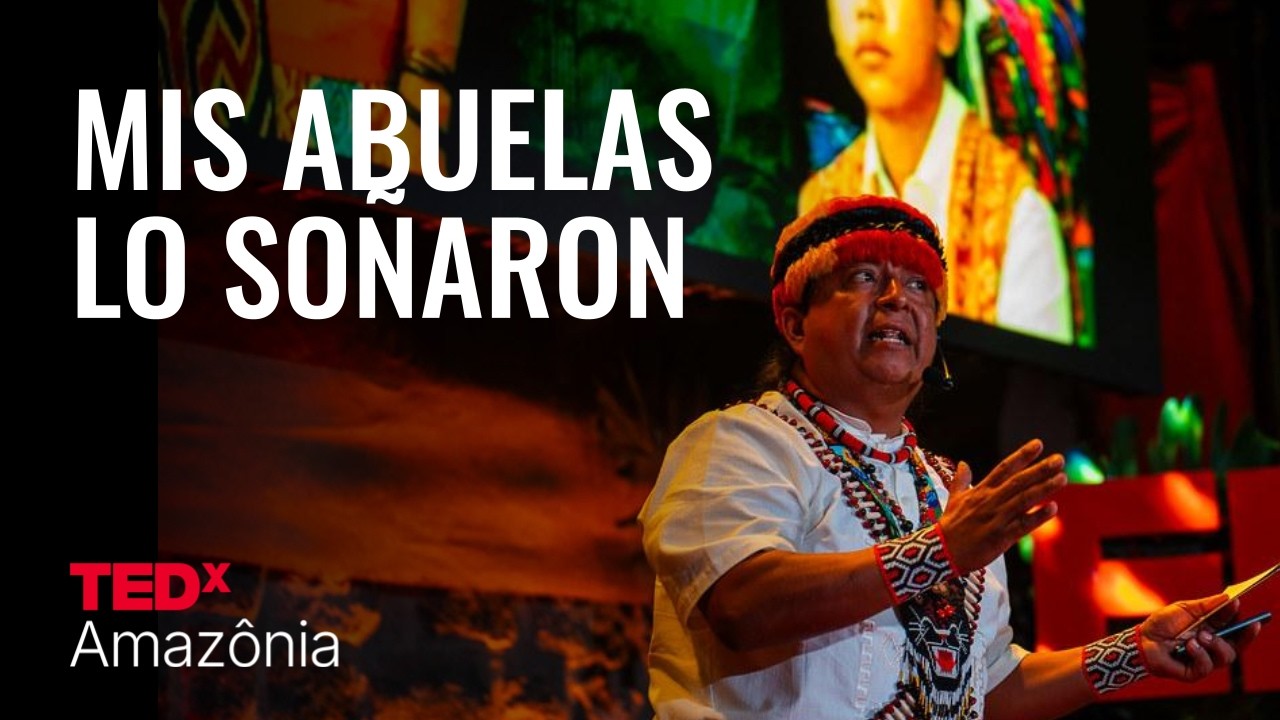
Lo que la gobernanza indígena puede enseñarle al mundo | Juan Carlos Jintiach Arcos | TEDxAmazônia
What indigenous governance can teach the world | Juan Carlos Jintiach Arcos | TEDxAmazônia
Title history
- Lo que la gobernanza indígena puede enseñarle al mundo | Juan Carlos Jintiach Arcos | TEDxAmazônia — observed on 20261104-2221 UTC (YouTube)
Keywords
Summary
157 words
Critical Evaluation
Value of the Information & Strength of the Argument
The value of the information lies in the speaker’s unique insider perspective on indigenous organizational structures and their evolution into transnational alliances. He provides concrete examples, such as the founding of his federation in 1964 under dictatorship and the formation of a confederation in 1984. The argumentation is passionate and appeals to emotional and spiritual values rather than empirical data. While it lacks systematic evidence, the speaker’s role as a representative of these movements lends authenticity. The logical thread is clear: indigenous governance, based on collective decision-making and respect for nature, has global relevance and lessons for sustainability and cooperation. However, the arguments are not deeply analyzed and rely heavily on persuasion.
Scientific Rigor, Source Quality, Title Accuracy
The talk is a personal account; no formal sources are cited. The only external reference is the TEDx platform itself. The historical events mentioned are not documented in detail, and no links to reports or studies are provided. The title is accurate as the content directly addresses what indigenous governance can teach the world. The speaker’s credibility is reinforced by his professional role, but the lack of citations limits the scientific rigor. The brief context of the talk at TEDxAmazônia suggests a focus on environmental and social issues, which aligns with the content.
220 words
Title / Content Match
The title accurately reflects the content: the speaker discusses lessons from indigenous governance practices and argues for their global relevance.
Quality & Reliability
6/10
The talk offers a personal, experience-based perspective on indigenous governance structures and global alliances, but lacks verifiable scientific data or detailed citations. The speaker's credibility is supported by his role as Executive Secretary of GATC, but the content is primarily anecdotal.
Key Moments
Markers derived by PSI from the transcript: the creator did not define chapters.
- Opening: honoring ancestors and the spiritual basis of indigenous leadership
- Creation of the federation in 1964 during dictatorship, basis of organizational unity
- Formation of confederations and the role of assemblies in decision-making
- Personal reflection on the importance of family and community in leadership
- The 1992 summit: indigenous leaders given only three minutes to speak
- Description of the Global Alliance of Territorial Communities and its reach across continents
- Call to respect and support indigenous leadership despite criminalization and marginalization
- Final message: indigenous governance offers solutions; the audience should carry the message
Cited Sources
- TEDx Talks — The talk is part of TEDx events, providing a platform for local ideas.
Concurring Sources
- TEDx Talks — The official TEDx platform, which the talk is associated with, supports local community discussions
Contribution & Novelties
The talk provides a personal testimony on indigenous governance mechanisms, specifically the evolution from community assemblies to global alliances, which is not commonly covered in mainstream discourse. It highlights the spiritual dimension and the role of ancestral knowledge in leadership. The ‘Pour aller plus loin’ section offers additional resources.
Pour aller plus loin :
- Indigenous governance — Overview of indigenous peoples’ self-governance concepts.
- Free, Prior and Informed Consent — A principle central to indigenous rights and decision-making.
- Amazon Cooperation Treaty Organization — Regional initiative involving indigenous communities in the Amazon.
- REDD+ — A framework for climate change mitigation that often involves indigenous territories.
103 words
Radar Profile
The scores show a moderate quantity and quality of information, with a low technical level and a good reliability based on the speaker's authoritative position. The profile suggests a talk that is informative for a general audience but lacks in-depth technical or scientific depth.