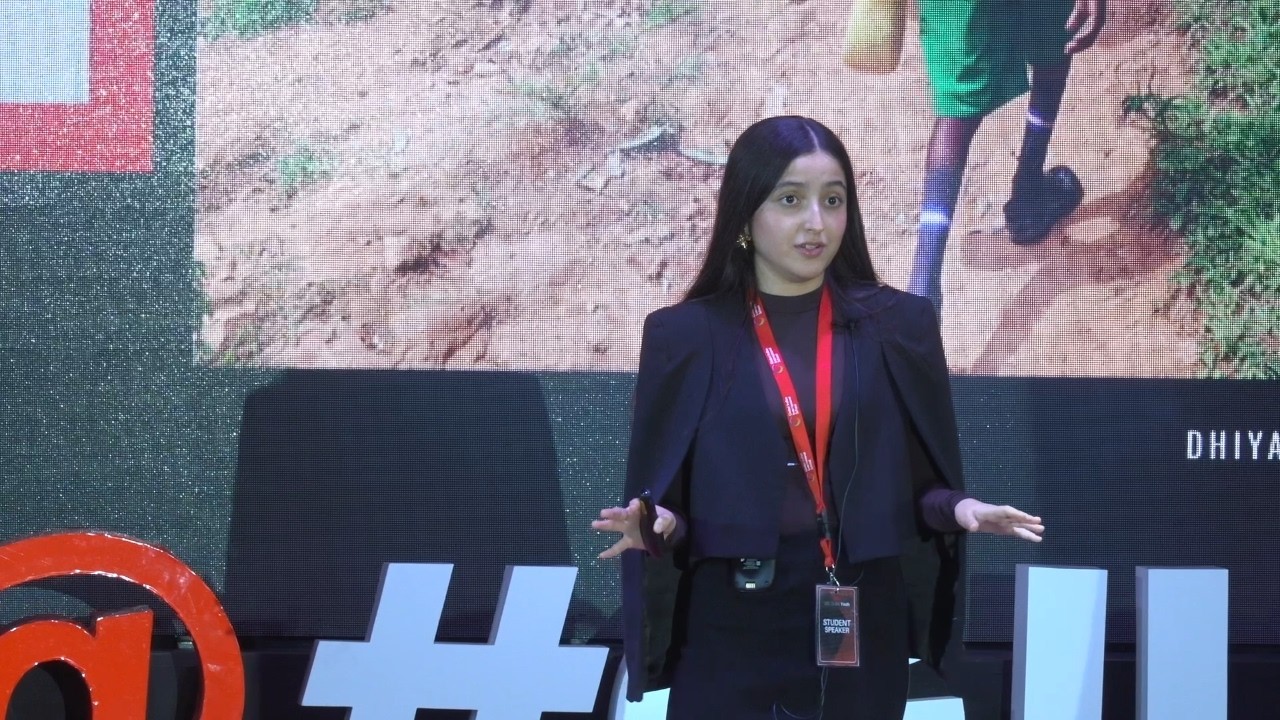
The Climate Inequality Paradox | Dhiya Somaia | TEDxGIIS Dubai
Title history
- The Climate Inequality Paradox | Dhiya Somaia | TEDxGIIS Dubai — observed on 20261027-0220 UTC (YouTube)
Keywords
Summary
166 words
Critical Evaluation
Value of the Information & Strength of the Argument
The talk offers a passionate and morally compelling argument for climate action, rooted in personal experience and clear examples. The emotional appeal is effective in raising awareness, and the demonstration of collective action (the finger tapping) serves as a memorable metaphor. However, the argumentation lacks depth: it relies heavily on anecdote and assertion rather than rigorous data or structured analysis. The speaker’s youth and earnestness lend credibility to the theme of intergenerational justice, but the logical progression from inequality to youth-led solution is somewhat oversimplified. The talk is more inspirational than analytical, and it does not engage with potential counterarguments or policy complexities.
Scientific Rigor, Source Quality, Title Accuracy
The talk mentions specific statistics (e.g., richest 10% producing half of emissions) and events (Cyclone Freddy) without citing sources, which weakens its scientific rigor. The description includes a generic TEDx link but no direct references to studies or reports. The title is accurate and directly tied to the content. The speaker’s personal narrative adds authenticity but does not substitute for evidence. No external sources are provided, and the absence of citations is a significant limitation for a scientific evaluation.
197 words
Title / Content Match
The title perfectly reflects the core thesis: the paradox that those least responsible for climate change suffer the most. Content matches the title exactly.
Quality & Reliability
6/10
The talk presents widely recognized climate inequality statistics and real-world examples (e.g., Cyclone Freddy) without citing specific studies, but the information is consistent with mainstream scientific consensus. The evidence is anecdotal and lacks detailed sourcing, which limits its academic rigor.
Key Moments
Markers derived by PSI from the transcript: the creator did not define chapters.
- Opening: doomscrolling through climate disasters on social media.
- Personal experience of extreme heat in Delhi, India.
- Memory of a glacial river in Kashmir now dry, highlighting local climate impacts.
- Introduction of two worlds: a child in an air-conditioned classroom vs. one walking for water, linking to emissions inequality.
- Focus on Malawi as a frontline country, mentioning droughts, cyclones, and food insecurity.
- Cyclone Freddy and Cyclone Judy: displacing over 600,000 people, stressing the lack of resources for recovery.
- Call to collective action: individual choices are insufficient alone; combined efforts create change.
- Interactive demonstration of tapping fingers to illustrate the power of collective action.
- Conclusion: future generations will either ask 'What were they thinking?' or express gratitude for courage to act.
Cited Sources
- TEDx Talks — The talk was given at a TEDx event, and this link is the general TEDx page, not a specific citation for the claims made in the talk.
Contribution & Novelties
The talk contributes a compelling youth perspective on climate inequality, emphasizing that young people are not only inheritors but also catalysts for change. It underscores the need for collective action over individual responsibility, using a tangible metaphor. While the underlying data are not new, the framing through a teenager’s lens and the call for intergenerational solidarity are valuable. The talk does not introduce novel scientific findings but serves as an effective advocacy piece.
Pour aller plus loin :
- Climate justice — Core concept linking emissions responsibility to social equity.
- Carbon footprint — Measures individual and national contributions to emissions.
- Intergenerational equity — Philosophical and legal framework relevant to the speaker’s argument about inheriting a warming planet.
116 words
Radar Profile
The radar profile shows low technical depth and moderate information quantity, with a high qualitative score relative to the lack of citations. This suggests a persuasive but not scientifically rigorous presentation. The reliability is average, reflecting the absence of verifiable sources.