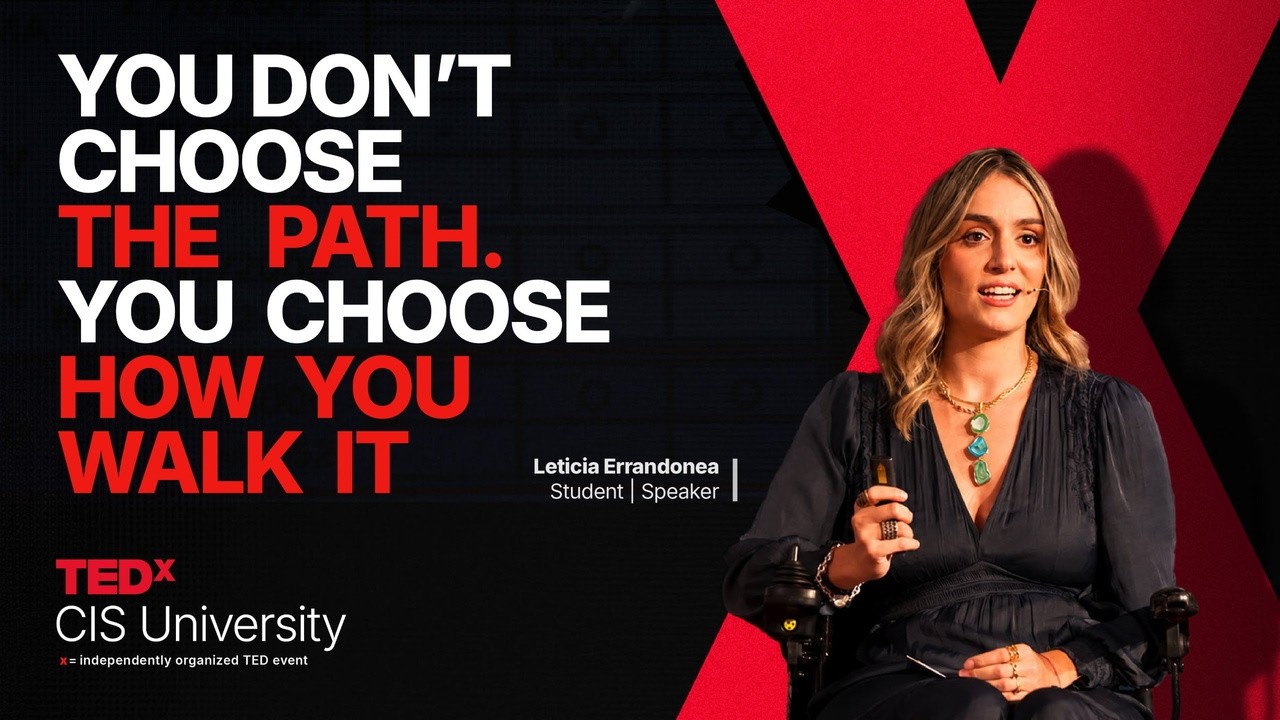
You Don't Choose the Path. You Choose How You Walk It | Leticia Errandonea | TEDxCIS University
Title history
- You Don't Choose the Path. You Choose How You Walk It | Leticia Errandonea | TEDxCIS University — observed on 20261104-2227 UTC (YouTube)
Keywords
Summary
144 words
Critical Evaluation
Value of the Information & Strength of the Argument
The value lies in the authentic personal experience and the practical advice derived from it. The speaker offers a concrete framework (‘day by day’, shifting from ‘why’ to ‘how’) that is applicable to managing uncontrollable circumstances. The argumentation is anecdotal and lacks empirical support, but its strength is in emotional resonance and relatable narrative. The speaker does not claim scientific authority, presenting instead a reflective and persuasive personal testimony.
Scientific Rigor, Source Quality, Title Accuracy
The talk is a firsthand account without citations or references to external sources, except for the institutional TEDx framework. The story is internally consistent and plausible, but no verifiable data is provided. The title accurately anticipates the content and message. The lack of scientific underpinnings limits the rigor, but as a personal reflection, it maintains coherence and sincerity.
142 words
Title / Content Match
The title perfectly reflects the core message: while we may not control our circumstances, we can choose our response and attitude.
Quality & Reliability
6/10
The talk is a personal narrative of resilience and cancer, offering practical insights but relying on anecdotal experience rather than evidence-based research. The content is authentic and emotionally compelling, but scientific rigor is limited.
Key Moments
Markers derived by PSI from the transcript: the creator did not define chapters.
- Introduction of the 'what's next manual' after receiving bad health news.
- Description of early symptoms and misdiagnoses, leading to embarrassment.
- Reveal of spinal cord cancer diagnosis and initial surgery.
- Recovery, learning 'day by day', and living life to the fullest.
- Relapse and the emotional turmoil, emphasizing fear of known suffering.
- Acceptance of disability and the shift from 'why' to 'how', concluding with the message about choosing how to walk the path.
Cited Sources
- TEDx program — The talk was given at a TEDx event, and this link provides information about the TEDx format.
Contribution & Novelties
The talk contributes a deeply personal perspective on resilience, introducing concepts like ‘day by day’ and the pragmatic shift from ‘why’ to ‘how’ when facing uncontrollable circumstances. It emphasizes acceptance of reality as a first step to coping, which aligns with existing psychological frameworks. The speaker’s creation of a ‘what’s next manual’ suggests a practical tool for those in similar situations, though it is not detailed.
Pour aller plus loin :
- Psychological resilience — Relevant for understanding the psychological mechanisms behind bouncing back from adversity.
- Acceptance and commitment therapy — A therapeutic approach that echoes the speaker’s emphasis on accepting reality and focusing on present action.
- Man’s Search for Meaning — Viktor Frankl’s book illustrates the choice of attitude in unbearable circumstances, closely related to the talk’s core message.
129 words
Radar Profile
The profile shows moderate scores in information quantity and quality, reflecting the personal yet limited scientific nature. Technical level is low, appropriate for a general audience. Reliability is moderate due to anecdotal evidence. Overall, the talk balances emotional value with practical insight, but lacks empirical backing.