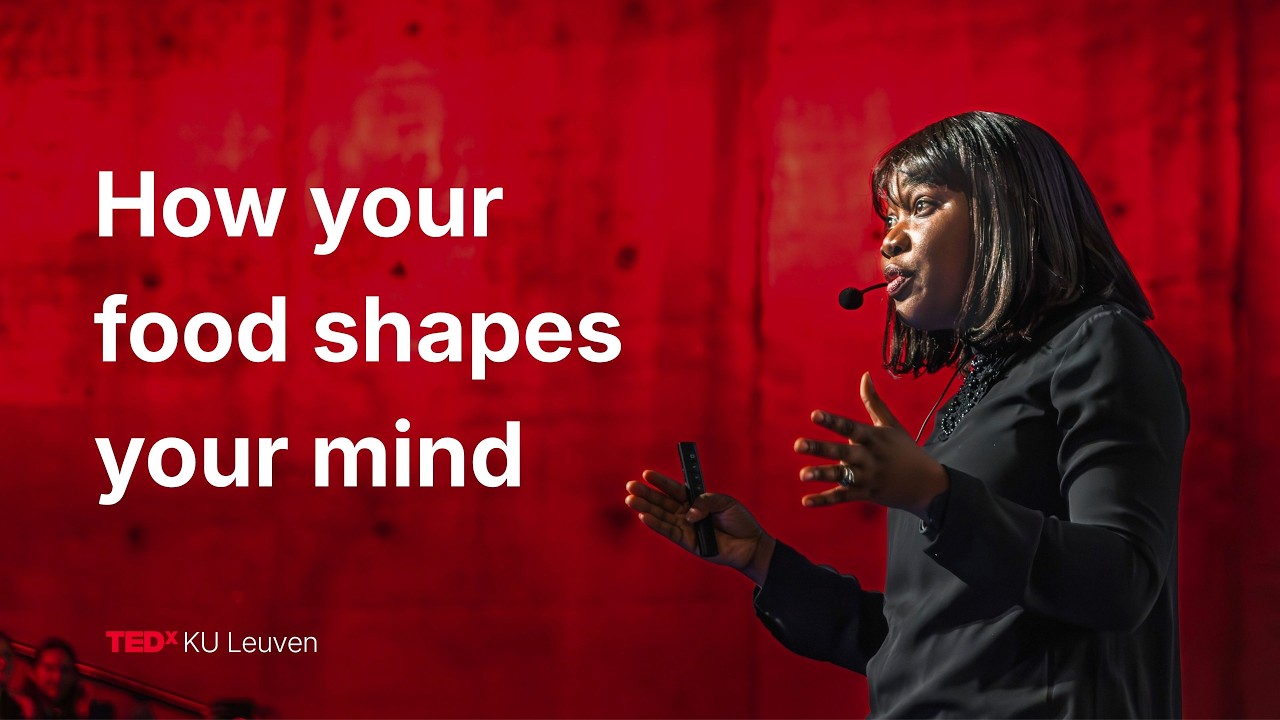
Supporting Mental Wellness | Chiemeka Onyeze-Joe | TEDxKU Leuven
Title history
- Supporting Mental Wellness | Chiemeka Onyeze-Joe | TEDxKU Leuven — observed on 20261101-0405 UTC (YouTube)
Keywords
Summary
242 words
Critical Evaluation
Value of the Information & Strength of the Argument
The talk offers practical and accessible advice on mental wellness, effectively communicating complex biochemical processes to a lay audience. The argumentation is structured around three pillars—food, sleep, exercise—and a fourth on social connection, each supported by scientific rationale and relatable analogies. The speaker uses a car analogy for fueling, compares the brain’s waste system to a city’s trash collection, and personal anecdotes to humanize the content. The claims are consistent with established scientific consensus, though they lack specific references. The argument is persuasive and encourages immediate behavioral changes, but the scientific depth is moderate, and some simplifications (e.g., the direct link between food and neurotransmitter synthesis) gloss over metabolic complexities. Overall, the value lies in synthesizing known knowledge into actionable habits, and the argumentation is logically coherent and compelling.
Scientific Rigor, Source Quality, Title Accuracy
The talk demonstrates a reasonable level of scientific rigour for a TEDx presentation. The speaker cites ‘research has shown’ without providing specific studies, which limits verifiability. The description includes a disclaimer that the talk does not substitute professional mental health advice, which is prudent. The provided links in the description are to TEDx guidelines and the TEDx homepage, not scientific sources. The title ‘Supporting Mental Wellness’ accurately reflects the content, which focuses on behavioral and biochemical supports. The talk’s main weakness is the absence of direct citations, but it aligns with mainstream understanding in neuroscience and public health. The overall scientific quality is adequate for public education, though not a formal research communication.
257 words
Title / Content Match
The title directly reflects the talk's focus on supporting mental wellness through lifestyle and biochemical factors, with strong consistency between title and content.
Quality & Reliability
7/10
The talk presents scientifically grounded concepts (oxidative stress, neurotransmitters, sleep hygiene, exercise benefits, oxytocin) but simplifies and lacks specific citations. The speaker is a credentialed public health researcher, yet the TEDx disclaimer notes the content represents personal views and is not a substitute for medical advice. Reliability is moderate to high, appropriately cautious.
Key Moments
Markers derived by PSI from the transcript: the creator did not define chapters.
- Opening: Question 'How is your mental health?' and global prevalence of mental illness.
- Introduction to biochemistry: mental wellness as biochemical, shaped by internal and external environments.
- Explanation of oxidative stress and reactive oxygen species, and their impact on neurons and neurotransmitters.
- First pillar: Food as raw materials for serotonin and dopamine; antioxidants from colorful foods.
- Second pillar: Sleep and the glymphatic system; consequences of sleep deprivation.
- Third pillar: Exercise, its immediate mood benefits, and an example of a 31 km run.
- Social connections and oxytocin: moments of connection, lowering stress and boosting immunity.
- Conclusion: Recap of food, sleep, exercise, connection; call to action for better mental wellness.
Cited Sources
- TEDx Content Guidelines — Linked in the description; provides the guidelines for TEDx talks, framing the talk's context.
- TEDx Official Site — Linked in the description; general TEDx information and talks archive.
Concurring Sources
- World Health Organization on Mental Health — Corroborates the importance of mental wellness and its global impact.
- National Institute of Mental Health on Depression — Supports the link between biological factors and depression.
Contribution & Novelties
The talk’s original contribution is the integration of biochemical mechanisms (oxidative stress, neurotransmitter precursors) with actionable lifestyle habits and social connection, framed within a public health perspective. It emphasizes the ’two environments’ concept, making mental wellness tangible through daily choices. While not offering new research, it distills and communicates existing knowledge effectively for a general audience.
Pour aller plus loin :
- Oxidative stress — Directly relevant to the talk’s core mechanistic explanation.
- Serotonin — Discusses the neurotransmitter’s role in mood and its dietary precursors.
- Glymphatic system — Explains the brain’s waste clearance during sleep, a key point.
- Oxytocin — The ’love hormone’ and its effects on social bonding and stress reduction.
111 words
Radar Profile
The radar profile shows a balanced but moderately strong performance across quality and reliability, with lower technical depth. The talk offers solid, accurate information without high complexity, making it accessible and trustworthy for a general audience.