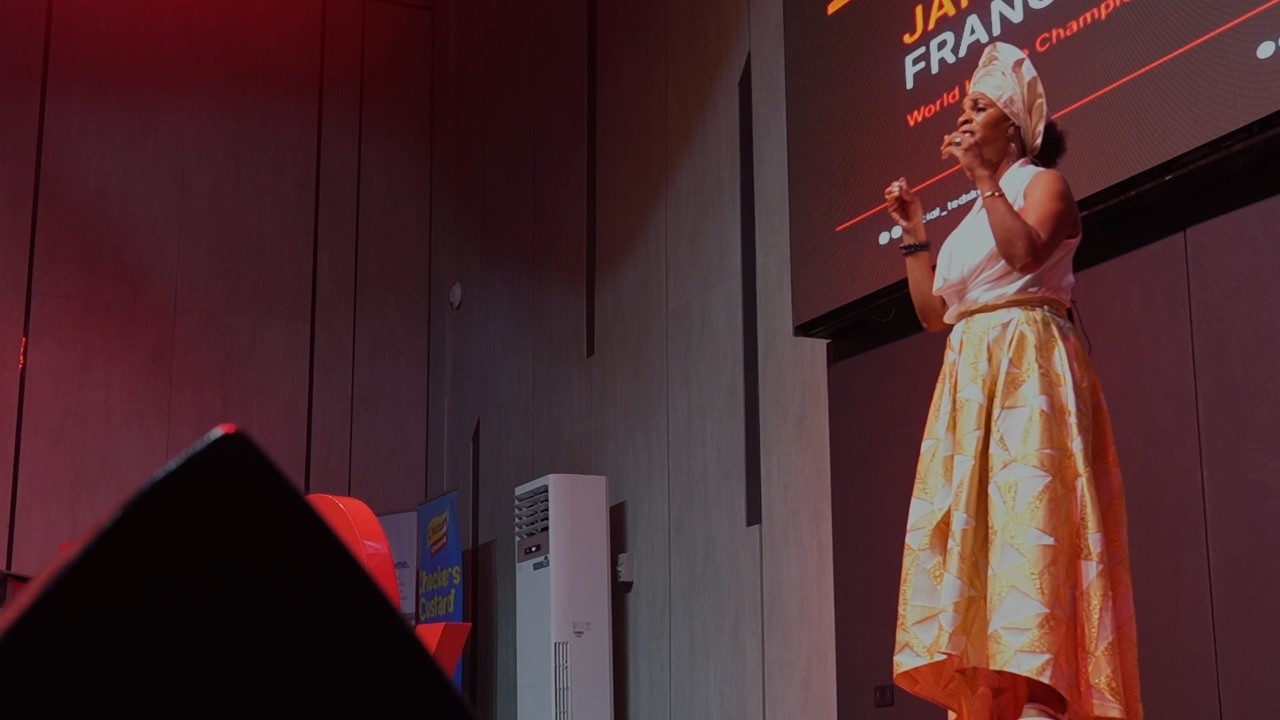
What messages are infuencing our children? | Janice Francis-Irwin | TEDxKubwa
Keywords
Summary
132 words
Critical Evaluation
Value of the Information & Strength of the Argument
The talk offers valuable personal perspectives on child development, particularly the role of identity and environmental messages. The argument is structured around personal stories and illustrations, such as the student who failed twice and succeeded after mindset coaching. However, the reasoning is largely anecdotal and lacks empirical evidence. The speaker’s credibility as a world champion and youth advocate supports the emotional resonance, but the argument would be stronger with references to psychological research. The call to focus on intentional messaging and self-belief is compelling, yet the absence of data limits its scientific weight.
Scientific Rigor, Source Quality, Title Accuracy
The talk does not cite academic sources or studies; it relies on personal experience and cultural anecdotes. The only external link provided is the generic TEDx page. The title aligns with the content, and the speaker stays on topic throughout. While the personal nature is engaging, the lack of references reduces the scientific rigor. No contradictory evidence is presented, and the claims are plausible but not verifiable. Adequation between title and content is high, but the scientific underpinnings are weak.
188 words
Title / Content Match
The title accurately reflects the content, as the talk directly addresses the question of what messages influence children, though the typo in 'infuencing' is noted.
Quality & Reliability
5/10
The talk is based on personal anecdotes and professional experience rather than empirical research, offering credible but subjective insights. The speaker's credentials in sport and youth development lend authenticity, but no scientific sources or data are provided.
Key Moments
Markers derived by PSI from the transcript: the creator did not define chapters.
- Introduction and opening about the influence of music.
- Discussion of two songs that shaped her childhood and teenage years.
- Family background: Caribbean roots, parents' journey, and the importance of example.
- Karate journey and the story of a student who learned resilience through failure.
- Focus on mindset and overcoming self-doubt.
- Identity, heritage, and the Big Drum tradition; connection to Nigeria.
- Call for Africa's youth population to lead and innovate.
- Conclusion: 'Children are our future' and encouraging dreamers.
Cited Sources
- TEDx — Description link pointing to the TEDx program, indicating the talk is part of this series.
Contribution & Novelties
The talk contributes a personal and culturally grounded perspective on the impact of messages on child development, emphasizing identity and resilience. Its originality lies in the fusion of elite sport experience with youth advocacy. However, it does not introduce new empirical findings. To deepen understanding, one can explore established psychological frameworks on related topics.
Pour aller plus loin :
- Self-efficacy - Wikipedia — Bandura’s concept of belief in one’s ability to succeed, directly relevant to the speaker’s emphasis on self-belief.
- Mindset (Carol Dweck) - Wikipedia — Fixed vs. growth mindset, which underpins the idea that effort and persistence can overcome failure.
- Social identity theory - Wikipedia — Explains how identity and group belonging shape behavior, aligning with the talk’s focus on identity as a foundation.
125 words
Radar Profile
The radar profile shows moderate scores on information quantity and reliability, but low technical depth and quality. This indicates a talk that is engaging and thoughtful but lacks scientific rigor and detailed, evidence-based content.