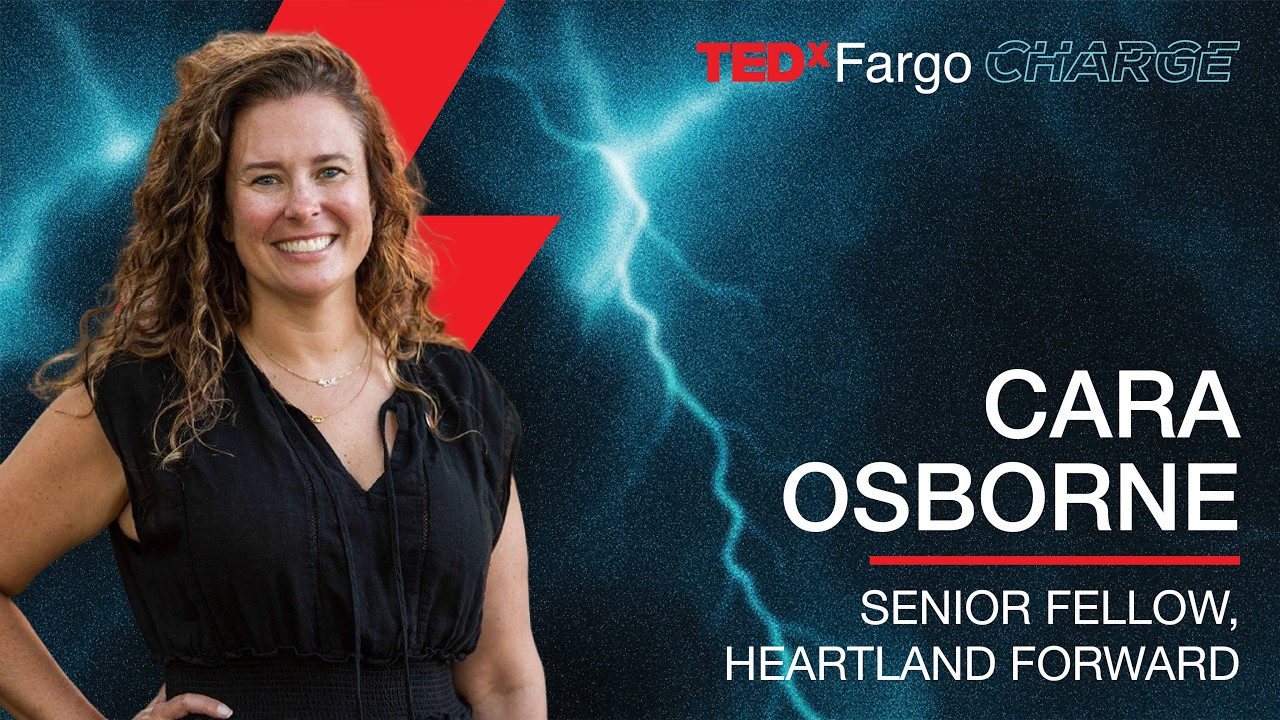
From Sperm to Worm: Why Healthcare Needs a Dose of Hospitality | Cara Osborne | TEDxFargo
Title history
- From Sperm to Worm: Why Healthcare Needs a Dose of Hospitality | Cara Osborne | TEDxFargo — observed on 20261027-0211 UTC (YouTube)
Keywords
Summary
209 words
Critical Evaluation
Value of the Information & Strength of the Argument
The talk offers a compelling narrative connecting hospitality, nature, and health, but its value is limited by a lack of evidence. The speaker relies on personal anecdotes and general references to research without providing specifics or citations. The argumentation is persuasive in a rhetorical sense—using shared etymology, personal story, and emotional appeal—but it does not meet scientific standards. The idea of shifting from a pathophysiological model to a relational, hospitality-based approach is conceptually interesting, but the physiological mechanisms she invokes, such as horse electromagnetic fields and immune-resilience from nature exposure, are presented as established facts without substantiation. The talk would benefit from concrete data or at least explicit references to peer-reviewed studies. Overall, while the call to transform healthcare is important, the current argumentation is more philosophical than empirical.
Scientific Rigor, Source Quality, Title Accuracy
Scientifically, the talk is weak. The speaker mentions ’epic volumes of research’ on microbiome, blue zones, and immune health in the Amish, but does not specify sources or study details. The claim about a horse’s electromagnetic field extending 20 feet and affecting heart rate is not scientifically established and is likely a misinterpretation of cardiac coherence research. The TED note explicitly warns that the talk falls outside content guidelines due to unsupported claims. The title, while catchy, is only partially aligned with the content; it suggests a broad life-cycle perspective but the talk focuses on maternity and wellness. The sources provided in the description are generic TEDx guidelines, not related to the specific claims. Thus, the scientific rigor is insufficient for a credible health expert presentation.
270 words
Title / Content Match
The title is creative and uses a metaphor for the life cycle, but it only loosely connects to the talk's focus on maternity care and hospitality. It is somewhat adequate as the talk does address birth and health from a holistic perspective.
Quality & Reliability
3/10
The talk is flagged by TED for lacking scientific support. Several claims about physiology, horse electromagnetic fields, and immunity are presented without citations. The speaker's professional credentials are solid, but the content relies on anecdotal and unverified assertions.
Key Moments
Markers derived by PSI from the transcript: the creator did not define chapters.
- Introduction and the core question: how to be born healthy and stay that way.
- Discussion of US maternal mortality rates and the pathophysiological model.
- Exploration of the shared root of 'hospital' and 'hospitality'.
- Introduction of the horse farm project and the 'Friends of the Farm' membership.
- Explanation of retreat, reconnect, and remember, and the physiological shift to parasympathetic state.
- Call to action: find your land, play host and guest, and stay healthy.
Cited Sources
- TEDx Content Guidelines — Referenced in the video description as the basis for the note from TED.
- TEDx Main Page — Mentioned at the end of the talk as part of the standard TEDx disclaimer.
Contribution & Novelties
The talk contributes a novel perspective by equating healthcare with hospitality, using the etymology of ‘hospital’ to argue for a more relational and human-centered approach. It also introduces the idea of using a horse farm as a therapeutic retreat to promote health through nature and animal connection. While these concepts are not new, the personal integration into a business model is original.
Pour aller plus loin :
- Blue Zone — Refers to regions with exceptional longevity; the speaker mentions it as evidence for nature and community benefits.
- Microbiome — The collection of microorganisms that influence immune health; cited vaguely by the speaker.
- Parasympathetic nervous system — The ‘rest and digest’ system the speaker claims is activated by nature exposure.
- Fight-or-flight response — The sympathetic response contrasted with the parasympathetic state in the talk.
- Nature therapy — A broader concept of using nature for health, related to the speaker’s farm retreat.
150 words
Radar Profile
The radar profile shows low scores across all dimensions, particularly in reliability and technical level. The talk is emotionally engaging but lacks scientific depth. The scores reflect a content that is more inspirational than evidence-based, with limited technical content and low factual support.