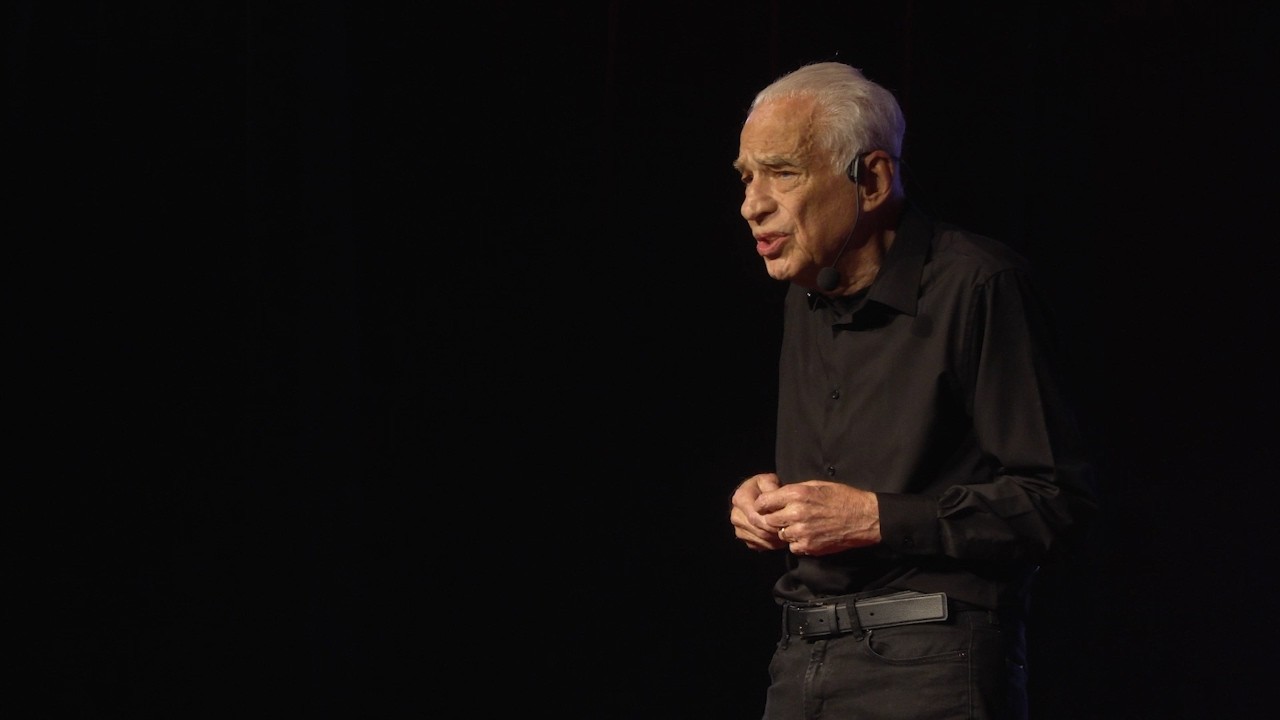
“¿Qué edad tendrías, si no supieras tu edad?” | Alberto Cormillot | TEDxSan Isidro
"How old would you be if you didn't know your age?" | Alberto Cormillot | TEDxSanIsidro
Title history
- “¿Qué edad tendrías, si no supieras tu edad?” | Alberto Cormillot | TEDxSan Isidro — observed on 20261106-1652 UTC (YouTube)
Keywords
Summary
115 words
Critical Evaluation
Value of the Information & Strength of the Argument
The talk offers valuable motivational insights into proactive aging and self-limiting beliefs. The argumentation is primarily anecdotal, relying on personal stories rather than scientific evidence. While the author is a credible medical expert, he does not provide empirical data or sources to support his claims. The strength lies in the engaging narrative and the practical lesson to differentiate between mental and physical limitations. The speaker’s personal example serves as a powerful testimony, but the lack of external validation limits its scientific value.
Scientific Rigor, Source Quality, Title Accuracy
The talk lacks rigorous scientific sourcing; no specific references or studies are mentioned. The only external link provided is the general TEDx page, which does not offer additional scholarly support. The title is succinct and accurately reflects the content, setting up a thought-provoking question that the talk answers through personal experience. The presentation is well-structured and engaging, but it does not meet scientific standards for evidence-based claims.
164 words
Title / Content Match
The title perfectly matches the central question posed in the talk, which is addressed through personal anecdotes and reflections.
Quality & Reliability
3/10
The talk is a personal narrative without scientific references, though the author is a medical doctor and respected in his field.
Key Moments
Markers derived by PSI from the transcript: the creator did not define chapters.
- Introduction and the central question about age without knowing it.
- Story of chest pain, visiting the hospital, and receiving a stent.
- Personal experience with colon cancer and subsequent recovery.
- Decision to start dancing at age 69 and challenges faced.
- Circus performance at age 87 with aerial dance numbers.
- Reflection on aging, love for his son, and closing remarks.
- Final dance demonstration and gratitude to the audience.
Cited Sources
- TEDx Talks — Official TEDx page providing information about the event and format.
Contribution & Novelties
The talk offers a compelling personal testimony on successful aging, emphasizing that age should not be a barrier to new experiences. It challenges common misconceptions about physical limitations and encourages questioning self-imposed boundaries. The original contribution lies in the speaker’s unique life story, which serves as an inspirational example rather than a scientific study.
Pour aller plus loin :
- Ageing — Provides a comprehensive overview of biological and social aspects of aging.
- Successful aging — Discusses concepts of resilience and adaptation in later life.
- Neuroplasticity — Explores the brain’s ability to adapt and learn throughout life, relevant to the speaker’s mindset.
101 words
Radar Profile
The radar profile shows low scores across all dimensions, indicating that the talk is primarily inspirational with limited factual depth, technical complexity, and scientific reliability.